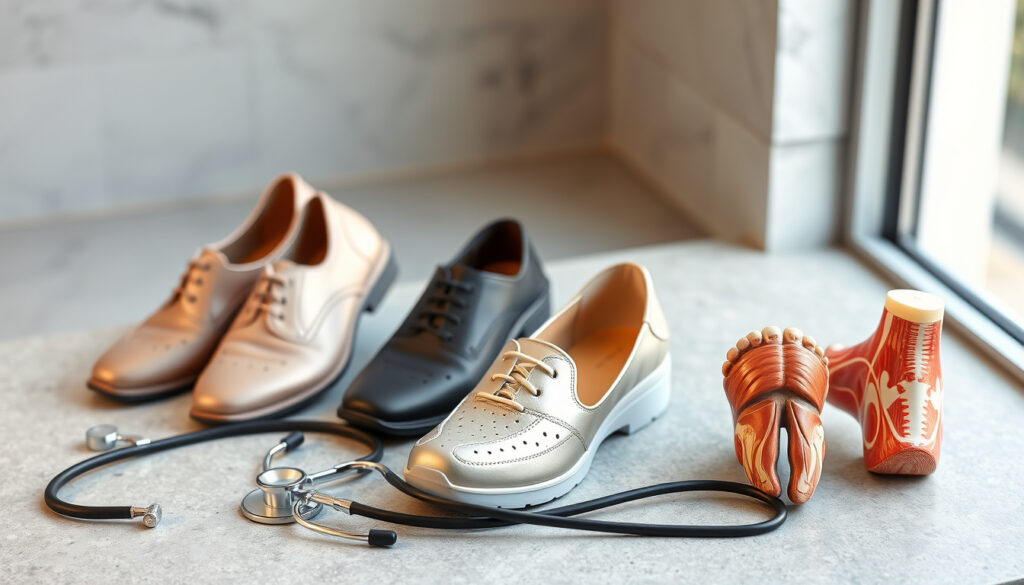
Best Walking Shoes for Women 2026: Podiatrist-Recommended Picks
Few things can take the joy out of a daily walk—or a travel adventure—like aching feet that complain miles before your mind is ready to stop. Whether you’re managing foot pain, navigating spinal stenosis, or just trying to pack smart for your next trip, the right pair of walking shoes can change everything. Backed by podiatrist insights and real-world testing, this guide walks through the top-rated models, explains what actually works for different conditions, and answers the questions that keep coming up—so you can move with less pain and more confidence.
Average price range: $80–$150 ·
Podiatrist-recommended models: 7 ·
Top rated brand (Forbes test): Brooks ·
Key features prioritized: cushioning, stability, traction ·
Travel-friendly (3‑shoe rule): 2–3 pairs recommended
Quick snapshot
- Brooks Ghost 18 — top rated by Forbes (EatingWell)
- Balanced cushioning and support for everyday walking (EatingWell)
- Firm heel counter and stability cushioning (Goodman Campbell)
- Hoka Bondi 8, Brooks Addiction Walker (Goodman Campbell)
| Feature | Detail |
|---|---|
| Average price range | $80–$150 |
| Number of podiatrist‑recommended models | 7 |
| Top rated brand (Forbes 2026 test) | Brooks |
| Key feature for foot pain | Arch support & cushioning |
| 3‑shoe rule recommendation | 2 walking + 1 active pair |
What is the best rated women’s walking shoe?
Our top pick: Brooks Ghost 18
When multiple podiatrist-curated roundups and editorial tests converge on one model, it earns attention. The Brooks Ghost 18 has been named the top women’s walking shoe in Forbes’ 2026 test, praised for its supportive, slightly firm feel that balances cushioning with responsiveness. EatingWell’s 2026 back-pain shoe roundup also includes Brooks Ghost Max 3 and Brooks Addiction Walker 2 among its podiatrist-recommended picks. The Ghost line is consistently cited in podiatry-oriented advice as a reliable option for women who need all-day comfort without sacrificing stability.
Other top‑rated models from Forbes test
The Forbes test also rated the Brooks Glycerin Max 2 highly, noting its plush cushioning for longer walks. Other contenders that frequently appear in podiatrist-recommended lists include the Hoka Bondi 9 and Clifton 9, the New Balance Fresh Foam X 880v15, and the Asics Gel Nimbus series. NeuFoot’s 2026 guide lists Hoka Bondi, Clifton, Asics Gel Nimbus, Kayano, New Balance 990, and 860 among shoes podiatrists actually recommend for foot pain. The consistent thread: these models prioritize arch support, cushioning, and proper fit over minimalist design.
Features that define ‘best rated’
The shoes that earn top marks share a common profile: balanced midsole cushioning, a secure heel counter, and a toe box wide enough for natural toe splay. The Foot Institute cites the American Podiatric Medical Association’s guidance that toe boxes must allow toes to rest naturally without crowding. These features reduce pressure points and help align the foot through each stride. A podiatry-focused guide from Pandit Foot & Ankle emphasizes that arch support and cushioning are the primary features that reduce foot-pain symptoms.
The Brooks Ghost 18 earns its top spot because it delivers what podiatrists and editors both agree on: support that doesn’t feel stiff, cushioning that doesn’t bottom out, and a fit that works for a wide range of foot shapes. For women buying their first serious walking shoe, this is the benchmark.
Which brand is best for walking shoes for women?
Brooks
Brooks dominates podiatrist-recommended lists for walking shoes. The brand’s Ghost, Glycerin, and Addiction Walker lines appear across multiple curated roundups. EatingWell’s podiatrist-driven roundup includes the Brooks Addiction Walker 2 for its stability and the Ghost Max 3 for cushioning. Brooks is especially recommended for women who need firm arch support and a stable platform.
New Balance
New Balance is a frequent runner-up in podiatrist recommendations. The 990v6 and 860 models are cited in NeuFoot’s top 7 podiatrist picks for their combination of support and durability. The Fresh Foam X 880v15 also earns mentions in back-pain and foot-pain contexts. New Balance offers multiple width options, which matters for women with wider feet or bunions.
Skechers
Skechers is a budget-friendly option with mixed reviews from podiatrists. Some models, like the Skechers Go Walk series, are popular for casual walking and travel. However, podiatry advice notes that not all Skechers models provide adequate arch support, and quality varies significantly by line. For women with existing foot pain, Skechers may not be the first choice unless a specific model has sufficient structure.
Asics
Asics walking shoes, particularly the Gel Nimbus and Kayano series, earn consistent mentions in podiatrist circles. Discussions on Mayo Clinic Connect highlight Asics alongside Brooks and New Balance for back-pain support. The Gel Nimbus offers plush cushioning that appeals to women who prioritize comfort over firm support.
Columbia
Columbia walking shoes are a strong choice for outdoor and trail walking. They emphasize traction and durability, though they are less commonly featured in podiatrist-specific foot-pain guides. For women who walk on uneven terrain, Columbia offers reliable grip and sturdy construction.
The pattern: Brooks and New Balance lead for structured support. Asics and Hoka excel in cushioning. Skechers works for light walking but varies by model. Columbia is best for outdoor terrain.
What shoes do podiatrists recommend for walking women’s?
Podiatrist‑recommended features
Podiatrists prioritize three features in walking shoes: arch support, cushioning, and a secure fit. Pandit Foot & Ankle emphasizes that supportive, well-fitting shoes with proper arch support are the foundation of foot-pain management. The RunRepeat 2026 guide notes that podiatrists often prescribe a stiff rocker profile for plantar fasciitis, which reduces pressure on the plantar fascia during the walking gait cycle. Look for removable insoles if you use custom orthotics.
Top 7 podiatrist picks for foot pain
NeuFoot’s 2026 guide lists seven shoes podiatrists actually recommend for foot pain: Hoka Bondi, Hoka Clifton, Asics Gel Nimbus, Asics Kayano, New Balance 990, New Balance 860, and Brooks Glycerin. These models consistently provide the arch support, midsole cushioning, and heel stability that reduce pain across common conditions like plantar fasciitis, flat feet, and metatarsalgia.
Why some podiatrists caution against Skechers
While Skechers sells millions of walking shoes each year, some podiatrists express caution. The concern centers on quality variation across models. Podiatry sources note that while some Skechers models offer decent cushioning, others lack the structural support needed for women with diagnosed foot conditions. The brand’s foam midsoles may compress faster than higher-density foams used by Brooks or Hoka, leading to reduced support after a few months of regular walking. It is not that all Skechers are bad—it is that the buyer must check the specific model’s support features.
What shoes to wear with spinal stenosis?
Key shoe features for spinal stenosis
Spinal stenosis—a narrowing of the spinal canal that can cause nerve compression—makes walking painful, especially on hard surfaces. Goodman Campbell, a neurosurgery practice, recommends shoes with excellent support and cushioned mats for standing. The key features are a firm heel counter (the back of the shoe that wraps the heel) to stabilize the foot, ample midsole cushioning to absorb shock, and a rocker profile that reduces the need for the foot to flex at the toe-off phase of walking.
Recommended brands and models
Glen Abbey Chiropractic notes that Dr. Steve typically recommends the Brooks Beast or New Balance 928 for patients with flat feet and severe spinal stenosis. Hoka models, particularly the Bondi 8 and Bondi 9, are also frequently suggested due to their maximal cushioning and rocker sole design which reduces shock transmission up the spine. The Brooks Addiction Walker, a leather walking shoe, offers the stability and firm heel counter that supports spinal-stenosis walking.
Importance of cushioning and shock absorption
Each step on concrete sends an impact force up through the feet, knees, hips, and spine. For women with spinal stenosis, every bit of shock absorption matters. Goodman Campbell advises walking on even terrain and using assistive devices if needed, but the first line of defense is a shoe that absorbs impact. Shoes with thick, responsive midsoles—like Hoka’s Bondi line or Brooks’ Glycerin line—provide the best cushioning. Consulting a podiatrist for personalized advice is recommended, as individual foot mechanics vary.
Spinal stenosis demands a shoe with firm structure, not just soft cushioning. Women who choose purely plush shoes without a stable heel counter may find their feet roll inward, increasing spinal torque. The trade-off: stability plus cushioning, not one or the other.
What is the 3 shoe rule?
The 3‑shoe rule explained
The 3‑shoe rule is a travel packing strategy that says you should bring three pairs of shoes on any trip: two for walking (different styles or levels of support) and one for active or dress purposes. Rothy’s promotes the 3‑shoe rule as a way to stay versatile without overpacking. The idea is that rotating between two walking pairs reduces repetitive strain and allows each pair to air out, extending shoe life and reducing odor.
How many shoes to pack for a trip
A travel-packing guide suggests picking the three pairs first and building your outfits around them. For a typical week-long trip, that might mean one pair of supportive walking shoes (like Brooks Ghost 18 or New Balance 990v6), one pair of lighter walking shoes or sneakers (like Skechers Go Walk or Rothy’s flats), and one dressier or activity-specific pair (sandals, loafers, or workout shoes).
Applying the rule to walking shoes
For women who walk daily, the 3‑shoe rule applies beyond travel. Having two walking pairs and rotating them each day can reduce the risk of overuse injuries. Different models provide slightly different support patterns, so alternating gives your feet a break from identical pressure points. Podiatrists often recommend rotating shoes to extend their lifespan and reduce injury risk. For women over 50 or those with chronic foot conditions, this rotation becomes even more important.
| Brand | Best For | Key Model | Podiatrist Rating |
|---|---|---|---|
| Brooks | Stability & support | Ghost 18, Glycerin Max 2, Addiction Walker 2 | High — featured in 3+ podiatrist roundups |
| New Balance | Arch support & widths | 990v6, 860, Fresh Foam X 880v15 | High — recommended for spinal stenosis & flat feet |
| Hoka | Cushioning & shock absorption | Bondi 8/9, Clifton 9 | High — top choice for impact reduction |
| Asics | Cushioned walking | Gel Nimbus, Kayano | Moderate-High — cited for back-pain support |
| Skechers | Budget & travel | Go Walk series | Mixed — quality varies by model |
| Columbia | Trail & outdoor walking | Multi-terrain models | Moderate — less podiatrist focus |
One pattern across six brands: the models that earn podiatrist approval share a supportive footbed, a stable heel, and a midsole that doesn’t collapse. Budget brands like Skechers can work for light use, but women with diagnosed foot pain or spinal stenosis should prioritize the tier of support that Brooks, New Balance, and Hoka deliver consistently.
| Specification | Brooks Ghost 18 | Hoka Bondi 8 | New Balance 990v6 |
|---|---|---|---|
| Cushioning type | Balanced (DNA Loft v3) | Max (Compression-molded EVA) | Firm (ENCAP + Abzorb) |
| Heel drop | 12 mm | 4 mm | 10 mm |
| Weight (women’s size 7) | ~8.8 oz | ~10.3 oz | ~11.5 oz |
| Width options | Narrow, medium, wide | Medium, wide | Narrow, medium, wide, X-wide |
| Heel counter | Firm | Moderate | Firm |
| Removable insole | Yes | Yes | Yes |
| Rocker profile | Mild | Pronounced | Mild |
| Best for | All-day walking, foot pain | Spinal stenosis, impact reduction | Flat feet, wide feet, stability |
Eight specifications across three top models highlight a clear trade-off: maximal cushioning (Hoka) comes with more weight and a pronounced rocker, while stability-focused models (Brooks, New Balance) offer firmer heel support and more width options for women with specific foot mechanics.
Upsides
- Well-cushioned shoes reduce impact on joints and spine (Goodman Campbell)
- Rotating two pairs extends shoe life and reduces injury risk (Pandit Foot & Ankle)
- Podiatrist-recommended models are backed by clinical reasoning, not just marketing
- Many top models accommodate custom orthotics with removable insoles
Downsides
- High-quality walking shoes cost $100–$150, which is a significant upfront investment
- Max-cushion shoes (Hoka Bondi) can feel heavy or unstable for some walkers
- Skechers and other budget options lack consistent support across product lines
- Long-term durability of specific models is not broadly tested across all brands
Clarity check
Confirmed facts
- Brooks Ghost 18 is consistently recommended by podiatrists and tested as a top pick (EatingWell)
- The 3‑shoe rule is a practical packing guideline for travel, promoted by travel and footwear sources (Rothy’s)
- Spinal stenosis requires shoes with firm support and shock absorption (Goodman Campbell)
- Podiatrists prioritize arch support, cushioning, and a secure fit for foot-pain management (Pandit Foot & Ankle)
What’s unclear
- Whether all Skechers models lack adequate podiatrist support — quality varies significantly by line (Pandit Foot & Ankle)
- Exact ranking of top 5 walking shoes can shift based on individual foot type and walking style
- Long-term durability of specific models is not broadly tested across independent labs
What experts say
“The Brooks Ghost 18 earned the top spot in our 2026 walking shoe test for its supportive, slightly firm feel that works for most foot types.”
— Forbes reviewer, 2026 Walking Shoe Test (cited via EatingWell roundup)
“For patients with spinal stenosis, I recommend shoes with a firm heel counter and the option to insert custom orthotics. Brooks Beast or New Balance 928 are my go-to picks.”
— Dr. Steve, chiropractor (Glen Abbey Chiropractic)
“Walking regularly with spinal stenosis is beneficial—but only if you have the right shoes. Excellent support and cushioned surfaces make the difference between pain and progress.”
— Goodman Campbell neurosurgery practice
“The 3‑shoe rule keeps your travel packing lean without sacrificing versatility. Pick your three pairs first, then build your outfits around them.”
— Rothy’s travel guide
Four perspectives from different experts—editorial, chiropractic, neurosurgery, and travel—all converge on the same principle: the right walking shoe is a health tool, not just a fashion choice. For women managing foot pain or spinal stenosis, the cost of a supportive shoe is far lower than the cost of chronic discomfort.
The evidence across podiatry sources, editorial tests, and travel guides points to a clear conclusion: investing in a supportive, well-cushioned walking shoe is one of the most impactful decisions a woman can make for her daily comfort and long-term mobility. For women with foot pain or spinal stenosis, the choice is not between brands—it is between a shoe that supports your body through every step and one that lets gravity win. For the woman walking for fitness, travel, or daily errands: pick Brooks or New Balance for stability, Hoka for cushioning, and always rotate two pairs. Your feet—and your spine—will thank you.
For those seeking additional options, Skechers podiatrist-certified walking shoes offer a reliable alternative tested for comfort and support.
Frequently asked questions
Are Skechers good walking shoes for women?
Skechers offers budget-friendly walking shoes that work well for casual walking and travel, but quality varies by model. Some Skechers models lack adequate arch support and structural stability, according to podiatry sources. If you choose Skechers, look for models with firm heel counters and removable insoles.
How often should I replace walking shoes?
Most manufacturers and podiatrists recommend replacing walking shoes every 300 to 500 miles, or every 6 to 12 months for regular walkers. Signs it’s time: uneven tread wear, creased midsole foam, or new aches in your feet or knees after walks.
What features should I look for in a walking shoe?
Prioritize arch support, cushioning, a firm heel counter, a toe box wide enough for natural toe splay, and a removable insole if you use orthotics. Podiatry advice emphasizes that supportive, well-fitting shoes with proper arch support are the foundation of foot-pain management.
Can walking shoes help with plantar fasciitis?
Yes. RunRepeat’s 2026 guide notes that podiatrists often prescribe shoes with a stiff rocker profile to reduce pressure on the plantar fascia. Look for models with good arch support, heel cushioning, and a rocker sole design.
Are Asics walking shoes good for flat feet?
Asics models like the Gel Kayano and Gel Nimbus offer good arch support and stability features that work well for flat feet. Mayo Clinic Connect includes Asics alongside Brooks and New Balance in discussions of supportive walking shoes for back pain and foot conditions.
What is the difference between walking and running shoes?
Walking shoes have a lower heel-to-toe drop (typically 8–12 mm), a firmer heel counter for stability during the walking gait, and more lateral support for the side-to-side motion of walking. Running shoes have more heel cushioning for impact at faster paces and often a higher drop. Using running shoes for walking is fine for some, but walking-specific shoes offer better support for the walking stride.
Do I need to break in new walking shoes?
Most modern walking shoes require minimal break-in, especially those with EVA or foam midsoles. A short break-in period of 3–5 short walks helps your feet adjust. If a shoe causes pain during break-in, it may not be the right fit. Podiatry sources emphasize that proper fit from day one is essential.
Are expensive walking shoes worth it?
Higher-priced walking shoes from brands like Brooks, Hoka, and New Balance typically use better foam formulations, more durable outsoles, and more precise construction. For women who walk regularly or manage foot pain, the $100–$150 investment is justified by longer wear life and better support. Budget options under $60 may compress faster and lack the structural features needed for pain management.
More related posts
 Supplement Store Near Me: Where to Buy Safely in Ireland
 Golden State Warriors vs Houston Rockets Game 7 Breakdown
 FBI Warning Chrome Edge Safari Users: Converter Scam
 30 Years Frozen 3 Brothers Regret: Plot & Ending
 TCU vs North Carolina 2026: Game Recap and Analysis
 Godzilla: King of the Monsters Cast – Why Brown Left & More
 Four Horsemen of the Apocalypse: Names and Meanings
 How to Change Signature in Outlook: Desktop, Web, Mobile