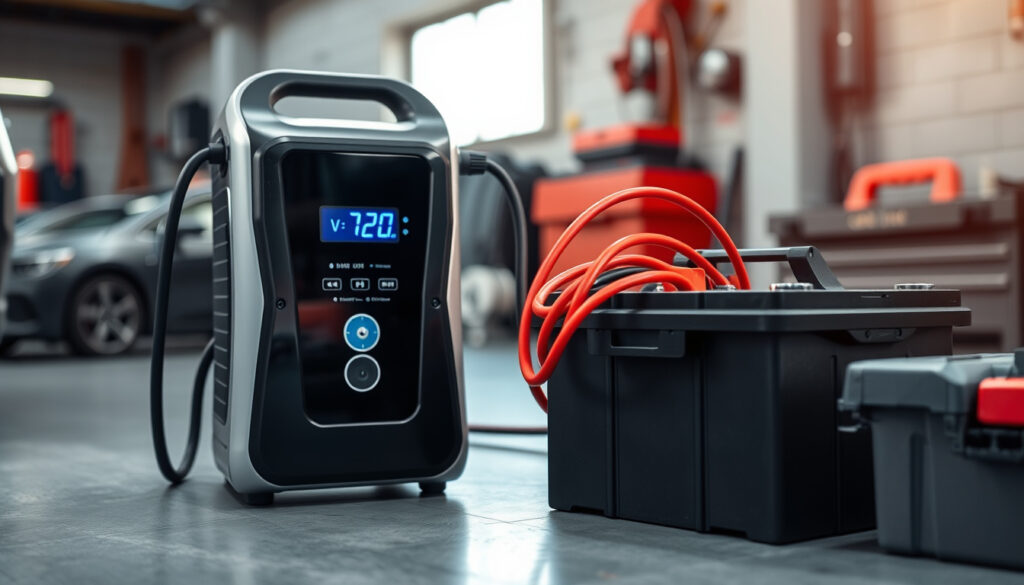
Car Battery Charger Guide: How Much, What to Buy, and How to Use
Few car problems feel more personal than turning the key and hearing nothing but a click, and whether that click becomes a 20-minute interruption or a weekend project often comes down to one item in your garage: a battery charger. This guide walks through 12V chargers, 6V legacy systems, smart versus trickle modes, and why the price spread follows features, not vehicle size.
Standard car voltage: 12 volts · Fully charged resting voltage: About 12.6 volts · Typical new charger price: $25 to $150+ · Average car battery lifespan: 3 to 5 years
Quick snapshot
- Nearly every modern passenger car uses a 12V electrical system, and CTEK’s car charger collection is built around that standard.
- Whether a specific dead battery can be revived depends on age, sulfation, and internal damage. (MotorJudge’s charger guide)
- Smart chargers switch from bulk to absorption to float instead of running at maximum current forever, as Aikins Select’s charger review explains.
- Match charger voltage and battery chemistry before purchase. (My Car Planet’s charger list)
Key facts at a glance
One sheet, one pattern: charger choice is really a battery-condition problem, not a vehicle-size problem.
| Label | Value |
|---|---|
| Voltage standard | Most modern cars use 12V systems. |
| Fully charged battery | Reads about 12.6 volts at rest. |
| Typical charger price | Roughly $25 to $150, depending on features. |
| Battery replacement signal | Battery fails to hold a charge near 12.4 volts. |
| Recovery amperage | 4–5A is a practical middle ground for recovering a weak battery while also providing maintenance, according to MotorJudge’s charger guide. |
| Smart charge curve | Bulk, absorption, and float stages, not constant max current, as Aikins Select’s charger review explains. |
| Average battery life | 3 to 5 years, with short trips and temperature swings shortening that window. |
The implication: price and amperage matter less than matching the charger to the battery state.
How much is a battery charger for a car?
You can pay anywhere from $25 to more than $150. The spread comes down to what the charger is built to do.
Why do car battery charger prices vary so widely?
- Basic trickle chargers are the lowest-cost option.
- Smart chargers and maintainers sit in the mid-range because they add automatic shutoff and charge-stage control.
- Multi-function jump-starter chargers are usually the most expensive form factor.
Price tracks electronics, not the cable. A unit that can handle multiple battery chemistries or switch between charging and boost costs more because it contains more control circuitry.
What features push a 12V charger above $100?
- Multi-chemistry support, especially lithium compatibility, adds cost.
- Higher amperage and boost modes add cost.
- Automatic shutoff and temperature compensation are mid-range and above.
MotorJudge’s charger guide warns that lead-acid-only chargers are not automatically suitable for lithium batteries, so a charger that covers both chemistries will sit at a higher price point.
Are cheap battery chargers worth it?
- A low-current maintainer is enough for a healthy battery in storage.
- A mid-range charger is a better fit for a weak battery.
- A very cheap unit without automatic shutoff can overcharge if left connected.
If your only goal is to hold a battery over winter, a cheaper maintainer may be enough. If you expect to recover discharged batteries, spend the extra for a smart charger.
For a daily driver, pay for smart shutoff before paying for raw amperage.
The implication: a $40 smart charger can protect a $200 battery better than a $25 trickle charger.
What is the best car battery charger?
There is no single winner because charger needs split between storage, recovery, and jump-starting. Match the machine to the job.
What should shoppers look for in a car battery charger?
- Battery chemistry support: lead-acid, AGM, or lithium.
- Voltage: 12V for nearly all modern cars; 6V only for vintage or special vehicles.
- Charge stages: automatic bulk, absorption, and float control.
My Car Planet’s charger list highlights the NOCO GENIUS5 as a 5A charger that handles 6V and 12V systems and both lead-acid and lithium batteries.
Is a battery maintainer the same as a charger?
- A charger is designed to recharge a depleted battery.
- A maintainer delivers low current for long-term storage.
- Some smart chargers combine both roles.
Maintainers prevent a problem; chargers fix one. A unit aimed at long-term storage keeps a healthy battery full, while a recovery charger puts real energy back into a weak one.
Should I buy a charger or a jump starter?
- Chargers restore a battery over hours.
- Jump starters get an engine running quickly but do not fully recharge the battery.
- Some units combine charging and boost assistance.
Redline Garage’s charger roundup includes models such as the Schumacher SC1281, which supports 6V and 12V lead-acid batteries with selectable charging or boost outputs.
Jump-starter combos solve one morning, but they do not replace the hours of charging a deeply discharged battery needs.
The trade-off: a jump-starter combo helps in an emergency, but a charger is the long-term fix.
Can you put a battery charger on a car?
Yes, and most chargers are designed for batteries still sitting in the car. The sequence matters.
Do I need to disconnect the battery before charging?
- Most chargers work on installed batteries.
- Automatic shutoff reduces overcharging risk.
- Smart chargers switch to float instead of staying at max current.
Aikins Select’s charger review notes that smart chargers progress through bulk, absorption, and float stages. That means a smart charger can stay connected for hours without pushing a fully charged battery past its limit.
Which terminal do I connect first?
- Connect the positive clamp first.
- Connect the negative clamp to a ground point, not directly to the battery, when the battery is installed.
- Work in a ventilated area.
This keeps sparks away from battery gas. For cars with stop-start systems or lithium batteries, check the owner’s manual before charging.
How long should you leave a car battery charging before starting?
- A smart charger can be left connected for hours.
- A basic trickle charger needs periodic checks.
- Plan on 4 to 24 hours for a full recharge depending on charger size and battery capacity.
If the battery is deeply discharged, a higher-current charger will shorten the wait; a storage maintainer is better suited to keeping a healthy battery full.
A basic trickle charger can keep a healthy battery topped up, but it is not built to safely recover a deeply discharged one.
What this means: if you own a smart charger, use it as a maintainer; if you own a basic trickle charger, pair it with a voltage check.
Should I use 6-volt or 12 volt to charge my car battery?
For almost any modern car, the answer is 12 volts. The 6V question comes up only with vintage or specialty vehicles.
How do I know if my car uses a 6V or 12V system?
- Nearly every modern passenger car uses a 12V electrical system.
- 6V systems appear mainly in classic cars, tractors, and some marine applications.
- Check the battery label or owner’s manual if you are unsure.
Mismatching voltage is not a small mistake. A 12V charger can overheat a 6V battery, and a 6V charger will not properly charge a 12V battery.
What happens if I use the wrong voltage?
- Wrong voltage can overheat or damage the battery.
- Some chargers handle both 6V and 12V, which makes them safer for mixed fleets.
- Selectable boost units add another layer of flexibility.
Dual-voltage support removes the guesswork. If you own a classic car and a modern daily driver, a charger that covers both voltages is a single-tool solution.
A dual-voltage charger covers a classic car and a modern daily driver with one tool.
The consequence: using the wrong voltage is one of the few ways a charger can actually harm a battery.
What kills a car battery the most?
The biggest killers are habits, not hardware: short drives, temperature swings, and small electrical drains that never turn off.
Does short driving drain the battery?
- Frequent short trips are a leading cause of battery failure.
- A 20-minute drive can add a small surface charge.
- A full recharge usually takes longer than a drive.
If your commute is short, the alternator may not put back the energy used to start the engine. That is why a battery that starts fine in summer can fail in winter.
Can heat or cold shorten battery life?
- Extreme temperatures stress lead-acid batteries.
- A typical lead-acid car battery lasts 3 to 5 years.
- Long periods without charging allow self-discharge.
Self-discharge can lead to sulfation, a buildup of lead sulfate crystals that reduces capacity. A maintainer is designed to prevent this by holding the battery at a safe voltage during storage.
How long will a car battery last without being charged?
- Self-discharge and parasitic drains gradually empty the battery.
- Leaving a car parked for weeks can drop voltage below a recoverable level.
- Parasitic drains from modules, clocks, and alarms keep pulling power even when the car is off.
The fix is not always a drive. A smart charger or maintainer is designed for this exact scenario.
Batteries do not die from one dramatic event; they die from repeated undercharging and long idle stretches.
The consequence: if you drive short trips in extreme weather, a smart charger is preventive care, not a repair.
Can a completely dead battery be recharged?
Often yes, if the battery still holds a charge and has not been damaged by sulfation or internal short circuits.
Is a 20 minute drive enough to charge a car battery?
- A 20-minute drive can put a small surface charge on the battery.
- It does not replace a full recharge.
- Use a charger to recover the battery properly.
MotorJudge’s charger guide describes a 4–5A charger as a practical middle ground for recovering a weak battery while also providing maintenance charging.
Does idling your car charge the battery?
- Idling charges at a much lower rate than driving.
- It will not recover a deeply discharged battery.
- A charger is the reliable way to refill the battery.
Even 30 minutes of idling can leave a weak battery short of the energy it needs. If the battery sits below 12.4 volts at rest, treat charging as a maintenance job, not a drive-by fix.
How often should I start my car to keep the battery charged?
- Starting the engine alone is not enough; the alternator needs time to replenish the energy.
- A periodic drive is helpful, but a maintainer is more consistent.
- Check resting voltage: about 12.6 volts means full, and near 12.4 volts means replace.
A smart charger takes the guesswork out of the schedule. It charges when needed and floats when the battery is full.
If the battery is deeply discharged, the fastest reliable fix is a charger, not the alternator.
The consequence: a 20-minute drive can get you to a parts store, but only a charger can reliably restore a battery to full.
Smart charger comparison
Three charger families, one pattern: price tracks features and use case, not vehicle size.
| Type | Best for | Charge behavior | Price signal |
|---|---|---|---|
| Maintainer / trickle charger | Storage, seasonal vehicles, infrequent drivers | Low current designed to hold a healthy battery | Lowest price band |
| Smart charger | Weak battery recovery and everyday maintenance | Automatic bulk, absorption, float stages | Mid-range price band |
| Jump-starter combo | Quick starts plus occasional charging | High-current boost with selectable charging modes | Premium price band |
The pattern: a smart charger’s job is to match current to battery state, and that is what the mid-range price buys.
Spec snapshot: three popular 12V chargers
Three models, one pattern: amperage and chemistry support matter more than brand name.
| Spec | NOCO GENIUS5 | Battery Tender Plus | Schumacher SC1281 |
|---|---|---|---|
| Rated output | 5A, per My Car Planet’s charger list | 1.25A, per TheTestedHub’s 12V guide | Not specified in the listing |
| Voltage support | 6V and 12V | 12V | 6V and 12V, per Redline Garage’s roundup |
| Chemistry support | Lead-acid and lithium, per My Car Planet’s list | Lead-acid | Lead-acid |
| Charge program | Not detailed in the listing | Storage-focused | Selectable charging or boost outputs |
| Intended use | Recovery and maintenance | Long-term storage | Charging and boost assistance |
| Best matched to | Daily drivers and mixed 6V/12V households | Seasonal vehicles and winter storage | Garages that want boost help without carrying a separate jump pack |
The takeaway: chemistry support should drive the purchase; amperage only changes how long you wait.
Pros and cons
One honest trade-off: charger features are an insurance policy, not a luxury.
Upsides
- Chargers cost less than repeat jump-start service calls.
- Smart chargers can be left connected overnight with automatic shutoff.
- Matching a mid-range charger to a weak battery is enough for most cars.
Downsides
- Cheap trickle chargers can lack automatic shutoff.
- Wrong voltage or chemistry can damage a battery.
- A 20-minute drive won’t replace a proper charge.
The trade-off: a cheap charger can work, but it makes you the automatic shutoff.
How to charge your car battery at home
- Confirm voltage and battery type before connecting anything.
- Choose a charger current based on battery condition: a low-current maintainer for storage, a recovery charger for weak batteries, or a higher-current charger for faster recovery.
- Connect the positive clamp first, then the negative clamp to a ground point.
- Plug in the charger and set the voltage mode if the charger is not automatic.
- Let the charger finish; a smart charger will drop to float when the battery is full.
- Check the battery at rest after charging. Near 12.6 volts means full; below 12.4 volts points to replacement.
The key: if you connect positive first and ground negative, you avoid the most common charging mistake.
Confirmed facts vs. what’s still unclear
Confirmed facts
- Most modern cars use a 12V electrical system, according to CTEK‘s car charger collection.
What’s unclear
- Whether a specific dead battery can be revived depends on age, sulfation, and internal damage.
- AutoZone’s exact free charging policy differs by store, so call ahead.
- A 20-minute drive’s actual charge depends on temperature, alternator output, and how discharged the battery is.
- Which specific charger wins a test roundup changes with each tester’s criteria.
- Exact charging times vary with battery capacity, temperature, and charger output.
- A 12V charger is the default choice for modern car batteries.
- A deeply discharged battery can often be recharged if it still holds a charge.
- Store charging service policies vary by location and often require battery testing.
- Full recharge usually takes 4 to 24 hours with a home charger.
- A basic trickle charger needs periodic checks.
- Choose amperage by battery condition, not vehicle size.
- Expect to pay $25 to $150+ depending on features.
The consequence: without knowing battery age, condition, and local store policies, any charger recommendation is provisional.
Quotes from the field
Car chargers should be chosen by intended use: maintenance and storage, safe starting or flat-battery recovery, and power-bank applications.
CTEK (car charger manufacturer)
The Battery Tender Plus is a 12V, 1.25A maintainer intended primarily for long-term vehicle storage.
TheTestedHub (12V charger guide)
The Schumacher SC1281 supports 6V and 12V lead-acid batteries and offers selectable charging or boost outputs.
Redline Garage (automotive resource)
The consensus: match the charger to the battery chemistry and the vehicle’s actual use pattern.
The bottom line
A charger is one of the cheapest investments in battery life. Most drivers do not need a $150 unit; they need a smart 12V charger that supports their battery chemistry and can be left connected without risk. For most U.S. drivers, the decision is clear: match a smart charger to your battery chemistry and use a maintainer between drives, or accept shorter battery life and more jump-starts.
Frequently asked questions
Can I leave a car battery charger connected overnight?
Yes, if it is a smart charger with automatic shutoff. Smart chargers switch to float mode instead of forcing current into a full battery. Basic trickle chargers without automatic shutoff need periodic checks.
What is a smart car battery charger?
A smart car battery charger uses automatic control to move through charging stages and stop or float when the battery is full.
What does sulfation do to a car battery?
Sulfation forms lead sulfate crystals on the battery plates and can reduce capacity, especially when a battery sits discharged for a long time.
Do I need a special charger for an AGM battery?
Many smart chargers support AGM batteries, but you should check the charger’s compatibility list before buying.
Can I charge a car battery in cold weather?
Yes, but charging is slower in very cold conditions. A smart charger can adjust the charging profile.
How does a battery maintainer know when to stop charging?
A maintainer senses the battery’s voltage and switches to a low float current once the battery reaches full charge.
Related reading
More related posts
 How to Cook Rice Perfectly: Ratio, Time & Beginner Guide
 Death on the Nile: Novel and Film Adaptations Guide
 How to Change Signature in Outlook: Desktop, Web, Mobile
 Primrose Candy Co files Chapter 11 bankruptcy details
 Is It Going to Snow? Ireland & UK Forecast
 Boston Celtics vs Brooklyn Nets Match Player Stats: Recap
 Teaspoons in a Tablespoon: Conversion Guide (tsp to tbsp)