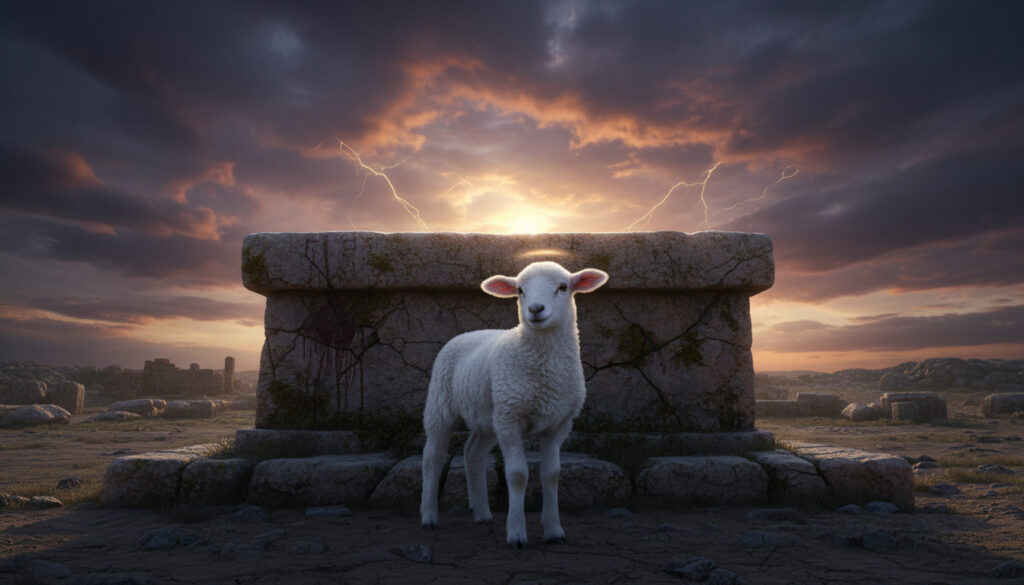
Lamb to the Slaughter – Meaning, Bible Origin and Usage
The phrase “lamb to the slaughter” evokes one of the most arresting images in the English language: an innocent creature led silently toward destruction. This idiom describes someone who goes passively, without protest, to an inevitable doom—often unaware of the fate awaiting them. Rooted in ancient biblical prophecy, the expression has transcended its religious origins to become a staple of modern literature, political commentary, and everyday speech.
While commonly understood to suggest helplessness, the original context reveals something more complex: a deliberate, voluntary submission to suffering. From Isaiah’s suffering servant to contemporary cultural references, the phrase carries layers of meaning that continue to resonate across centuries.
What Does ‘Lamb to the Slaughter’ Mean?
Core Meaning
Silent, willing submission to oppression or fate without resistance
Biblical Origin
Isaiah 53:7 prophecy regarding the suffering servant
Modern Usage
Idiomatic expression for innocent or unwitting victims
Key Nuance
Voluntary endurance rather than mere physical helplessness
Key Insights
- Emphasizes silence under oppression: The biblical source specifically notes the subject “opened not his mouth” despite affliction
- Connotes innocence: Lambs symbolize harmlessness and purity in Semitic and Christian traditions
- Suggests unsuspecting victimhood: Modern usage often implies the victim does not comprehend the danger
- Represents voluntary atonement: Theological interpretation views the sacrifice as willing, not coerced
- Functions as simile: Linguistically compares human behavior to livestock being led to literal slaughter
- Carries Holocaust controversy: Later usage describing Jewish genocide victims sparked debate about resistance and blame
- Allows ironic inversion: Writers like Roald Dahl subverted the imagery for darkly comic effect
| Attribute | Details |
|---|---|
| Primary Source | Isaiah 53:7 (King James Version) |
| New Testament Reference | Acts 8:32 |
| Hebrew Term (Lamb) | keśeh |
| Hebrew Term (Slaughter) | ṭeb̄aḥ |
| First English Translation | King James Version (1611) |
| Modern Variants | “Like sheep to the slaughter” |
| Literary Reference | Roald Dahl (1953) |
| Theological Concept | Suffering Servant |
Where Does ‘Lamb to the Slaughter’ Come From?
Ancient Biblical Imagery
The expression emerges from Isaiah 53, a poetic song describing a “suffering servant” who endures oppression without protest. Written during the post-exilic period, the text portrays this figure as bearing the iniquity of others through patient submission. The imagery draws directly from ancient sacrificial practices, where lambs served as unblemished offerings, emphasizing both innocence and the gravity of the impending death.
From Hebrew Prophecy to English Idiom
The King James Version translators standardized the English phrasing in 1611, selecting “lamb to the slaughter” for its rhythmic alliteration and visceral impact. Linguistic analysis reveals the Hebrew employs an attributive simile—”as a lamb that is led to the slaughter”—rather than metaphor, maintaining the comparison to literal livestock. This translation choice cemented the phrase within English religious vocabulary before its eventual secular adoption.
The Hebrew employs keśeh for lamb or sheep and ṭeb̄aḥ specifically for slaughter, forming an attributive simile rather than a metaphor—emphasizing comparison to actual sacrificial livestock practices of the era.
The Variation: “Like Sheep to the Slaughter”
A related variant, “like sheep to the slaughter”, shifts the focus from individual sacrifice to collective passivity. While Isaiah 53:7 mentions both the singular lamb and the sheep before shearers, modern usage of the sheep variant often describes group victimhood or mass tragedy, carrying distinct connotations from the singular “lamb” formulation.
What Is the Bible Verse for ‘Lamb to the Slaughter’?
Isaiah 53:7 and the Suffering Servant
The primary biblical source reads: “He was oppressed, and he was afflicted, yet he opened not his mouth: he is brought as a lamb to the slaughter, and as a sheep before her shearers is dumb, so he openeth not his mouth.” Biblical commentaries emphasize this portrays patient silence under suffering, not literal physical helplessness. The servant retains agency—choosing not to speak—while accepting the role of atoning sacrifice.
The biblical text emphasizes patient silence under suffering, not literal dragging or physical helplessness. The servant’s restraint evokes the Passover lamb’s sacrificial role—willing and unblemished.
Acts 8:32 and Early Christian Interpretation
The New Testament explicitly quotes Isaiah 53:7 in Acts 8:32, where Philip encounters an Ethiopian eunuch reading the prophecy. Interpreting the passage as fulfilled prophecy regarding Jesus’ death, the early Christian community adopted the phrase to describe Christ’s voluntary submission to crucifixion. Theological analysis connects this to John 1:29’s “Lamb of God,” creating a constellation of atonement imagery centered on willing sacrifice.
Theological Implications
Christian theology distinguishes between victimhood and sacrifice in this passage. Theological expositions argue the servant’s silence demonstrates strength and humility rather than weakness, presenting a model of redemptive suffering. This interpretation informs hymnody, liturgy, and devotional practice, where the “lamb” represents innocence voluntarily accepting punishment for others’ transgressions.
During the Holocaust, the phrase “like sheep to the slaughter” (כצאן לטבח) was controversially applied to describe Jewish victims, misinterpreting the biblical virtue of patient endurance as passive acceptance of genocide—a usage widely disputed by historians and theologians.
How Did the Phrase Evolve Through History?
- 8th Century BC: Composition of Isaiah 53, including verse 7, within the context of Hebrew prophecy regarding suffering and redemption. Source: Textual analysis
- 1st Century AD: Acts 8:32 records the phrase being quoted by Philip as fulfilled prophecy regarding Jesus’ trial and crucifixion. Source: Biblical cross-reference
- 1611: King James Version translators standardize the English phrasing “lamb to the slaughter,” cementing its place in English religious vocabulary. Source: Translation history
- 20th Century: Holocaust historians adopt “like sheep to the slaughter” to describe genocide, sparking debate about resistance and victimhood. Source: Historical documentation
- 1953: Roald Dahl publishes the short story “Lamb to the Slaughter,” ironically inverting the phrase’s meaning by using a frozen leg of lamb as a murder weapon. Source: Literary archives
- Present Day: Usage extends to political commentary, military contexts, and self-help literature, retaining biblical undertones while largely secularizing the meaning. Source: Contemporary analysis
What Do Scholars Know for Certain?
| Established Facts | Uncertainties and Debates |
|---|---|
| Isaiah 53:7 is the undisputed origin of the phrase | Exact date of transition from biblical quotation to secular idiom |
| Acts 8:32 explicitly quotes the Isaiah passage in the New Testament | Whether Jesus’ trial silence represents direct fulfillment or theological echo |
| Hebrew terms keśeh and ṭeb̄aḥ form the linguistic basis | The precise identity of Isaiah’s original suffering servant—individual messiah or collective Israel |
| Modern usage universally retains themes of innocence and impending doom | Extent to which Holocaust usage misappropriates the biblical concept of virtuous endurance |
How Does Culture Shape This Expression?
Beyond biblical studies, the phrase permeates secular discourse with complex implications. In military contexts, commanders have described troops sent into futile battles as “lambs to the slaughter,” evoking the tragedy of unnecessary sacrifice. Political commentators employ the idiom to characterize constituents deceived by harmful policies, while self-help literature warns against “going like a lamb to the slaughter” in interpersonal relationships—advising vigilance against manipulation.
The expression’s power lies in its tension between innocence and violence. Whether describing a soldier facing impossible odds, a criminal suspect unaware of interrogation tactics, or the When They See Us – True Story of Central Park Five, the imagery maintains its capacity to disturb. This duality—suggesting both virtue and vulnerability—ensures its persistence across disciplines ranging from homiletics to true crime analysis.
Literary works continue to interrogate the phrase’s boundaries. From Story of Seasons Grand Bazaar – Beginner’s Guide and Tips to high modernist poetry, writers exploit the gap between the phrase’s biblical dignity and its potential for ironic subversion, keeping the idiom vital in contemporary English.
What Do Primary Texts Reveal?
“He was oppressed, and he was afflicted, yet he opened not his mouth: he is brought as a lamb to the slaughter, and as a sheep before her shearers is dumb, so he openeth not his mouth.”
— Isaiah 53:7, King James Version
“The place of the scripture which he read was this, He was led as a sheep to the slaughter; and like a lamb dumb before his shearer, so opened he not his mouth.”
— Acts 8:32, New Testament
Why Does This Phrase Endure?
The idiom persists because it captures an essential human paradox: the moral power of maintaining dignity while facing destruction. From Isaiah’s ancient prophecy through Christian theology to modern journalism, “lamb to the slaughter” compresses volumes of cultural memory into four words—conjuring innocence, sacrifice, and the silent courage to endure. Whether warning against naivety or honoring voluntary suffering, the phrase remains indispensable for describing humanity’s most solemn moments.
Frequently Asked Questions
Is “lamb to the slaughter” found in the Old or New Testament?
The phrase originates in the Old Testament (Isaiah 53:7) and is quoted in the New Testament (Acts 8:32) as fulfilled prophecy regarding Jesus’ sacrificial death.
What is the difference between “lamb” and “sheep to the slaughter”?
“Lamb” emphasizes individual innocence and voluntary sacrifice, while “sheep” stresses collective passivity or group victimhood, though both derive from Isaiah 53:7.
Does the phrase suggest weakness or strength?
Biblically, it indicates strength through patient silence and willing submission, though modern secular usage often implies mere helplessness or naivety.
How did Roald Dahl use this phrase differently?
In his 1953 story, Dahl ironically inverted the meaning—the “lamb” becomes a murder weapon (a frozen leg of lamb), subverting the victim imagery completely.
Are there other biblical references to lambs and slaughter?
Yes, the Passover lamb (Exodus 12) and John 1:29’s “Lamb of God” connect to this imagery, though Isaiah 53:7 provides the specific “to the slaughter” phrasing.
Why is the phrase controversial in Holocaust studies?
Some historians used “like sheep to the slaughter” to characterize Jewish passivity during the genocide, sparking debate about victim-blaming versus the biblical praise of virtuous endurance.
What Hebrew words form the original phrase?
The Hebrew uses keśeh (lamb/sheep) and ṭeb̄aḥ (slaughter), creating a simile comparing the servant to sacrificial livestock led without resistance.
Does the phrase always imply the victim is unaware?
Not in the biblical context. The suffering servant chooses silence knowingly, whereas modern usage often implies the victim does not comprehend their fate.
More related posts
 Godzilla: King of the Monsters Cast – Why Brown Left & More
 Parts of the Eye – Anatomy Functions and Structures
 How to Watch the Super Bowl – Channel, Streams & Free Options
 2024 Ford Ranger Raptor: Specs, Price, Comparisons & Buyer Guide
 Golden State Warriors vs Houston Rockets Game 7 Breakdown
 Florida Minimum Wage 2025: $14 Per Hour & Livable Wage Analysis
 FBI Warning Chrome Edge Safari Users: Converter Scam
 40 Days from Today: Date, Age, and Longevity Calculator