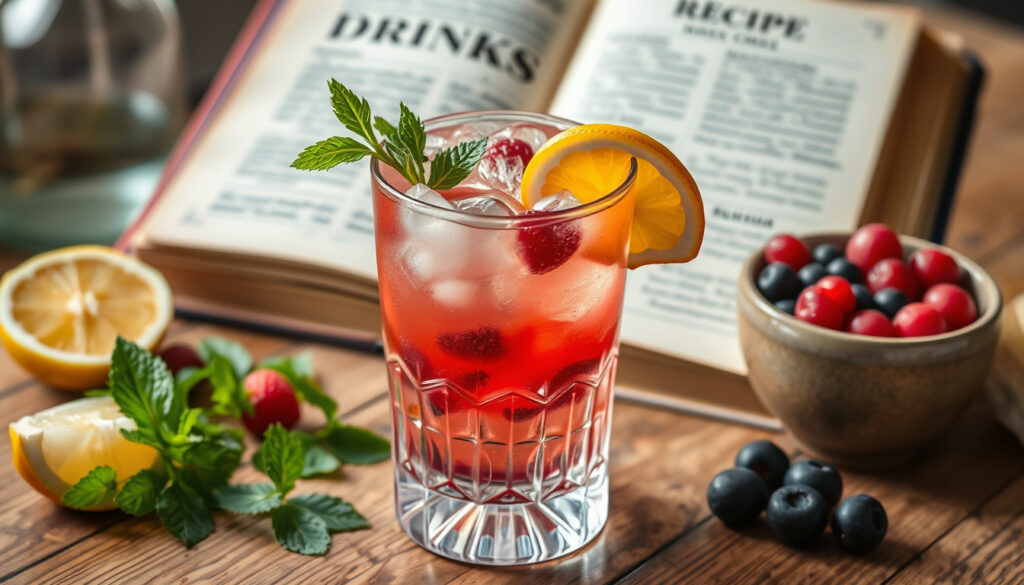
What Is a Mocktail? Definition, History, and Popular Recipes
There’s a quiet revolution happening at bars and dinner parties: more people are ordering drinks that look, smell, and taste like cocktails—but contain zero alcohol. These are mocktails, and they’re no longer just a polite pass for designated drivers.
Mocktail definition: Non-alcoholic drink crafted to mimic a cocktail ·
Alcohol content: 0% ABV ·
Common base ingredients: Juices, syrups, herbs, sparkling water, non-alcoholic spirits ·
Origin of term: Blend of ‘mock’ (fake) and ‘cocktail’
Quick snapshot
- Mocktails contain 0% alcohol by volume (Lucca Osteria & Bar (restaurant and bar)).
- The term “mocktail” blends “mock” and “cocktail”, with usage dating to the 1980s (WebstaurantStore (commercial food service supplier)).
- Shirley Temple is the most famous mocktail, created in the 1930s (WebstaurantStore).
- The exact origin of the word “mocktail” is debated; no single first use has been documented (Crossip Drinks (non-alcoholic beverage brand)).
- Whether a simple juice mixture qualifies as a mocktail or requires non-alcoholic spirits is subjective (Difford’s Guide (bartending resource)).
- Whether mocktails are culturally perceived as “lesser” than cocktails is debated among industry professionals. (Crossip Drinks (non-alcoholic beverage brand))
- 1930s: Shirley Temple mocktail created at Chasen’s restaurant, Los Angeles (WebstaurantStore).
- 1980s: Term “mocktail” enters popular usage (WebstaurantStore).
- 2010s: Rise of craft non-alcoholic spirits and dedicated mocktail bars (Ritual Zero Proof (non-alcoholic spirits brand)).
- Mocktails are expected to grow as health and wellness trends push demand for zero-proof alternatives (Ritual Zero Proof).
- More bars are adding dedicated non-alcoholic menus with craft ingredients. (Ritual Zero Proof)
One quick reference row after another: what defines the category.
| Attribute | Detail |
|---|---|
| Alcohol content | 0% ABV |
| Origin of term | 1980s, portmanteau of “mock” and “cocktail” |
| Most famous example | Shirley Temple (created 1930s) |
| Common base | Juice, soda, syrup, non-alcoholic spirit |
What is considered a mocktail?
A mocktail is a non-alcoholic beverage designed to resemble a cocktail in appearance, complexity, and drinking experience. Unlike a simple soda or juice, mocktails are crafted with intention: balanced flavors, layered textures, and often the same mixing techniques used for alcoholic drinks (Lucca Osteria & Bar). The Oxford Languages dictionary defines a mocktail as “a non-alcoholic drink consisting of a mixture of fruit juices or other soft drinks.”
Definition and core characteristics
- No alcohol: All mocktails contain 0% ABV.
- Resembles a cocktail: They look and often taste like their alcoholic counterparts, with similar glassware and garnishes.
- Complex flavor profile: Ingredients include syrups, herbs, spices, bitters (alcohol-free), and non-alcoholic spirits to create depth.
- Mixology techniques: Shaking, stirring, muddling, and layering are common.
Key ingredients and preparation
- Base: Fruit juice (e.g., orange, cranberry, lime), soda, flavored syrup, or non-alcoholic spirits.
- Sweetener: Simple syrup, agave, honey, or flavored syrups.
- Acid: Citrus juice (lemon, lime) to balance sweetness.
- Herbs and spices: Mint, basil, ginger, rosemary for aroma and complexity.
- Sparkling water: Adds effervescence, often replacing soda water.
Preparation mirrors cocktail making: ingredients are combined in a shaker with ice, stirred or shaken, then strained into a glass. Garnishes like fruit slices, edible flowers, or herb sprigs complete the presentation.
The implication: A mocktail is not just a drink; it’s a category that demands skill and intention, much like a traditional cocktail.
Is a mocktail just a virgin drink?
The terms “mocktail” and “virgin drink” are often used interchangeably, but industry experts draw subtle distinctions. A virgin drink is any non-alcoholic version of a cocktail—think Virgin Mary or Virgin Mojito. A mocktail, on the other hand, implies a crafted drink that doesn’t necessarily mimic a specific alcoholic cocktail (Difford’s Guide).
Mocktail vs virgin cocktail
- Virgin drink: Broad term for any non-alcoholic version of an alcoholic drink. The label “virgin” simply means no alcohol.
- Mocktail: Subset of virgin drinks that emphasize crafted flavor and presentation, often using non-alcoholic spirits to mimic the complexity of a cocktail.
Terminology nuances
- Non-alcoholic cocktail: A term some prefer for drinks that include non-alcoholic spirit bases, to avoid the “mock” (imitation) connotation.
- Zero-proof cocktail: Another emerging term that emphasizes the absence of alcohol without the “mock” label.
The nuance matters: calling something a “mocktail” can imply it’s a copycat, while “non-alcoholic cocktail” positions it as a legitimate category of its own.
Why this matters: Language shapes perception. As the market grows, the terminology will influence how these drinks are valued and priced.
What is the most famous mocktail?
If one drink defines the category, it’s the Shirley Temple. Created in the 1930s at Chasen’s restaurant in Los Angeles for the child actress, this non-alcoholic mix of ginger ale, grenadine, and a maraschino cherry has become the cultural touchstone for alcohol-free drinking.
Shirley Temple
- Ingredients: Ginger ale, grenadine, maraschino cherry.
- Origin: 1930s, Chasen’s, Los Angeles.
- Variations: Often made with lemon-lime soda; some versions include orange juice.
Other iconic mocktails
- Roy Rogers: Cola with grenadine and a cherry.
- Virgin Mary: Tomato juice, spices, Worcestershire, lemon.
- Nojito (Non-alcoholic Mojito): Mint, lime, sugar (or syrup), sparkling water.
The pattern: These drinks share one thing—they’re built on bold, familiar flavors that don’t need alcohol to shine.
What is a mocktail vs cocktail?
The core difference is obvious: alcohol. But beyond that, mocktails and cocktails share more than they diverge. Both rely on balance, technique, and presentation. Here’s how they stack up:
Three dimensions, one headline: mocktails and cocktails are siblings, not opposites.
| Aspect | Mocktail | Cocktail |
|---|---|---|
| Alcohol content | 0% ABV | Typically 10–40% ABV (depends on spirit) |
| Base ingredients | Juices, syrups, non-alcoholic spirits, soda | Spirits (vodka, gin, rum, etc.), liqueurs, mixers |
| Flavor complexity | Achieved through syrups, bitters, herbs, and acids | Achieved through spirits, vermouth, bitters, liqueurs |
| Preparation techniques | Shaking, stirring, muddling, layering | Same techniques |
| Glassware | Any cocktail glass (martini, highball, rocks, coupe) | Same glassware |
| Garnishes | Fruit slices, herbs, edible flowers | Similar garnishes |
| Cultural perception | Often seen as a non-alcoholic option or “mock” | Standard adult beverage |
Alcohol content
- Cocktails are defined by an alcohol base (spirits) with typical ABV 10-40%.
- Mocktails use non-alcoholic spirits, syrups, and acids to achieve similar body.
Flavor profile and complexity
- Cocktails derive bitterness and depth from spirits, vermouth, and bitters.
- Mocktails rely on alcohol-free bitters, herbs, shrubs, and spice syrups.
Presentation and glassware
- Both categories use identical vessels: martini glasses, highballs, coupes, rocks glasses.
- A well-made mocktail is visually indistinguishable from a cocktail.
The global mocktail market is projected to grow significantly as health and wellness trends drive demand for zero-proof alternatives. Bars that ignore this trend risk losing a growing customer segment.
The trade-off: Cocktails bring a warming, complex kick that mocktails can’t replicate chemically—but mocktails win on accessibility, safety, and health.
Why is it called a mocktail?
The word is a portmanteau: “mock” (to imitate) + “cocktail.” It suggests a drink that mimics a cocktail without being one. The term gained traction in the 1980s as non-alcoholic drinking culture grew.
Etymology of ‘mocktail’
- First known use: The precise origin is unclear, but the term appeared in print by the early 1980s.
- Linguistic construction: “Mock” meaning counterfeit + “cocktail” as a mixed alcoholic drink.
Historical context
Before the 1980s, alcohol-free mixed drinks were simply called “soft drinks” or “fruit punches.” The rise of cocktail culture and health consciousness created a need for a distinct label. Today, “mocktail” is the dominant term, though some advocates push for “non-alcoholic cocktail” to remove the imitation stigma.
Calling a drink a “mocktail” is clear but can feel diminishing. Industry advocates increasingly prefer “non-alcoholic cocktail” to remove the imitation stigma.
The catch: The name “mocktail” itself carries baggage—it’s both a clear label and a reminder that these drinks are seen as copies, not originals.
Clarity check
Based on available research, here’s what’s established and what remains uncertain about mocktails.
Confirmed facts
- Mocktails contain 0% alcohol by volume.
- The Shirley Temple is the most recognized mocktail.
- The term “mocktail” dates to the 1980s.
- Mocktails are increasingly served at bars with same techniques as cocktails.
What remains unclear
- The exact first use of the word “mocktail” is undocumented.
- Whether a drink without non-alcoholic spirits qualifies as a mocktail is contested.
- The boundary between mocktail and simple juice mixer is subjective.
- Whether mocktails are culturally perceived as “lesser” than cocktails is debated among industry professionals.
What experts say
“A mocktail is essentially a cocktail without the liquor, but that doesn’t mean it’s any less of a crafted drink.”
— Escoffier.edu (culinary education institution)
“Mocktails can be simple juice-and-soda combinations or elaborate creations using non-alcoholic spirits to mimic the complexity of a cocktail.”
— Ritual Zero Proof
“If a drink uses a non-alcoholic spirit base, it’s better described as a non-alcoholic cocktail, not a mocktail.”
For anyone designing a bar menu or hosting a party, the choice is no longer between soda and cocktail. Mocktails offer a genuine third path: complex, intentional, and inclusive. For the growing audience of health-conscious drinkers, the path is clear: demand quality, not just absence of alcohol.
A detailed guide on the definition and history of mocktails can be found at definition and history of mocktails.
Frequently asked questions
What is a mocktail party?
A mocktail party is a social gathering where all drinks served are non-alcoholic. The focus is on creative, alcohol-free beverages, often with elaborate recipes and presentations. They are popular for baby showers, workplace events, and anyone choosing not to drink.
Is mocktail halal?
In general, mocktails are halal because they contain no alcohol. However, some ingredients like vanilla extract may contain trace alcohol; for strict observance, choose alcohol-free extracts and verify no fermentation.
What are some good non-alcoholic drinks for diabetics?
Mocktails can be made diabetic-friendly by using sugar-free syrups, fresh or frozen fruit without added sugar, and sparkling water. Avoid sweetened juices and stick to low-sugar options like berry or citrus bases with herbs.
What is a classy mocktail?
A classy mocktail is any non-alcoholic drink that uses premium ingredients, elegant glassware, and refined presentation. Examples include a rosemary grapefruit spritz or a lavender lemonade with sparkling water and edible flowers.
What defines a virgin mocktail?
A virgin mocktail is a non-alcoholic version of a specific cocktail, such as a Virgin Mary or Virgin Mojito. While all virgins are non-alcoholic, not all mocktails are virgin—mocktails can be original creations not copying a specific cocktail.
Related reading
More related posts
 Men’s Figure Skating at 2026 Winter Olympics: Gold & Results
 Rings of Power Season 3: News, Lore Questions & Renewal Status
 $697 Social Security Checks April 2025: Dates & Max Benefits
 MRI vs CT Scan: Key Differences, Safety, and When to Use Each
 Wheel of Time Season 4: Cancellation, Pickup, Release Date
 T20 World Cup 2026 Points Table & Super 8 Teams
 Tower Defense Simulator Codes – None Active April 2026