COVID-19 Symptoms: Current Signs, Duration, and Contagious Period
You wake up with a scratchy throat, a slight cough, and your temperature feels off. At this point, you’re probably wondering the same thing most people are: is it COVID, a cold, or something else? This guide walks through the most current symptoms of COVID-19, how they compare to a common cold, and exactly what to expect day by day based on guidance from the CDC, the NHS, the HSE, and the World Health Organization.
Most common symptoms: fever, cough, fatigue, loss of taste/smell ·
Symptom onset range: 2–14 days after exposure ·
Typical contagious period: 10 days from symptom start, or 5 days if mild ·
Hospitalization rate (current variants): approx 2–4% of reported cases
Quick snapshot
- Exact contagious window for current Omicron sublineages relies on earlier variant data (CDC Clinical Presentation)
- Whether the “3 new symptoms” is a fixed set or varies by subvariant (CDC Clinical Presentation)
- Peak transmission: 1–2 days before symptoms through first 3 days of illness (CDC Yellow Book)
- Worst days typically day 3 to 5 for respiratory symptoms (WHO)
What are the most current signs of COVID?
Common symptoms today
- Fever (temperature 38°C or above) or chills — cited by the CDC (U.S. public health agency) as a primary indicator
- New, continuous cough — listed by the NHS (UK national health service)
- Shortness of breath or difficulty breathing — flagged by WHO (global health authority)
- Fatigue — common across all major health authority lists
- Loss of taste or smell — a distinctive marker for COVID per the NHS
New or changed symptoms from recent variants
- Sore throat and runny nose have become more prominent with Omicron sublineages (WHO fact sheet, Nov 2025)
- Headache and muscle aches are now commonly reported alongside classic symptoms (CDC Clinical Presentation)
- Gastrointestinal symptoms like nausea, vomiting, and diarrhea occur in some cases (CDC)
When to test
- Test immediately if you develop any of the above symptoms, especially if you’ve had known exposure in the past 5 days.
- If the first test is negative but symptoms persist, test again 24–48 hours later.
- If you have access to PCR, it remains the gold standard for early detection.
Rapid antigen tests are reliable for current variant detection (CDC testing guidance).
Because Omicron and its sublineages shifted the symptom profile toward upper respiratory symptoms, many people mistake COVID for a mild cold and skip testing — which fuels continued spread in workplaces and households.
How can I tell if I have COVID or a cold?
Symptom overlap and key differences
Both infections share a few overlapping signs, but the pattern differs in important ways. One clear pattern emerges from the symptom lists:
| Symptom | COVID-19 (current variants) | Common cold |
|---|---|---|
| Fever (38°C or above) | Common, often the first sign | Rare in adults; mild in children |
| Loss of taste or smell | Distinctive marker — frequent | Very rare |
| Fatigue | Significant, can be debilitating | Mild to moderate |
| Runny or stuffy nose | Common with Omicron variants | Very common, often the main symptom |
| Sore throat | Common with current variants | Mild to moderate |
| Cough | New, persistent, often dry | Mild, productive |
| Sneezing | Less common | Very common |
The implication: if you have fever plus loss of taste or smell, COVID is far more likely than a cold. But for sore throat and runny nose alone, only a test can tell.
Loss of taste or smell as distinct marker
- Occurs in 40–60% of COVID cases, versus less than 5% of colds (CDC, NHS)
- This symptom is rare in colds and almost never as sudden or complete as in COVID
- If you lose taste or smell, isolate immediately and test
When to use a rapid test
- Use a rapid antigen test as soon as symptoms appear — it’s the fastest way to rule out or confirm COVID (CDC testing guidance)
- If symptoms persist and the first test is negative, test again 24–48 hours later
- Rapid tests are widely available at pharmacies, clinics, and online retailers
Relying solely on symptom judgment means you risk spreading COVID when you think it’s “just a cold.” Rapid tests are cheap, fast, and settle the question in 15 minutes.
The pattern is clear: symptom judgment alone is unreliable, making rapid testing the responsible choice for anyone with respiratory symptoms.
How long do symptoms of COVID last and which days are the worst?
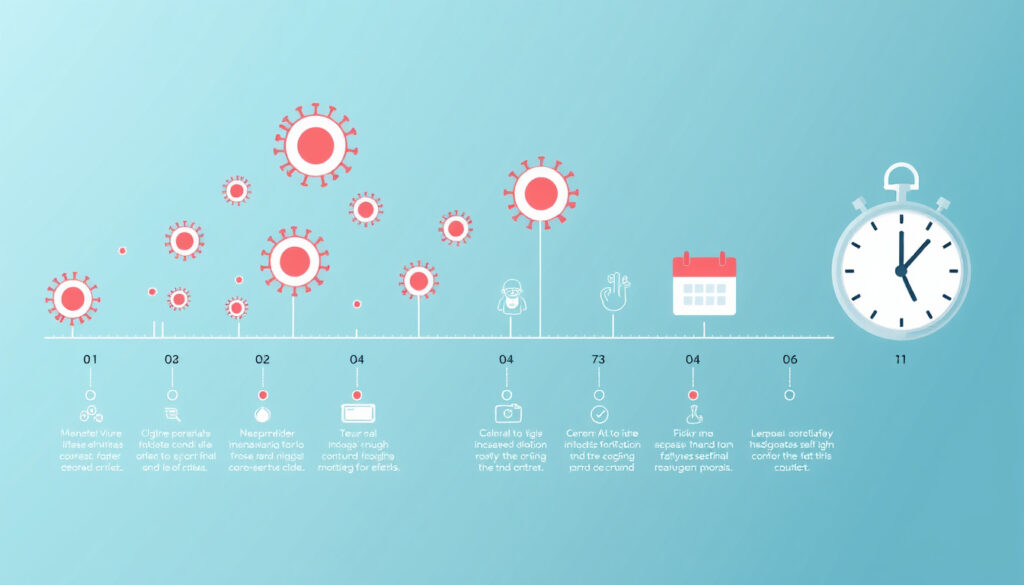
Typical symptom timeline
- Incubation period: 2 to 14 days after exposure, with most cases showing symptoms around day 4–6 (CDC)
- Day 1–2 of symptoms: fever, cough, fatigue appear; contagious peak begins (CDC Yellow Book)
- Day 3–5: often the worst — respiratory symptoms may intensify; fever may peak (WHO guidelines)
- Day 6–10: symptoms start improving for mild cases; some contagious risk remains
- Week 4+: if symptoms persist beyond 4 weeks, this may indicate long COVID (WHO)
Day 3 to 5 as peak severity window
- Respiratory symptoms most intense between day 3 and day 5 for most patients (CDC Clinical Presentation)
- Shortness of breath may worsen during this window, especially in older adults or those with underlying conditions
- If chest pain, severe shortness of breath, or confusion develops, seek emergency care immediately
When symptoms may linger (long COVID signs)
- Long COVID defined as symptoms persisting beyond 4 weeks from onset (WHO)
- Most common lingering symptoms: fatigue, brain fog, shortness of breath, and joint pain
- Affects roughly 10–20% of COVID patients, according to current estimates (CDC)
COVID symptom timeline
- Day 0 (exposure): Virus enters body; no symptoms yet
- Day 2–14: Incubation period; symptoms may appear at any point
- Day 1–2 of symptoms: Fever, cough, fatigue typical; contagious peak begins (CDC Yellow Book)
- Day 3–5: Often the worst days; respiratory symptoms intensify (WHO)
- Day 6–10: Symptoms improve; some contagious risk persists
- Day 5 (from symptom onset): Isolation can end if fever-free for 24 hours and symptoms improving (CDC)
- Week 4+: Long COVID possible if symptoms persist beyond 4 weeks (WHO)
Am I still contagious with COVID after 5 days?
CDC and HSE isolation guidelines
- CDC (U.S.): Most people are contagious 1–2 days before symptoms and the first 2–3 days after symptoms start (CDC Yellow Book)
- CDC (U.S.): Isolation for at least 5 days after symptom onset; mask through day 10 when around others (CDC isolation guidance)
- HSE (Ireland): Avoid contact for 5 days after symptoms start; can return to normal activities if no fever for 48 hours and feeling well
- NHS (UK): Most people are no longer infectious after 5 days, but some may remain infectious for up to 10 days (NHS)
Factors that affect contagious period
- Immunocompromised individuals may shed virus longer — up to 20 days in some cases (CDC Clinical Presentation)
- Vaccination status: vaccinated people generally have shorter infectious windows
- Symptom severity: mild cases tend to be contagious for fewer days than moderate or severe cases
How to know you are no longer contagious
- No longer contagious if symptoms are improving AND you have been fever-free for 24 hours without fever-reducing medication (CDC)
- Two negative rapid antigen tests taken 24–48 hours apart is a strong indicator
- If symptoms persist beyond 10 days, consult your healthcare provider
For people with mild symptoms, the 5-day isolation rule is standard — but about 30% of people still test positive on rapid tests at day 5. If you can, test before ending isolation.
The catch here is that relying on the 5-day rule alone can still put others at risk, especially in shared workplaces or homes.
Can I go back to work after 3 days of COVID?
Return-to-work criteria from health authorities
- CDC (U.S.): At least 5 days of isolation recommended; return after 5 only if no fever and symptoms are improving (CDC isolation guidance)
- HSE (Ireland): Stay home for 5 days; can return if no fever for 48 hours and feeling well
- NHS (UK): Avoid contact with others for 5 days; can return after 5 if no fever and symptoms are improving (NHS)
- UK Government guidance: Some people may be infectious for up to 10 days from the start of infection (UK Government)
Risk of spreading at workplaces
- Returning to work on day 3 means you’re likely still in the contagious peak window (CDC Yellow Book)
- Even if symptoms are mild, you can still spread the virus to colleagues, especially in shared indoor spaces
- If returning early is unavoidable, wear a well-fitting mask (N95 or equivalent) and maintain distance from others
Variation by country (US vs UK vs Ireland)
- US (CDC): Minimum 5 days isolation, then mask through day 10
- UK (NHS/UK Government): Stay home 5 days; some may be infectious up to 10 days (UK Government)
- Ireland (HSE): 5 days isolation; can return if fever-free for 48 hours and feeling well
How serious is the new COVID strain and which organ does it affect most?
Current variant severity levels
- Newer variants (Omicron sublineages like JN.1 and its descendants) generally cause milder disease than earlier strains, but are highly transmissible (WHO fact sheet, Nov 2025)
- Hospitalization rates for current variants are approximately 2–4% of reported cases
- Severe disease risk remains higher for unvaccinated individuals, older adults (65+), and those with comorbidities (CDC Clinical Presentation)
Primary organ involvement (lungs, heart, brain)
- Lungs (respiratory system): COVID primarily attacks the respiratory system, causing pneumonia, acute respiratory distress, and inflammation (CDC Clinical Presentation)
- Heart: COVID can cause myocarditis (inflammation of the heart muscle), arrhythmias, and blood clotting issues (WHO)
- Brain: Neurological effects include brain fog, headache, dizziness, and in severe cases, stroke or encephalopathy (CDC)
- Kidneys: Acute kidney injury can occur in severe COVID cases, especially in hospitalized patients (WHO)
Who is at high risk
- Unvaccinated individuals face significantly higher risk of hospitalization and severe outcomes (CDC Clinical Presentation)
- Adults aged 65+ have the highest risk of severe disease and death
- People with chronic conditions (diabetes, heart disease, lung disease, obesity, immunosuppression) are at elevated risk
For a healthy, vaccinated person under 50, the new strains feel like a bad cold. But for an unvaccinated older adult or someone with diabetes, the risk of lung inflammation and organ damage is real and serious.
What this means for public health: the focus has shifted from population-wide lockdowns to protecting high-risk groups and managing long-term complications.
What’s confirmed vs what’s still unclear about COVID symptoms
Confirmed facts
- Fever, cough, and fatigue are the most consistently reported symptoms across all major health authorities (CDC, NHS, WHO)
- Loss of taste or smell remains a distinguishing marker for COVID vs common cold (NHS)
- Most contagious 1–2 days before symptoms and the first 3 days after onset (CDC Yellow Book)
- Isolation for 5 days is the standard recommendation across the US, UK, and Ireland
What’s still unclear
- Exact duration of contagiousness for current Omicron sublineages — most data still relies on earlier variant studies (CDC Clinical Presentation)
- Whether “3 new symptoms” is a fixed set or variant-dependent (WHO)
- Risk of severe illness with newest sublineages for the vaccinated population remains under study (CDC Clinical Presentation)
- Exact percentage of asymptomatic cases for the latest Omicron sublineages (WHO)
“People with COVID-19 can be infectious from 1–2 days before symptoms begin and up to 8–10 days after symptoms begin.”
— CDC Yellow Book (U.S. travel health reference)
“Many people will no longer be infectious to others after 5 days, but can be infectious for up to 10 days.”
— NHS (UK national health service guidance)
“People with COVID-19 are usually infectious from 48 hours before symptoms appear and until symptoms are gone, which can be up to 10 days.”
— Australian Government health information (national public health authority)
“Newer variants generally cause milder disease but are highly transmissible.”
— WHO fact sheet (global health authority, Nov 2025)
The bottom line for anyone waking up with a scratchy throat or a fever in 2025: test early, isolate for at least 5 days, and don’t assume it’s “just a cold” until a test confirms it. For healthcare systems, the shift toward milder but more transmissible variants means the real burden now falls on protecting vulnerable populations and managing long COVID. For the average person, the choice is clear: keep rapid tests at home, know the day-by-day symptom pattern, and follow your country’s isolation guidelines — or risk spreading it to someone who could end up in hospital.
cdc.gov, cdc.gov, collingwoodsurgery.nhs.uk, collingwoodsurgery.nhs.uk, goodrx.com, pfizerforall.com, medicalnewstoday.com
Frequently asked questions
Can COVID symptoms appear suddenly?
Yes. Many people report waking up with fever, cough, or fatigue that came on within hours, not days. The incubation period is 2–14 days, but once symptoms start, they often escalate quickly.
Is a runny nose a sign of COVID or a cold?
It can be either. With Omicron sublineages, runny nose is a common COVID symptom. The best way to tell is a rapid antigen test — if negative, it’s likely a cold.
Should I go to the hospital for COVID symptoms?
Most mild cases can be managed at home with rest, hydration, and over-the-counter medications. Go to the hospital if you have severe shortness of breath, chest pain, confusion, or a high fever that won’t come down.
Can I have COVID without a fever?
Yes. Fever is common but not universal. Some people, especially those who are vaccinated or have mild cases, may have only a sore throat, runny nose, or fatigue without a temperature.
Can children show different COVID symptoms?
Children often have milder symptoms — runny nose, cough, fever — but can also develop a rare inflammatory condition called MIS-C. Monitor for fever lasting more than 3 days, rash, or red eyes.
How long after exposure do you test positive?
Most people test positive 3–5 days after exposure, but it can take up to 14 days. Test immediately if you have symptoms; if exposed but symptom-free, test on day 3 and again on day 5.
Do COVID symptoms vary by vaccine status?
Yes. Vaccinated people tend to have milder, shorter symptoms and a lower chance of hospitalization. Unvaccinated individuals are more likely to experience the full range of symptoms including fever, severe cough, and shortness of breath.
More related posts
 Jeon Jong-seo – Age, Height, Movies, Boyfriend
 49ers vs Eagles Match Player Stats: Wild Card 2026 Box Score
 Best Federal Inmate Text App: 4 Services Compared
 Florida Minimum Wage 2026: Current $14 Rate & $15 Jump
 Daylight Savings Time 2024: Clocks, Ireland, and Sleep
 Taron Egerton Movies List: Full Filmography & 2026 Films
 AT&T Customer Service Number 24/7: Official Support Lines
 Super Smash Bros. Ultimate Worth It 2026? Price & Roster