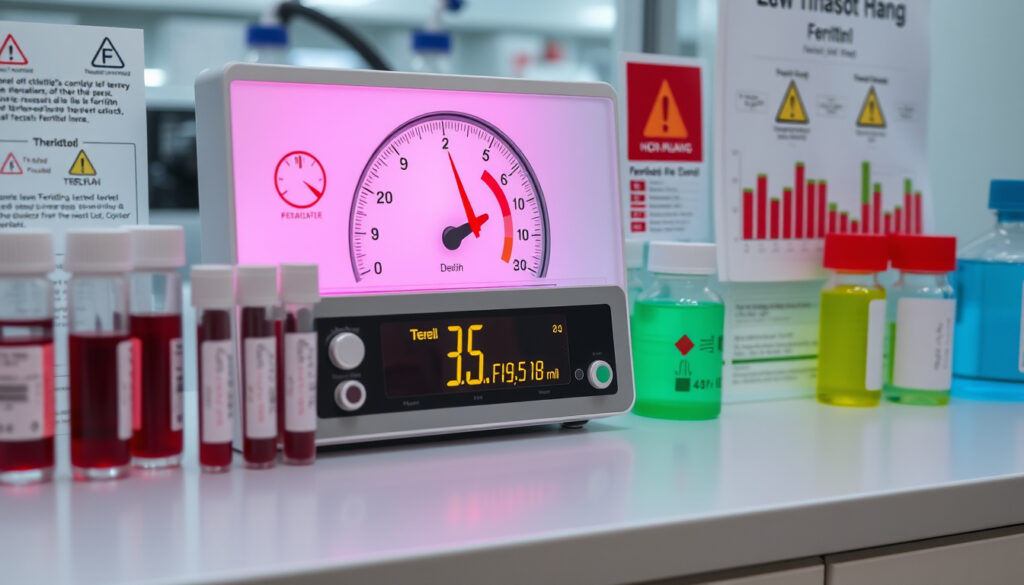
What Is Dangerously Low Ferritin Levels – Thresholds, Symptoms, Risks
Ferritin serves as the body’s primary iron storage protein, acting as a critical indicator of iron reserves in blood and tissues. When ferritin levels drop below established thresholds, it signals depleted iron stores—one of the earliest markers of iron deficiency that can eventually progress to iron-deficiency anemia if left unaddressed. Understanding what constitutes dangerously low ferritin levels helps individuals recognize when medical evaluation becomes necessary.
Blood tests measuring ferritin provide valuable insight into iron status, though interpreting results requires understanding normal ranges, individual health factors, and the distinction between low ferritin and active anemia. While many people focus on hemoglobin readings, ferritin offers a window into iron stores before more serious complications develop.
What Is a Dangerously Low Ferritin Level?
Ferritin levels represent nanograms per milliliter (ng/mL) or micrograms per liter (µg/L)—units that medical sources use interchangeably. Clinical thresholds establish what constitutes dangerously low ferritin across different populations and health circumstances.
The World Health Organization defines iron deficiency in adults as ferritin below 15 µg/L, with the threshold dropping to below 12 µg/L for children under five years of age. However, practitioners treating exhausted patients report symptoms emerging at ferritin levels between 30 and 37 ng/mL, suggesting that clinical experience sometimes diverges from strict cutoff values. The American Medical Association notes that iron deficiency becomes clinically significant when ferritin falls below 30 µg/L, with severe depletion occurring below 15 ng/mL.
No universal “dangerous” cutoff exists in medical literature. Instead, clinicians assess risk based on whether symptoms accompany low ferritin, whether anemia has developed, and whether underlying causes like internal bleeding require urgent investigation. A ferritin level of 10 ng/mL generally warrants prompt medical attention and treatment consideration, particularly when hemoglobin has also declined.
Mildly low: 15–30 ng/mL — may cause fatigue without anemia. Low: below 15 ng/mL — indicates iron deficiency. Severe: below 10–12 ng/mL — requires treatment and investigation. These figures represent general guidelines; laboratory reference ranges vary.
Ferritin behaves as an acute-phase reactant, rising during inflammation or infection. In chronic inflammatory conditions, iron deficiency may be present even when ferritin remains between 30–100 µg/L. Healthcare providers may adjust thresholds using transferrin saturation (TSAT) below 20% to confirm deficiency in these cases, according to peer-reviewed guidance published in the National Institutes of Health database.
Low ferritin alone rarely constitutes a medical emergency. However, certain symptoms accompanying depleted iron stores demand urgent evaluation: black or bloody stools, vomiting blood, severe shortness of breath, chest pain, or fainting. These signs may indicate internal bleeding, particularly gastrointestinal hemorrhage, and require immediate medical attention regardless of ferritin readings.
Normal Ferritin Levels by Age and Gender
Reference ranges for ferritin differ substantially between demographic groups, reflecting variations in body size, hormone profiles, and physiological demands. Most laboratories provide specific ranges tailored to their testing methods, making it essential to review results using the reference values printed on individual lab reports.
Adult Ferritin Ranges
Adult males typically maintain higher ferritin levels than females due to menstrual blood loss in women. For adult males, the normal ferritin range spans approximately 24–340 µg/L, with some laboratories reporting upper limits reaching 500 ng/mL depending on the assay method used. Adult females generally fall within an 11–310 µg/L range, with many labs specifying 15–205 ng/mL as the conventional reference range.
Children and Adolescent Ranges
Children aged six months to fifteen years show ferritin levels between 12–140 ng/mL under normal circumstances. The World Health Organization considers ferritin below 12 µg/L as low for children under five years of age, reflecting their smaller blood volume and higher proportional iron requirements during rapid growth phases.
Pregnancy Considerations
Pregnancy significantly alters iron dynamics, with increased maternal blood volume and fetal iron transfer depleting maternal stores. While specific pregnancy thresholds vary, healthcare providers monitor ferritin alongside hemoglobin levels, with anemia diagnosed when hemoglobin falls below 120 g/L in conjunction with depleted iron stores. Pregnant individuals require closer surveillance of iron status throughout gestation.
| Population Group | Normal Ferritin Range (ng/mL) | Low Threshold |
|---|---|---|
| Adult Males | 24–340 | Below 30 |
| Adult Females | 11–310 (often 15–205) | Below 15–30 |
| Children (6 months–15 years) | 12–140 | Below 12 |
| Children Under 5 | Varies | Below 12 (WHO) |
These values represent general clinical guidelines. Individual laboratories establish their own reference ranges based on tested populations and measurement techniques. Patients should always interpret results in consultation with their healthcare provider, who can account for personal health factors that influence what constitutes normal ferritin for any given individual.
Symptoms and Risks of Low Ferritin Levels
Ferritin depletion produces effects that often develop gradually, making symptoms easy to dismiss as ordinary fatigue or stress. Recognizing the progression from mild deficiency to more serious complications helps individuals decide when to pursue testing and treatment.
Early-Stage Iron Deficiency Without Anemia
Before hemoglobin declines, low ferritin alone can produce noticeable symptoms. Symptoms of Low Iron often begin with persistent tiredness that does not improve with rest. Brain fog, difficulty concentrating, and reduced exercise tolerance frequently accompany early depletion.
Physical manifestations at this stage include hair thinning or loss, restless legs syndrome (particularly noticeable at night), brittle nails that chip easily, and cold sensitivity in hands and feet. These symptoms occur because iron supports cellular energy production and oxygen transport throughout the body, even before hemoglobin drops to anemia levels.
Progression to Iron-Deficiency Anemia
When iron stores become severely depleted, hemoglobin production declines, resulting in iron-deficiency anemia. This stage introduces additional symptoms including noticeably paler skin (particularly visible in the inner eyelids, nail beds, and gums), rapid or irregular heartbeat as the heart works harder to compensate for reduced oxygen-carrying capacity, a swollen or sore tongue, and diminished appetite.
Research has documented associations between severely low ferritin and conditions including restless legs syndrome, concentration difficulties resembling ADHD symptoms, and fibromyalgia-like pain patterns. These connections underscore that iron plays roles beyond oxygen transport, affecting neurological function and musculoskeletal health.
Long-Term Risks If Untreated
Prolonged iron deficiency without intervention can compromise immune function, reduce physical and cognitive performance, and increase vulnerability during pregnancy. In men and postmenopausal women, persistently low ferritin warrants investigation for hidden gastrointestinal bleeding, which may indicate ulcers, colorectal cancer, or other conditions requiring medical management.
Causes, Diagnosis, and Treatment for Low Ferritin
Understanding why ferritin levels decline helps guide appropriate intervention. Multiple factors can deplete iron stores, and addressing the underlying cause forms an essential component of any treatment approach.
Common Causes of Ferritin Depletion
Blood loss represents the most frequent cause of low ferritin in adults. For women of reproductive age, heavy menstrual bleeding accounts for significant iron depletion over time. Gastrointestinal bleeding—resulting from ulcers, inflammatory bowel disease, regular NSAID use, or colorectal cancer—can cause substantial iron loss that accumulates gradually.
Dietary factors also contribute to ferritin depletion. Inadequate intake of iron-rich foods, particularly heme iron from animal sources, can lead to gradual store depletion. Certain absorption disorders, including celiac disease and gastric bypass surgery, impair the intestine’s ability to absorb iron even when dietary intake proves sufficient.
Increased physiological demand outpaces iron intake during pregnancy and breastfeeding. Chronic kidney disease similarly elevates iron requirements as the kidneys produce less erythropoietin, the hormone that stimulates red blood cell production.
Interpreting Ferritin Test Results
Ferritin testing alone provides incomplete information. Healthcare providers typically order ferritin alongside hemoglobin, transferrin saturation (TSAT), and sometimes serum iron measurements to build a complete picture of iron status. Ferritin serves as the most sensitive early marker of iron deficiency, often showing depletion before other values change.
Results fall into distinct patterns: low ferritin combined with low hemoglobin indicates iron-deficiency anemia requiring treatment. Low ferritin with normal hemoglobin suggests iron deficiency without anemia—a stage where intervention may prevent progression to anemia. Normal ferritin with abnormal other values may point toward inflammation, chronic disease anemia, or other conditions affecting iron metabolism rather than true deficiency.
Follow-up testing after initiating treatment helps confirm that ferritin levels are recovering appropriately. Treatment response typically manifests within weeks, though full repletion of iron stores may require several months of consistent supplementation or dietary changes.
Treatment Approaches
Treatment strategies address both the depleted iron stores and any underlying cause of depletion. Dietary modifications increase iron intake through foods including lean red meat, poultry, fish, lentils, beans, spinach, and iron-fortified cereals. Vitamin C enhances non-heme iron absorption, making citrus fruits, bell peppers, and strawberries valuable additions to iron-rich meals.
Oral iron supplements provide concentrated doses when dietary changes prove insufficient. Standard supplementation delivers 150–200 milligrams of elemental iron daily, typically taken in divided doses. Common formulations include ferrous sulfate, ferrous gluconate, and ferrous fumarate. Oral iron commonly causes constipation or gastrointestinal discomfort, which some individuals find intolerable.
Intravenous iron infusion becomes necessary when oral supplements fail to raise ferritin adequately, when absorption impairment exists, when gastrointestinal intolerance prevents oral intake, or when significant ongoing losses require faster repletion than oral supplements can achieve. Pregnant individuals with severe depletion and those with chronic kidney disease frequently receive intravenous iron as part of their treatment protocols.
Individualized Thresholds: What Ranges Mean for You
Fixed numerical thresholds provide useful guidance, yet individual circumstances influence what ferritin level warrants concern. Laboratory reference ranges themselves vary between facilities, reflecting differences in testing equipment and the populations used to establish normal values.
Age affects interpretation significantly. Children have different thresholds than adults, while older adults may exhibit altered ferritin patterns due to chronic conditions or reduced dietary intake. Sex differences persist throughout adulthood, with women generally requiring lower ferritin levels to maintain adequate iron stores due to menstrual losses.
Underlying health conditions complicate assessment further. Inflammation from chronic diseases, infections, or autoimmune conditions elevates ferritin as part of the immune response, potentially masking true iron deficiency. Kidney function, liver health, and thyroid status all influence how the body processes and stores iron.
Rather than focusing solely on whether a ferritin value falls below a specific number, consider the full clinical picture. Symptoms, medical history, other blood test results, and individual risk factors all inform whether low ferritin requires intervention. A value that falls within normal range for one person may represent significant depletion for another.
Why Ferritin Matters: The Role of Iron Storage in Health
Iron serves as an essential component of hemoglobin, the protein in red blood cells that carries oxygen from the lungs to tissues throughout the body. Ferritin acts as the cellular warehouse for this critical mineral, storing iron in a form that remains accessible when the body needs to produce new hemoglobin, muscle myoglobin, or enzyme cofactors.
Without adequate ferritin stores, the body cannot maintain sufficient iron availability for these vital functions. Tissues with high metabolic demands—muscles, brain, immune cells—feel the impact first, producing the fatigue, cognitive difficulties, and weakened immunity commonly reported with depleted stores.
The relationship between ferritin and health outcomes extends beyond anemia. Research continues exploring connections between iron status and conditions ranging from heart failure to cognitive decline, suggesting that optimal ferritin levels contribute to overall wellbeing far beyond preventing one specific deficiency disease.
Key Takeaways on Ferritin Thresholds
Determining what constitutes a dangerously low ferritin level requires context beyond single numbers. General clinical thresholds—below 15 µg/L according to WHO standards, below 30 µg/L in broader practice—provide starting points for assessment, but individual health status, symptoms, and additional laboratory findings guide clinical decisions.
Ferritin testing offers one of the earliest opportunities to identify iron deficiency before anemia develops. Recognizing symptoms like unexplained fatigue, restless legs, or hair changes and linking these to potential iron depletion empowers individuals to seek testing before more serious complications emerge. What Blood Type Is the Universal Donor relates to blood health topics that share laboratory evaluation approaches with ferritin assessment.
Treatment effectively restores ferritin levels in most cases, whether through dietary changes, oral supplementation, or intravenous iron administration. Identifying and addressing the underlying cause—particularly ruling out internal bleeding in appropriate populations—remains essential for preventing recurrence. Anyone concerned about their ferritin levels should consult a healthcare provider who can interpret results within the context of their complete medical history.
Frequently Asked Questions
Can low ferritin occur without anemia?
Yes. Iron deficiency progresses through stages, with ferritin depletion occurring before hemoglobin declines. Low ferritin with normal hemoglobin indicates iron deficiency without anemia—a stage where treatment may prevent progression to full anemia.
Can low ferritin cause hair loss?
Research confirms that low ferritin contributes to hair thinning and hair loss, particularly in women. Iron supports cellular division and growth in hair follicles, making adequate stores important for maintaining normal hair cycles.
Is a ferritin level of 10 dangerous?
A ferritin level of 10 ng/mL falls below established deficiency thresholds and warrants medical attention. Whether it represents an emergency depends on accompanying symptoms, hemoglobin levels, and the presence of signs suggesting internal bleeding. A healthcare provider can determine appropriate next steps.
What ferritin level requires iron infusion?
No single threshold mandates iron infusion. Healthcare providers consider IV iron when oral supplements fail to raise ferritin, when absorption impairment exists, when gastrointestinal intolerance prevents oral intake, or when severe deficiency requires rapid repletion during pregnancy or chronic kidney disease treatment.
How quickly can ferritin levels increase with treatment?
Hemoglobin typically improves within weeks of starting iron supplementation. Ferritin recovery takes longer—often several months—to fully replenish depleted stores. Healthcare providers usually recommend follow-up testing 2–4 weeks after starting treatment to assess initial response.
What is considered critically low ferritin?
Ferritin below 10–15 ng/mL generally represents severe depletion. However, the term “critically low” depends on clinical context. Some severely depleted individuals remain asymptomatic while others experience significant symptoms. Medical evaluation determines whether critically low ferritin requires urgent intervention.
Should men and postmenopausal women with low ferritin be concerned about internal bleeding?
Yes. In men and postmenopausal women, low ferritin without an obvious cause warrants gastrointestinal evaluation to rule out hidden bleeding from ulcers, polyps, or other conditions. Menstrual blood loss no longer provides an explanation in this population, making investigation essential.
More related posts
 Wheel of Time Season 4: Cancellation, Pickup, Release Date
 What Is an NPI Number? Complete Guide
 U.S. Economy News Today: Record Spending vs Recession Risks
 Rings of Power Season 3: News, Lore Questions & Renewal Status
 Games Coming Out in 2025: Release Dates & Schedule
 When They See Us – True Story of Central Park Five
 A Remarkable Place to Die Season 2: Renewed, Episodes & Stream