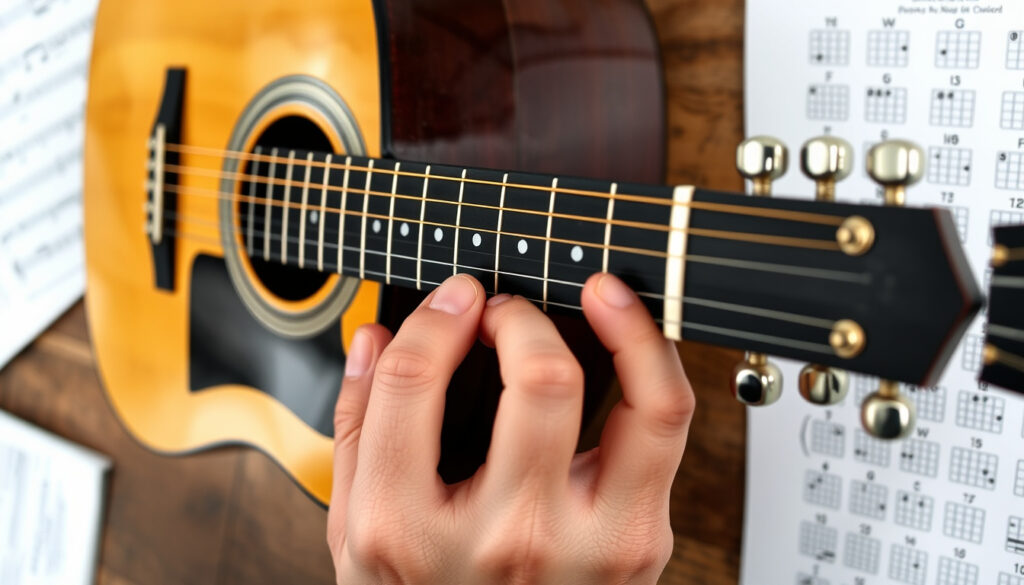
Guitar Chords for Beginners: 5 Basic Chords, Easy Songs & Tips
Pick up a guitar for the first time and you’ll probably land on the same few open chords: C, A, G, E, D. They’re the foundation of thousands of songs, yet many newcomers worry they need dozens of shapes to get started — the truth is, with just four or five of these basic grips, you can play everything from folk ballads to pop hits.
Basic chord set size: 5 (C, A, G, E, D) · Essential chord set (Justin Guitar): 8 (C, A, G, E, D, Am, Em, Dm) · Recognized ‘forbidden chord’: The tritone interval (diminished fifth)
Quick snapshot
- G, C, D, A, E are standard open chords (Guitar Tricks)
- The I‑V‑vi‑IV progression appears in hundreds of pop songs (School of Rock)
- The tritone was historically avoided in medieval music (Wikipedia)
- Which exact five chords are universally “basic” depends on the teacher
- Whether the forbidden chord myth is historically accurate is debated
- Most beginners can switch between open chords confidently after 4‑6 weeks of daily practice (Justin Guitar)
- Once basic open chords are secure, move on to barre chords and strumming patterns
- Focus on song‑based practice to maintain motivation
Here are the key statistics for beginner guitar chords:
| Fact | Detail |
|---|---|
| Number of basic chords | 5 (C, A, G, E, D) |
| Number of essential chords (Justin Guitar) | 8 (C, A, G, E, D, Am, Em, Dm) |
| Most common beginner song | Wonderwall by Oasis (Em, G, D, A, C) |
| Forbidden chord interval | Tritone (diminished fifth) |
| Ed Sheeran's go‑to progression | I‑V‑vi‑IV (e.g. G‑D‑Em‑C) |
What are the 5 basic guitar chords?
The most durable starting set among teachers is the C‑A‑G‑E‑D group – often called the CAGED system. Guitar Tricks (online lesson platform) notes that these five open chords are the most common starting point because they use only first‑position frets and open strings.
The G chord
- Fingering: 320003 (standard). Place middle finger on fret 3 of low E, index on fret 2 of A, ring on fret 3 of high E.
- Guitar Tricks shows this as the full barre‑free version.
The C chord
- Fingering: 032010. Index on fret 1 of B, middle on fret 2 of D, ring on fret 3 of A.
- School of Rock groups it as part of the CAGED set.
The D chord
- Fingering: XX0232. Index on fret 2 of G, ring on fret 3 of B, middle on fret 2 of high E.
- Often taught right after A and E.
The A chord
- Fingering: X02220. Index, middle, ring bar the second fret of D, G, B.
- One of the easiest for a clean sound.
The E chord
- Fingering: 022100. Index on fret 1 of G, middle on fret 2 of A, ring on fret 2 of D.
- Often the first chord many teachers start with.
The pattern is clear: start with these five shapes and you already have the core vocabulary for countless songs.
What is the easiest song to play on guitar chords?
Three chords – G, C, D – are behind dozens of easy songs. Applied Guitar Theory (guitar education site) compiled 52 easy songs that use only open‑position chords.
Songs using only 3 chords
- “Horse with No Name” (America) – Em, D6, Em, A (two chords in practice).
- “Bad Moon Rising” (Creedence Clearwater Revival) – D, A, G.
- Source: Sound Guitar Lessons (free lesson site) includes these in its beginner songlist.
Songs using 4 chords
- “Let It Be” (The Beatles) – C, G, Am, F.
- “With or Without You” (U2) – D, A, Bm, G.
- Modern Guitar Tuition lists C, G, D, Em, Am as its basic set for four‑chord tunes.
Songs using the 5 basic chords
- “Wonderwall” (Oasis) – Em, G, D, A, C (all five plus a minor).
- Lauren Bateman (online guitar instructor) recommends her beginner song pack that uses only A, Am, C, D, Dm, E, Em, F, F#m, G.
What this means: even a minimal chord vocabulary unlocks a huge repertoire.
What is the forbidden chord on a guitar?
Music history has a dark legend: the tritone interval – a diminished fifth – was supposedly banned in medieval church music because of its dissonant sound. This interval, spanning three whole tones (hence the name), appears in devil‑may‑care rock riffs and jazz lines today.
- Historical context: The Catholic Church reportedly prohibited the tritone in Gregorian chant because it was considered “the devil’s interval.”
- Modern usage: It’s now a staple in heavy metal and jazz, used freely by artists from Black Sabbath to The Simpsons theme.
The chord that was once feared is now a tool for creative tension. For beginners, it’s nothing to avoid – just another interval to recognise.
The implication: historical taboos don’t limit modern playing.
What are Ed Sheeran 4 chords?
Ed Sheeran famously builds songs around the I‑V‑vi‑IV progression – in the key of G that’s G‑D‑Em‑C. School of Rock (music education franchise) notes that this exact sequence appears in hundreds of pop songs across decades.
The I‑V‑vi‑IV progression
- Roman numerals: I (tonic), V (dominant), vi (relative minor), IV (subdominant).
- Open chord shapes: G (320003), D (XX0232), Em (022000), C (032010).
Songs that use it
- “Perfect” (Ed Sheeran) – G, D, Em, C.
- “Let It Be” (The Beatles) – C, G, Am, F (vi‑IV‑I‑V variant).
- ChordGenome (online chord encyclopedia) says this progression accounts for the majority of radio hits.
How to transpose for different keys
- If the song is in C major: I=C, V=G, vi=Am, IV=F.
- In D major: I=D, V=A, vi=Bm, IV=G.
- Learn the shapes, then move them up or down the fretboard using a capo.
The pattern holds: one progression, countless songs.
What are the 4 chords in every pop song?
The I‑V‑vi‑IV progression is the most common chord sequence in Western pop music. StringKick (online guitar school) lists it as the foundation of beginner songwriting. But it’s not the only pattern – variations like I‑V‑ii‑IV and vi‑IV‑I‑V are also extremely frequent.
- Examples: “No Woman No Cry” (Bob Marley) – C, G, Am, F; “Someone Like You” (Adele) – A, E, F#m, D.
- Modern Guitar Tuition (UK based lesson site) provides chord charts that rely almost exclusively on these four chords.
Other common progressions
- I‑V‑ii‑IV (e.g. “Sweet Home Alabama” in D: D‑C‑G‑D).
- vi‑IV‑I‑V (e.g. “Africa” by Toto: Am‑F‑C‑G).
- I‑V‑vi‑IV (the pop‑punk staple).
The catch: you only need to learn a few patterns to cover decades of hits.
Can I teach myself to play guitar?
Yes – with discipline and the right resources. Justin Guitar (renowned online teacher) built a whole curriculum around self‑learning. Lauren Bateman (professional instructor) says that consistent 15‑minute daily practice is more effective than long weekly sessions.
Self‑learning resources
- YouTube channels: Justin Guitar, Marty Music, Lauren Bateman.
- Apps: Yousician, Fender Play, Ultimate Guitar Tabs.
- Structured courses: School of Rock online, Berklee Online.
Pros and cons
Upsides
- Learn at your own pace
- Free or low‑cost
- Huge library of online tabs and videos
Downsides
- No live feedback on technique
- Risk of developing bad habits (wrist tension, poor posture)
- Missing structured progression may slow progress
Recommended practice routine
-
Step 1: Learn E, A, D
- Spend 3‑5 days on each. Press down firmly just behind the fret.
- Strum each string individually to check for buzzing.
- ChordGenome also recommends this order for fastest pickup.
-
Step 2: Add minor chords Em, Am, Dm
- Em is the easiest barre‑free minor (022000). Am is X02210.
- Practice switching from Am to Em – they share the same ring‑finger position.
- Guitar Tricks fingerings: Am=X02210, Dm=XX0231.
-
Step 3: Tackle G and C
- G requires wider finger stretch – keep thumb relaxed on the back of the neck.
- C is tricky for the wrist – drop the guitar neck higher into your palm.
- Modern Guitar Tuition includes both in its basic open‑position set.
-
Step 4: Practice common progressions
- G‑D‑Em‑C (Ed Sheeran loop): strum up to four beats per chord.
- Use a metronome app. Start at 60 BPM.
-
Step 5: Play songs
- “Horse with No Name” (Em‑D6).
- “Bad Moon Rising” (D‑A‑G).
- “Wonderwall” (Em‑G‑D‑A‑C).
- Sound Guitar Lessons provides 10 easy songs with chord diagrams.
A self‑taught player who sticks to a structured routine will be playing full songs inside two months. Without live feedback, recording your practice and comparing it to tutorials is the next best thing.
The takeaway: consistency beats intensity for building muscle memory.
Step by step: Learn your first guitar chords
Based on StringKick’s recommended order – E, A, D first – and the experience of dozens of teachers, here is a five‑step plan to go from zero to playing songs.
-
Step 1: Learn E, A, D
- Spend 3‑5 days on each. Press down firmly just behind the fret.
- Strum each string individually to check for buzzing.
- ChordGenome also recommends this order for fastest pickup.
-
Step 2: Add minor chords Em, Am, Dm
- Em is the easiest barre‑free minor (022000). Am is X02210.
- Practice switching from Am to Em – they share the same ring‑finger position.
- Guitar Tricks fingerings: Am=X02210, Dm=XX0231.
-
Step 3: Tackle G and C
- G requires wider finger stretch – keep thumb relaxed on the back of the neck.
- C is tricky for the wrist – drop the guitar neck higher into your palm.
- Modern Guitar Tuition includes both in its basic open‑position set.
-
Step 4: Practice common progressions
- G‑D‑Em‑C (Ed Sheeran loop): strum up to four beats per chord.
- Use a metronome app. Start at 60 BPM.
-
Step 5: Play songs
- “Horse with No Name” (Em‑D6).
- “Bad Moon Rising” (D‑A‑G).
- “Wonderwall” (Em‑G‑D‑A‑C).
- Sound Guitar Lessons provides 10 easy songs with chord diagrams.
Clarity check: what’s confirmed and what’s not
From the certainty‑uncertainty plan, two clusters stand out:
Confirmed facts
- G, C, D, A, E are standard open chords (Guitar Tricks)
- I‑V‑vi‑IV appears in hundreds of pop songs (School of Rock)
- The tritone was historically avoided in medieval sacred music (Wikipedia)
What’s unclear
- Which exact five chords are called “basic” differs between teachers – some include Am, others don’t.
- Whether the forbidden chord myth is historically accurate is debated; the ban may have been largely informal.
Perspectives from teachers
“Learn essential beginner guitar chords like the G chord & other easy guitar music chords to start playing popular songs.”
— School of Rock (schoolofrock.com)
“The 8 Essential Beginner Chord Grips”
— Justin Guitar (justinguitar.com)
“Start with E, A, D – then add Em, Am, Dm – finally G and C.”
— StringKick (stringkick.com)
“52 easy songs that can be played largely with basic open chords.”
— Applied Guitar Theory (appliedguitartheory.com)
Final takeaway
Five open chords – C, A, G, E, D – are the skeleton key to guitar. They unlock thousands of songs, from folk to pop to rock. The forbidden chord myth is a fascinating piece of music lore, but it has no bearing on how you learn. For the self‑taught player, the clear choice is to start with those five, add the minor shapes, then spend 10 minutes a day switching between them. Two months from now you’ll be playing full songs, and the barrier that once seemed high will feel like a step stool.
chordgenome.com, truefire.com, youtube.com, youtube.com, youtube.com, reddit.com, laurenbateman.com
For a more detailed reference, check out this complete beginners chord guide which includes a free PDF chart.
Frequently asked questions
What are the easiest chords to play on guitar?
Open chords like E major, A major, and D major are the easiest because they use only two or three fingers and no barre. Minor chords (Em, Am) are also simple for beginners.
How do I switch chords quickly?
Practice the “two‑chord drill”: pick two chords (e.g., G and C), set a metronome at 50 BPM, and switch on every beat. Gradually increase tempo. Keep your fretting hand relaxed.
Do I need a guitar pick to play chords?
No – fingerpicking works fine. But many beginners find a medium‑gauge pick (0.73mm) helps produce a consistent strum. Experiment both ways.
What is a barre chord and should I learn it as a beginner?
A barre chord uses one finger to press down all six strings at once (e.g., F major bar). Wait until open chords feel comfortable (about 2–3 months) before tackling barre shapes.
Why do my fingers hurt when playing guitar?
Normal for the first 2–3 weeks. The skin on your fingertips needs to callus. Keep practice sessions short (10–15 min) and take breaks. Avoid pressing too hard – let the fret do the work.
How often should I practice guitar chords?
Daily 15‑minute sessions are far more effective than a two‑hour weekly session. Consistency builds muscle memory faster.
What is the difference between major and minor chords?
Major chords sound bright / happy; minor chords sound sad / dark. The difference is the third note of the scale – a major third (4 semitones) vs. a minor third (3 semitones). Em and E sound different because of that one fret shift.
More related posts
 Social Security Checks Delayed May 2025: Payment Schedule
 76ers vs Memphis Grizzlies Player Stats: Overtime Recap
 New Movies to Stream: Top Picks on Netflix, Prime Now
 What Is a Synonym? Definition, Examples, and Types
 Caleb McLaughlin Movies and TV Shows: Full List & Upcoming
 Jeffree Star and Kanye West: Rumors, Feuds, Facts
 Ain’t No Love in Oklahoma: Luke Combs Lyrics & Facts
 Lincoln Lawyer Season 4 Release Date and Cast on Netflix