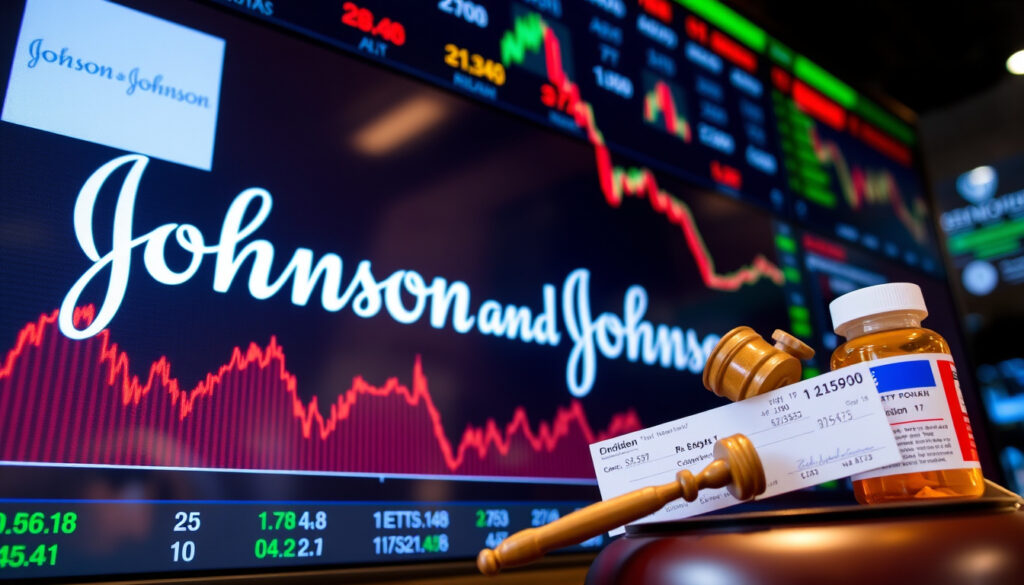
Johnson & Johnson (JNJ) Stock: Price, Dividend & Buy/Sell
There aren’t many stocks you can hand to someone and say “this one raises its dividend every single year” — but Johnson & Johnson has done exactly that for 64 straight years, and analysts still carry a Buy rating on the stock. That streak is the quiet engine behind a lot of JNJ buy-and-hold decisions, so if you’re weighing whether to buy, hold, or sell, this breakdown separates what’s confirmed from what’s still guesswork.
Current price: $258.45 ·
12-month price target: $279.64 ·
Analyst rating: Buy ·
Q2 2026 EPS: $2.90 ·
Dividend streak: 64 years ·
Indicated annual dividend: $5.36
Quick snapshot
- The 2026 dividend increase is the 64th consecutive annual raise (Johnson & Johnson Investor Relations (official company release)).
- 2026 guidance points to roughly $100.5B in reported sales and about $11.53 in adjusted EPS at the midpoint (Last10K (SEC filing summary)).
- Whether the streak continues to 65 years in 2027 — the board decides annually. (Investing.com (analyst consensus tracker))
- Short-term price direction: analyst targets span $190 to $320 (Investing.com (analyst consensus tracker)).
- Q3 2026 dividend of $1.34 per share, payable September 8, 2026 (Business Wire (press release distributor)).
- Watch the April 2027 board decision on the 65th consecutive increase.
- Earnings reports will refresh the analyst target range.
The pattern: the confirmed facts are dividend and guidance data, while nearly everything about the short-term price remains an open question.
JNJ at a glance
Six data points, one pattern: the investment case is built on a durable dividend and a consensus that still expects a higher price.
| Metric | Value |
|---|---|
| Ticker | JNJ |
| Exchange | NYSE |
| Current price | $258.45 |
| 12-month price target | $279.64 |
| Analyst rating | Buy |
| Q2 2026 EPS | $2.90 |
What this means: the stock’s case rests on a stable income stream and analyst upside — not on a high-octane growth narrative.
Why did J&J stock go up?
Part of the answer is momentum from a clean earnings beat. J&J’s second-quarter 2026 earnings came in at $2.90 per share against a $2.85 consensus, and the rating environment has stayed firmly positive since: Investing.com’s 22-analyst consensus rates JNJ a Buy with an average 12-month target of $279.82 (consensus tracker linked in the snapshot above). MarketBeat’s separate tracker shows a Moderate Buy based on 25 analysts, with an average target of $276.22 (MarketBeat (analyst ratings aggregator)).
The 2026 outlook gives analysts another reason to stay constructive: company guidance calls for roughly $100.5 billion in reported sales and about $11.53 in adjusted earnings per share at the midpoint, according to a summary of J&J’s SEC filings (linked in the snapshot above).
The earnings beat matters less than what it signals: guidance in the high single digits gives the dividend room to keep compounding.
Why is Johnson & Johnson stock down Today?
- Broader market selloffs pull down defensive healthcare names too.
- Litigation or policy headlines can move the stock intraday on news rather than fundamentals.
- The consensus target range runs from $190 to $320, so daily swings rarely change the annual picture (consensus tracker linked in the snapshot above).
No single data point explains any one day’s drop. What the record shows is that JNJ has traded through wider swings while the dividend streak kept compounding.
Bottom line: JNJ’s earnings beat and confirmed guidance explain the positive bias; a single-day dip does not change the 12-month consensus data.
How do I invest in Johnson & Johnson?
JNJ trades on the New York Stock Exchange under the ticker JNJ, so buying it works like buying any other US-listed stock: you need a brokerage account, available cash, and a decision on how many shares — or fractional shares — you want.
Can I buy JNJ stock through any brokerage?
- Any US broker with NYSE access can place a JNJ order.
- Fractional shares may be available at some brokers, so you don’t need a full share price to start.
- International access varies by broker; check currency and dividend handling before buying.
The practical move is picking a broker, funding the account, and placing an order for the ticker. The full process, from account to record date, is covered in the step-by-step section.
What this means: JNJ is one of the easiest large-cap stocks to buy; the harder decision is sizing the position, which should match your dividend goals.
Will JNJ raise its dividend in 2026?
That question already has an answer. J&J raised its quarterly dividend from $1.30 to $1.34 per share in 2026, an increase of 3.1%, and the new indicated annual dividend is $5.36 — four quarters at the new rate (Business Wire, linked in the snapshot above). That marks the 64th consecutive year of increases, a streak the company’s investor relations office confirmed in its 2026 announcement.
Recent history shows the pattern:
- FY2024: $4.91 per share paid.
- FY2025: $5.14 per share paid.
- 2026: $5.36 indicated annual dividend.
Payout coverage stays comfortable: the $5.36 indicated payout sits in the mid-40s as a percentage of the 2026 adjusted EPS guidance midpoint of $11.53, with the guidance figures sourced in the specs table below.
A 3.1% raise is a slow drip, not a gusher. At a yield near 2.1%, JNJ rewards patience more than it pays current income — investors who need cash flow now will find richer yields elsewhere.
The pattern: the 2026 raise is confirmed; the 2027 decision, typically announced in April, is the next real test of the 65-year streak.
Should I sell Johnson and Johnson stock?
Selling is a personal decision, but the consensus data tilts toward holding. Investing.com’s consensus rates JNJ Buy with a 12-month average target of $279.82, and MarketBeat’s tracker shows a Moderate Buy with 18 buys, six holds, and one strong buy. MarketBeat’s average target is $276.22, with a high of $320 and a low of $210 (MarketBeat, linked above).
From the recent price near $258.45, those targets imply roughly 7–8% upside — modest but positive. The dividend adds another ~2.1% yield, and the 64-year increase streak lowers the odds of an income cut.
- A guide-down in adjusted EPS below the $11.53 midpoint.
- A paused or reduced dividend increase.
- A fundamental change in your own time horizon or income needs.
The honest risk is the spread: analyst targets run from $190 to $320. A legal or policy headline can push JNJ toward the low end faster than a dividend raise can pull it back.
The trade-off: selling today locks in a 64-year dividend streak at a modest yield and gives up the moderate upside analysts still project; holding means accepting short-term price noise as the cost of income compounding.
Bottom line: For dividend-growth investors, JNJ is a hold with a confirmed 2026 raise and a Buy consensus. For income investors chasing higher yield, it is a weak fit — a 3.1% raise and a ~2.1% yield will not replace paycheck-style dividends.
Which dividend stocks are the best to buy right now?
J&J is a fixture in that conversation because its dividend history is measurable: 64 consecutive increases, a 3.1% raise in 2026, and a payout that grew from $4.91 in fiscal 2024 to $5.14 in fiscal 2025 (company annual report, cited in the specs table below).
What are the top 5 stocks to buy right now?
- Screens that rank stocks by dividend growth, payout ratio, and balance-sheet strength routinely place JNJ near the top of healthcare names.
- A 64-year increase streak and a mid-40s payout ratio are the two metrics that matter most.
For a top-5 list, the right test isn’t “who pays the most” — it’s “who can keep raising.” JNJ passes that test.
What are the top 3 dividend paying stocks?
- Yield alone is a trap: a very high yield often signals a cut is coming.
- JNJ’s ~2.1% yield looks modest until you add the 64-year streak and the 3.1% raise.
Among dividend payers, income durability — not peak yield — separates the top tier.
What are the six dividend stocks to buy and hold forever?
- “Forever” stocks share three traits: multi-decade increase streaks, payout coverage, and recession-resistant demand.
- JNJ checks all three, with the streak at 64 years and the payout near the mid-40s of adjusted earnings.
Three years of JNJ dividend data, one pattern: the raise is steady, moderate, and fully covered by earnings.
| Metric | Fiscal 2025 | 2026 (current) |
|---|---|---|
| Dividends paid per share | $5.14 actual | $5.36 indicated |
| Consecutive increase streak | 63rd year | 64th year |
| Quarterly dividend rate | $1.30 | $1.34 |
The implication: when someone asks which dividend stocks are best, JNJ earns its place through durability, not yield — the opposite of a high-yield trap.
Bottom line: JNJ is a dividend-durability pick, not a yield pick, so it belongs near the top of screens that reward long streaks and low payout ratios — not screens that sort by yield alone.
Dividend history and 2026 guidance
Seven specifications, one takeaway: the dividend is company-funded and growing, and the guidance behind it supports mid-single-digit earnings growth.
| Specification | Detail |
|---|---|
| Ticker | JNJ |
| Exchange | NYSE |
| Sector | Healthcare — pharmaceuticals, medical devices, consumer health |
| 2026 guidance (midpoint) | ~$100.5B reported sales; ~$11.53 adjusted EPS (Last10K (SEC filing summary)) |
| Dividends paid per share | FY2025: $5.14; FY2024: $4.91 (Johnson & Johnson 2025 Annual Report (company filing)) |
| Quarterly / annual dividend | $1.34 per quarter; $5.36 indicated annual rate (Business Wire, linked in the snapshot above) |
| Fiscal 2025 end | December 28, 2025 (Johnson & Johnson 2025 Annual Report, linked above) |
Why this matters: the payout is covered by earnings, the raise is confirmed, and the company has given analysts a concrete guidance base to work from.
JNJ stock: pros and cons
Upsides
- 64 consecutive annual dividend increases, including the 3.1% raise to $1.34 per quarter in 2026 (company release cited above).
- Analyst consensus of Buy or Moderate Buy, with average targets near $277–$280.
- 2026 guidance of ~$100.5B sales and ~$11.53 adjusted EPS at the midpoint (SEC filing summary cited above).
- Dividend coverage near the mid-40s of adjusted EPS guidance.
Downsides
- Yield near 2.1% is modest for income-focused portfolios.
- Dividend growth of 3.1% trails the high-single-digit EPS growth, so price appreciation must do the heavy lifting.
- Price targets range widely, from $190 to $320, so short-term drawdowns can be sharp.
- Litigation and policy headlines can push the stock on news rather than fundamentals.
What this means: JNJ asks investors to trade current yield for dividend longevity, and the analyst data says the market has so far accepted that trade.
How to buy JNJ stock, step by step
- Choose a broker — any US broker with NYSE access can buy JNJ; some also offer fractional shares.
- Fund the account and confirm settlement times.
- Review the consensus: Buy rating with targets near $280, from the sources above.
- Place a market or limit order for ticker JNJ.
- Track the dividend dates — the Q3 2026 dividend of $1.34 per share is payable September 8, 2026.
- Mark the next catalyst: the board’s 2027 dividend decision, typically announced in April.
What this means: buying JNJ takes minutes; managing it takes a calendar, because the dividend schedule matters more than the daily chart.
Key dates and timeline for JNJ
- — Fiscal 2025 close; dividends paid reached $5.14 per share (company annual report, linked above).
- — Q2 2026 dividend payable, with a May 26 record date (company release, linked in the snapshot above).
- Q2 2026 — J&J reported EPS of $2.90, above the $2.85 estimate.
- / — Q3 2026 record and payment dates (Business Wire, linked in the snapshot above).
- April 2027 (expected) — Board decision on the 65th consecutive increase.
- Ongoing — Price moves driven by earnings, litigation headlines, and market conditions.
The pattern: the calendar is built around one recurring event — the April board decision on the next raise — rather than quarterly earnings drama.
Confirmed facts vs. what’s unclear
Confirmed facts
- The 2026 dividend increase is the 64th consecutive annual raise (company release, cited above).
- FY2025 dividends paid were $5.14 per share, up from $4.91 (annual report, cited above).
- The quarterly dividend is $1.34, implying a $5.36 annual rate (Business Wire, cited above).
- Analyst consensus is Buy or Moderate Buy, with targets near $277–$280 (consensus trackers, cited above).
What’s unclear
- Whether the streak reaches 65 years in 2027 — the board decides every year.
- Short-term price direction: the analyst range spans $190 to $320.
- When litigation or policy headlines will next move the stock.
- Whether price targets get revised after the next quarterly earnings report.
The pattern: the confirmed facts are dividend and guidance data; everything about short-term timing sits in the uncertain column.
What the company and analysts say
“Johnson & Johnson Announces 64th Consecutive Year of Dividend Increase, Raises Quarterly Dividend by 3.1%”
Headline, Johnson & Johnson Investor Relations 2026 dividend announcement (linked above)
Johnson & Johnson reported increasing its dividend for the 63rd consecutive year in fiscal 2025.
JNJ carries a Buy consensus, with analyst targets clustered near $280 and a wide low-to-high range of $190 to $320.
Consensus data from Investing.com and MarketBeat, cited above
What this means: the company’s own release, the annual report, and independent trackers align on the durable-income case even where their price ranges differ.
What this means for JNJ investors
JNJ’s investment case splits cleanly in two. The dividend is confirmed, growing, and funded: 64 straight increases, a $5.36 indicated annual rate, and a payout ratio in the mid-40s of adjusted earnings. The price is a consensus estimate with a wide range — $190 to $320 — which is another way of saying the short term is guesswork.
For a dividend-focused investor, the decision is clear: hold JNJ through the April 2027 dividend decision, the next real catalyst, or sell only if your income needs and time horizon have genuinely changed. Selling a 64-year compounder to chase next quarter’s price move risks giving up the one thing JNJ has proven it can deliver: a raise every single year.
Frequently asked questions
What is J&J’s current dividend yield?
About 2.1%, based on the indicated annual dividend of $5.36 divided by the recent share price near $258.45. The yield rises when the stock falls and falls when the stock rises. See the company announcement cited above.
How long has J&J been paying dividends?
J&J has increased its dividend for 64 consecutive years as of 2026, according to Johnson & Johnson Investor Relations. The fiscal 2025 annual report recorded the 63rd consecutive increase; the 2026 announcement extended the streak.
How does J&J’s dividend compare to other healthcare stocks?
The yield near 2.1% is moderate, but the durability stands out: 64 straight increases, a 3.1% raise in 2026, and a payout ratio near the mid-40s of adjusted EPS guidance. Few healthcare dividend payers can document a comparable streak.
Is J&J a good long-term investment?
Analysts lean yes. Investing.com’s consensus is Buy with a 12-month target of $279.82, and MarketBeat’s tracker shows Moderate Buy. The 2026 guidance, the 64-year streak, and the confirmed raise support a long-term income-growth case. The fit depends on your time horizon and how much current yield you need.
What are the main risks for JNJ shareholders?
Three stand out: short-term price volatility, with analyst targets ranging from $190 to $320 (consensus tracker linked in the snapshot above); the annual board decision on the dividend, with the 2027 call testing the 65-year streak; and litigation or policy headlines that can move the stock on news rather than fundamentals.
Does J&J pay monthly dividends?
No. J&J pays quarterly. The Q2 2026 dividend was payable June 9, 2026, and the Q3 2026 dividend of $1.34 per share is payable September 8, 2026, per the company release and Business Wire cited above.
More related posts
 What Is Dangerously Low Ferritin Levels – Thresholds, Symptoms, Risks
 Used Toyota Prius for Sale in Ireland: Prices & Tips
 1 Gallon to Liter: US vs UK Conversion Guide
 What Blood Type Is the Universal Donor – O-Negative Explained
 James Carville’s Democracy Reform Proposals Explained
 Walmart Money Center Hours: Services, Fees & Locations
 NBA YoungBoy Net Worth: $60M Deal, $70M Tour, $500M
 When Is Super Bowl 2025? Date, Time, Teams & Halftime Show