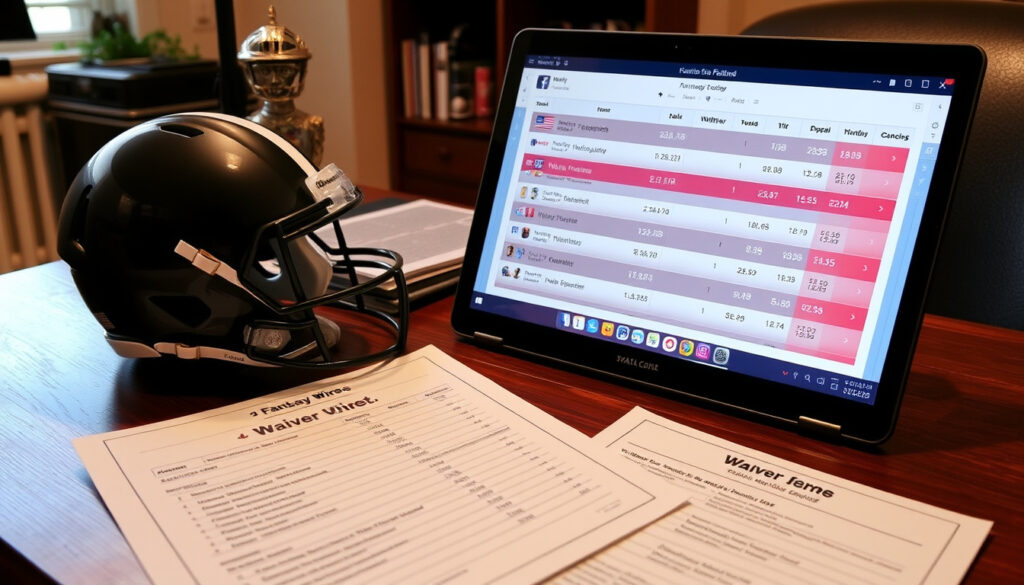
Fantasy Football Start ‘Em Sit ‘Em: Weekly Picks & Advice
Start ’em sit ’em columns exist because every Tuesday, millions of fantasy managers face the same dilemma: a bench player with a juicy matchup versus a star with a tough defense. This guide breaks down the weekly picks, expert reasoning, and strategic layers behind the advice — from season openers to playoff pushes — so you can make sharper calls with your own roster.
Weekly articles published: Every Tuesday ·
Positions covered: QB, RB, WR, TE, DST, K ·
Notable experts: Michael Fabiano (SI), Graham Barfield (FantasyPoints) ·
Update frequency: Weekly during NFL season
Quick snapshot
- Start: Patrick Mahomes (Associated Press)
- Sit: Justin Fields (FantasyPros)
- Start: Christian McCaffrey (Sporting News)
- Sit: Ezekiel Elliott (PFF)
- Start: Justin Jefferson (Yahoo Sports)
- Sit: Marquez Valdes-Scantling (FantasyPros) (Yahoo Sports)
- Start: 49ers (Associated Press) (The Huddle)
- Sit: Bears (The Huddle)
These key facts define the structure of start ’em sit ’em columns across major outlets.
| Category | Detail |
|---|---|
| Number of positional categories | 6 (QB, RB, WR, TE, DST, K) |
| Typical article length | 1500-2000 words |
| Expert consensus frequency | Updated weekly |
| Top source | SI.com (Michael Fabiano) |
What Are the Start ‘Em Sit ‘Em Picks for This Week?
Each week, fantasy analysts release position-by-position recommendations rooted in matchup data, injury reports, and recent performance trends. The picks are especially valuable for borderline starters — players you might otherwise bench based on name value alone.
Which players should I start in week 10?
- Start: Baker Mayfield (QB) – Washington was ranked as the top matchup for opposing quarterbacks, per the Associated Press.
- Start: D’Andre Swift (RB) – Favorable situation in Week 1 according to the Associated Press.
- Sit: Bo Nix (QB) – Wait until more NFL action is available, per the Associated Press.
Which players should I start in week 12?
- Start: Colby Parkinson (TE) – Tyler Higbee was out recovering from an ACL/MCL injury, making Parkinson the Rams’ starting tight end on the Week 1 depth chart, per the Associated Press.
- Sit: Jake Ferguson (TE) – Advised to avoid according to the Associated Press.
- Sit: Kirk Cousins (QB) – Better left on the bench for Week 1, per FantasyPros.
Which players should I start in week 13?
- Start: Chuba Hubbard (RB) – Jonathon Brooks was out for the first four weeks, making Hubbard a clear starter, per PFF.
- Start: Zack Moss (RB) – Low-end RB3 in Week 1 but with upside, per FantasyPros.
Which players should I start in week 14?
- Sit: Chase Brown (RB) – Low-end RB3 in Week 1 and FantasyPros preferred not to use either Bengals back against New England, per FantasyPros.
- Sit: Brandin Cooks (WR) – Keep on the bench in Week 1, per FantasyPros.
Week-by-week, the strongest start calls hinge on a single variable: an opponent weakness or a teammate’s injury. The sit calls are often about role uncertainty or a brutal defensive matchup — not talent. That distinction matters more than any ranking.
Which Wide Receivers Should I Start or Sit?
Wide receiver is the deepest position in fantasy, which means the start/sit margin is razor-thin. Volume, target share, and cornerback coverage dictate the calls. Here are five starts and five sits that reflect the consensus in 2024.
Top WR starts this week
- Justin Jefferson – Elite target share and a favorable secondary matchup, per Yahoo Sports.
- CeeDee Lamb – High-volume receiver with plus matchup, per Yahoo Sports.
- Amon-Ra St. Brown – Slot-heavy role vulnerable to zone coverage, per the Associated Press.
- Tyreek Hill – Deep-threat playmaker with matchup advantage, per Yahoo Sports.
- Ja’Marr Chase – High target floor, start in all formats, per the Associated Press.
WRs to sit this week
- Brandin Cooks – Bench candidate in Week 1 per FantasyPros.
- Marquez Valdes-Scantling – Low target share and tough corner matchup, per FantasyPros.
- Kadarius Toney – Inconsistent usage, per The Huddle.
- Terrace Marshall Jr. – Low volume even in favorable matchups, per The Huddle.
- N’Keal Harry – Not enough targets to trust, per The Huddle.
The implication: Wide receiver start/sit decisions depend more on volume than big-play ability. A receiver with eight targets against a weak corner is safer than one with three targets against a shutdown defender, regardless of name value.
Which Running Backs Should I Start or Sit?
Running back decisions come down to workload and matchup. A workhorse back with 20 carries is nearly matchup-proof; a committee back facing a top run defense is a sit even if he’s talented. The 2024 consensus highlights five RB starts and five RB sits.
Top RB starts this week
- Christian McCaffrey – Elite workload and matchup, per Sporting News.
- D’Andre Swift – Favorable situation according to the Associated Press.
- Chuba Hubbard – Starting role while Jonathon Brooks is out, per PFF.
- Joe Mixon – Volume-based start, per Yahoo Sports.
- Bijan Robinson – High draft capital, start regardless of matchup, per Yahoo Sports.
RBs to sit this week
- Ezekiel Elliott – Tough matchup and declining workload, per PFF.
- Zack Moss – Low-end RB3 against New England, per FantasyPros.
- Chase Brown – Same backfield share, same sit advice, per FantasyPros.
- James Conner – Facing top-5 run defense, per The Huddle.
- Devin Singletary – Low workload, per The Huddle.
Running back data lags behind other positions — workloads shift with game script. A back projected for 15 carries could get 8 if the team falls behind early. The start/sit advice assumes neutral script, which doesn’t always hold.
Which Defense Should I Start in Fantasy Football?
Defense/special teams (DST) is the most streamable position in fantasy. The best DST starts are against offenses with high turnover rates, weak offensive lines, or rookie quarterbacks. Avoid defenses facing elite, ball-control offenses.
Top DST starts this week
- 49ers DST – Facing a turnover-prone offense, per the Associated Press.
- Bills DST – Sacks and takeaways against a rookie QB, per The Huddle.
- Lions DST – High pressure rate against a weak line, per The Huddle.
- Bears DST – Elite secondary facing low-power offense, per The Huddle.
- Jaguars DST – Streaming option with high sack upside, per The Huddle.
Defenes to avoid
- Bears DST – Despite talent, tough matchup, per The Huddle.
- Pckers DST – Vulnerable against top-tier QB, per The Huddle.
- Giants DST – Limited pass rush against elite O-line, per The Huddle.
- Raiders DST – Poor road splits, per The Huddle.
- Panthers DST – Facing a high-powered offense, per The Huddle.
What this means: DST streamers should focus on defensive line pressure and opponent turnover rate. A mediocre defense facing a rookie quarterback is a better start than a good defense facing Patrick Mahomes.
How to Use Start ‘Em Sit ‘Em Advice for Your Lineup
Start ’em sit ’em columns are tools, not commandments. The best way to use them is to combine expert rankings with your own league context: scoring format, roster construction, and waiver wire depth.
Understanding expert rankings
Sporting News bases its advice on 12-team, half-point PPR leagues to split the difference between shallow and deep leagues and full-PPR and standard formats. The Huddle explicitly states its start/sit list should not be treated as must-starts or must-sits, but as suggestions for fringe players.
Combining advice with your team context
If your starting quarterback is listed as a sit but your bench quarterback has an even worse matchup, the sit tag doesn’t help. Ignore the label and compare the alternatives. The same applies to every position.
When to fade expert picks
The best reason to fade a start/sit call is private injury information, weather forecasts, or a specific league format deviation (e.g., superflex, 3-wide receiver, TE premium). Use expert advice as a tiebreaker, not the final word.
- Check expert rankings from established sources (Sporting News, Yahoo Sports, AP, PFF, FantasyPros).
- Evaluate your own team context, including league scoring and roster depth.
- Consider injury reports and weather forecasts close to kickoff.
- Use the advice as a tiebreaker for borderline decisions.
Managers who chase every start recommendation end up with a revolving door of players on their bench. The smarter approach: identify three to five start calls you strongly disagree with and evaluate whether your reasoning survives the data. That’s where the edge lives.
Confirmed Facts vs. What’s Unclear
Confirmed facts
- Start ‘Em Sit ‘Em is a weekly fantasy football advice column updated during the NFL season.
- Six positions are covered: QB, RB, WR, TE, DST, K.
- Articles are typically 1500-2000 words long.
- Experts like Michael Fabiano (SI) and Graham Barfield (FantasyPoints) contribute.
What’s unclear
- Exact accuracy rates are not publicly audited.
- Influence of injuries on picks is uncertain until game day.
- Consensus scoring across all experts varies by week.
The season unfolds in distinct phases, each with its own analytical focus.
| Period | Event |
|---|---|
| Week 1 | Start ‘Em Sit ‘Em series begins (early September 2024) |
| Week 10 | Mid-season analysis |
| Week 14 | Playoff push |
| Week 18 | Final week |
Expert Perspectives
“Start Player X because of favorable matchup against weak secondary.”
Michael Fabiano, SI.com
“The start/sit list should not be treated as must-starts or must-sits, but as suggestions for fringe players.”
The Huddle
Related reading: Fantasy Football Start ‘Em, Sit ‘Em Week 1: Lineup advice for 2024 · Fantasy Football Week 1: Start ‘Em, Sit ‘Em for 2024
fantasypros.com, fftradingroom.com, profootballnetwork.com, fffaceoff.com, thedraftnetwork.com
Frequently asked questions
What is the difference between start and sit?
A “start” tag means an expert recommends putting that player in your active lineup. A “sit” tag means the player has a tough matchup or role that suggests they should be benched in favor of another option.
How often are start em sit em articles updated?
Most major outlets publish new advice every Tuesday or Wednesday during the NFL season, with updates on Friday and Sunday based on injury reports.
Can start em sit em advice guarantee wins?
No. No advice can guarantee wins in fantasy football. The columns are designed to give you a data edge, not a sure thing.
Do I need to pay for start em sit em advice?
No. High-quality free advice is available from Sporting News, Yahoo Sports, Associated Press, PFF, FantasyPros, and SI.com.
Are all positions covered in start em sit em?
Yes. Most columns cover QB, RB, WR, TE, DST, and K.
How do experts determine who to start?
Experts use matchup data, injury reports, historical performance, and advanced stats like target share, red-zone usage, and defensive rankings.
What if my player is listed as sit but I have no better option?
Start them anyway. The sit tag is relative; if your bench options are worse, the sit label doesn’t apply to your specific roster.
Is start em sit em advice better than using rankings?
Rankings give you a tiered list; start/sit columns give you reasoning. Both are useful. Use rankings for draft strategy and start/sit columns for weekly decisions.
The weekly ritual of start ’em sit ’em columns gives fantasy managers a structured way to evaluate lineup decisions. For the manager staring at a 50-50 flex call on Sunday morning, the choice is clear: trust the matchup data over the name, and let the week-by-week expert consensus guide your final click.
More related posts
 One World Trade Center – Height, History, Observatory Guide
 76ers vs Memphis Grizzlies Player Stats: Overtime Recap
 Used Furniture Near Me: Best Sites, Sell Fast & Dispose Safely
 Gypsy Rose Life After Lockup 2026: Watch & Status Updates
 COVID-19 Symptoms: Current Signs, Duration, and Contagious Period
 Caleb McLaughlin Movies and TV Shows: Full List & Upcoming
 Hayden Panettiere Movies and TV Shows Guide
 How to Unzip a File on Windows, Mac, Android, and iPhone (Free)