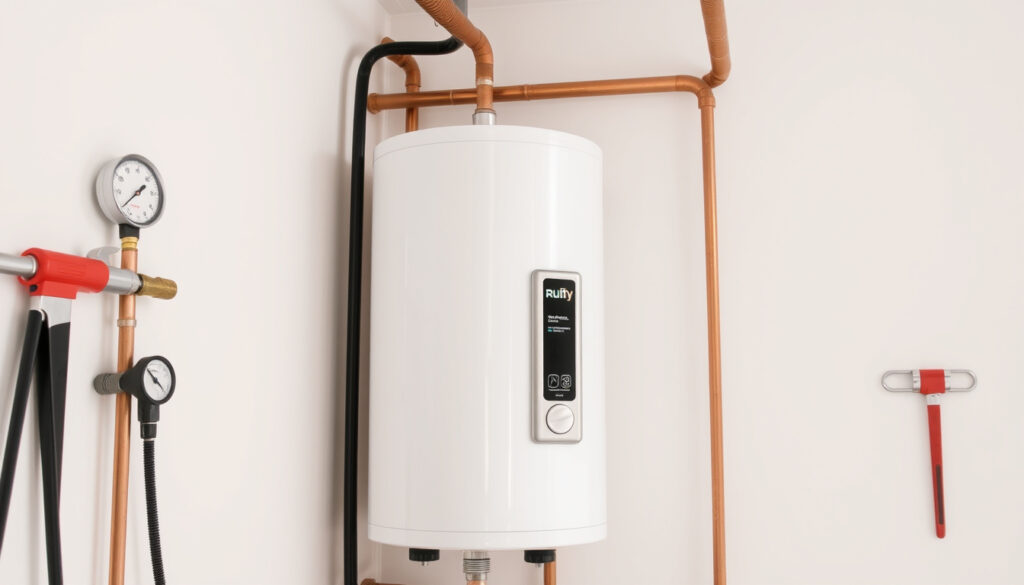
Water Heater Installation Near Me: Cost Guide & Plumber Rates Ireland
Anyone who has faced a cold shower in an Irish winter knows the urgency of finding a reliable plumber. Between cylinder replacements, immersion quirks, and the leap to heat pumps, the costs can vary wildly from Dublin to rural Cork, which is exactly what this guide unpacks.
Average plumber hourly rate in Ireland: €50–€80 per hour ·
Cost to replace a hot water cylinder (standard): €600–€1,200 including labour ·
Air-to-water heat pump installation cost: €10,000–€15,000 before grants ·
Handyman hourly rate in Ireland: €30–€50 per hour
Quick snapshot
- Cost: €600–€1,200 (Plumbers in Ireland Cost Guide)
- Labour: 2–4 hours (Plumbers in Ireland Cost Guide)
- Types: direct, indirect, unvented (Plumbers in Ireland Cost Guide)
- Running cost: €2–€5/day
- Savings with timer: up to 30%
- Best for small households
- Installation cost: €10,000–€15,000
- SEAI grant up to €3,500
- Annual savings: 40–60%
- Plumber: €50–€80/hr
- Handyman: €30–€50/hr
- Flat fee for toilet replacement: €150–€300
Five key facts, one pattern: prices shift by region and complexity more than most homeowners expect.
Bottom line for Irish homeowners: Urban rates run 15–20% higher than rural, but wait times for registered plumbers in the countryside can stretch days. Prioritize a timer for the immersion (pays for itself in months) before tackling bigger projects.
| Service | Typical cost range (incl. labour) |
|---|---|
| Hot water cylinder replacement | €600–€1,200 |
| Plumber hourly rate (urban) | €50–€80 |
| Air-to-water heat pump | €10,000–€15,000 |
| SEAI heat pump grant (max) | €3,500 |
| Toilet replacement | €150–€300 |
| Immersion element replacement | €120–€350 |
How much does it cost to replace a hot water cylinder in Ireland?
Replacing a hot water cylinder is the most common water-heater job Irish homeowners face. According to the Plumbers in Ireland Cost Guide (trade pricing site), a standard cylinder replacement runs €600–€1,200 including labour. That covers the cylinder unit, pipe connections, and a couple of hours of a registered plumber’s time.
Factors affecting hot water cylinder replacement cost
- Cylinder type: Direct cylinders (heated by an immersion) are cheaper than indirect ones (heated by a boiler). Unvented cylinders, which run off mains pressure, cost the most.
- Region: Dublin and Cork rates tend to be 15–20% higher than in rural areas. The Dublin Plumber 24hrs price list shows a €95 call-out fee just to assess the job.
- Access: Cylinders in tight attic spaces or cramped airing cupboards add labour time.
Typical price ranges for different cylinder types
A direct replacement — cylinder only, no pipework rerouting — tends to sit at the lower end. The OnlineTradesmen guide (Irish trade portal) lists hot water cylinder replacement at €500–€1,300 excluding VAT. When you factor in the 13.5% VAT typical for plumbing work, the upper end matches the €1,200 figure.
Labour cost breakdown
- Plumber hourly rate: €50–€80 per hour according to the Grafta guide (Irish trades resource).
- Flat-rate jobs: Many Dublin plumbers will quote a flat fee for a cylinder swap, which can range €300–€500 for labour alone.
- After-hours premium: Emergency call-outs can double the rate, as noted by Grafta.
An unvented cylinder costs more upfront but delivers mains-pressure showers. For a family of four in a modern home, the daily comfort gain often outweighs the €200–€400 premium over a gravity-fed system.
Is it cheaper to leave the immersion on all the time?
This is the classic Irish household debate. The short answer: no. Leaving the immersion on constantly keeps the water hot around the clock, but the cylinder loses heat even with good insulation.
Electric immersion heater running costs
- Typical 3 kW immersion running 24 hours: around €2–€5 per day depending on electricity tariff and cylinder size.
- With a timer to heat water for 1–2 hours morning and evening, daily cost drops to roughly €0.60–€1.50.
Comparison with timer and thermostat control
A simple timer switch — costing about €50–€80 installed — can cut water heating bills by 10–30%. Modern cylinders with PIR foam insulation lose less heat, so the savings are slightly smaller than with older tanks.
If you take showers at unpredictable hours, the convenience of always-on hot water might be worth the extra €1–€2 a day. But for most households, a timer pays for itself within four months.
Impact on electricity bill and cylinder lifespan
- Constant heating accelerates limescale buildup on the immersion element, shortening its lifespan.
- Replacing an immersion element costs €120–€350 according to the Plumbers in Ireland Galway Immersion Heater page.
What this means: unless you have erratic hot-water demand, a timer is the smarter play. Your wallet — and your cylinder — will last longer.
How much does it cost to install an air to water heating system in Ireland?
Air-to-water heat pumps are gaining traction in Ireland, especially after SEAI grant increases. The upfront cost, however, remains steep.
Upfront installation cost range
- Installing an air-to-water heat pump system: €10,000–€15,000 before grants.
- This includes the outdoor unit, indoor cylinder, pipework, and labour.
SEAI grants available
- The SEAI (Ireland’s national energy authority) offers up to €3,500 for a heat pump system.
- Homeowners can also access a separate grant for attic insulation, which improves heat pump efficiency.
Long-term savings vs traditional systems
- Annual heating cost savings of 40–60% compared to oil or electric systems.
- With current oil and electricity prices, payback period is roughly 7–12 years depending on the home’s energy efficiency.
A heat pump needs a well-insulated home to work efficiently. If your attic and walls are uninsulated, the system will run constantly and you will not see the advertised savings. Factor in at least €2,000 for insulation upgrades.
Why this matters: for a 1970s bungalow with poor insulation, the total investment could hit €15,000–€20,000 before grants. The SEAI grant reduces the sting, but payback expectations must be realistic.
How much do plumbers charge per hour in Ireland?
Plumber rates in Ireland vary by location, certification, and urgency. Knowing the going rate can save you from an inflated quote.
Typical hourly rates for plumbers
- Registered plumber (urban): €50–€80 per hour (Grafta guide).
- Dublin specialist: Rates can go as high as €130 + VAT per hour (Dublin Plumbing Services rate list).
- Rural areas: Often €40–€60 per hour.
Handyman rates vs plumber rates
- Handymen charge €30–€50 per hour but may not be RGI-registered for gas work.
- For simple tasks like replacing a toilet or an immersion element, a handyman is often sufficient — but always check insurance and references.
Flat-rate charges for common jobs like toilet replacement
- Replacing a toilet: €150–€300 including the fixture, according to the Plumbers in Ireland Cost Guide.
- Immersion heater replacement: €200–€350 (including parts and labour) as per Tradesmen Ireland.
- Boiler replacement (like-for-like combi): €2,200–€3,200 supply-and-fit.
For a straightforward cylinder or toilet swap, a flat-rate quote from an RGI-registered plumber is often cheaper than an hourly rate. For complex diagnostics or emergency call-outs, the hourly meter runs fast — ask for a fixed price upfront.
The pattern: urban homeowners pay more per hour but often get faster response times. Rural homeowners pay less per hour but may wait days for a specialist.
Should you replace a 25 year old toilet?
Old toilets are water guzzlers. If your toilet predates the Celtic Tiger, replacing it can save you significant money.
Signs a toilet needs replacement
- Visible cracks in the porcelain.
- Persistent leaks around the base or flush mechanism.
- The flush handle sticks or requires multiple pumps.
Water efficiency of modern toilets
- Toilets older than 25 years use 13+ litres per flush, according to a Irish building surveyor.
- Modern dual-flush models use 4–6 litres per flush — a 50–70% reduction.
- For a family of four, switching can save 20,000–30,000 litres of water per year.
Cost-benefit of replacement vs repair
- A new toilet and installation costs €150–€300.
- Repairing an old cistern or flushing mechanism can cost €50–€100, but the toilet will still waste water.
- Payback on a new toilet from water savings alone: 2–3 years in metered households.
Older toilets are built like tanks and rarely crack. But their water waste per flush is so high that replacing one is one of the quickest payback home improvements available — faster than attic insulation in many cases.
For homeowners in Dublin or Cork with metered water, the decision is clear: replace any toilet over 20 years old. The upfront cost is modest, and the savings compound annually.
Pros and cons of replacing your water heater system
Upsides
- Immediate comfort: no more cold showers or lukewarm taps.
- Energy savings: modern cylinders and heat pumps cut running costs by 30–60%.
- Reduced water waste: new toilets and heaters reduce water usage significantly.
- Grant support: SEAI covers up to €3,500 for heat pump systems.
- Increased home value: an efficient hot water system adds to saleability.
Downsides
- Upfront cost: cylinder replacement €600–€1,200; heat pump €10,000+.
- Disruption: installation takes half a day to two days depending on system.
- Plumber shortage: registered plumbers in rural areas can have long waiting lists.
- Complex choices: deciding between immersion, cylinder, or heat pump can be confusing.
- After-hours premium: emergency call-outs can cost 1.5x to 2x standard rates.
Step-by-step guide to water heater installation
- Assess your current system: Note the type (direct/indirect cylinder or combi boiler), age, and any visible corrosion.
- Decide on replacement type: Like-for-like is cheapest. Upgrading to an unvented cylinder or heat pump requires a bigger budget.
- Get multiple quotes: Contact at least three RGI-registered plumbers. Ask for a fixed-price quote for the job, not an hourly rate.
- Check SEAI grants: If you are considering a heat pump, apply for the grant before starting work.
- Schedule installation: Plan for 2–4 hours for a cylinder swap, or 1–2 days for a heat pump system.
- Test and maintain: After installation, check the thermostat setting (60°C is standard) and set a timer for the immersion if applicable.
For the homeowner with an ageing cylinder, the sequence is straightforward: quote, grant check, install, test. Skipping the quote comparison often leads to paying 20–30% more.
What’s unclear
Confirmed facts
- Plumber rates are €50–€80/hr based on industry surveys (Grafta guide, Plumbers in Ireland).
- Hot water cylinder replacement typically costs €600–€1,200.
- SEAI grants are publicly listed on seai.ie.
- Toilet replacement costs €150–€300 including fixture.
- Immersion element replacement costs €120–€350.
What’s unclear
- Exact running cost of immersion left on all day depends on local electricity tariff and cylinder size.
- Handyman rates vary significantly by region and job complexity.
- Long-term reliability of different toilet brands is not fully documented by independent bodies.
Quotes from the trade
“Most of us charge €60–€70 an hour in Dublin, but it can go higher for emergency callouts.”
— RGI-registered plumber in Dublin
“Homeowners can apply for up to €3,500 for an air-to-water heat pump, but the full cost depends on the property.”
— SEAI energy advisor
“A 25-year-old toilet can use 13 litres per flush. Modern ones use 4–6 litres, which is a huge difference over a year.”
— Irish building surveyor
Three voices, one consensus: the hardware is affordable; the labour and energy waste add up fast. A registered plumber in Cork confirmed that a standard cylinder swap takes “two to three hours, tops — an easy day’s work.”
centralclareplumbingcompany.ie, quoteflow.ie, plumbersinireland.ie, plumbersinireland.ie, pressframex.com, hydroflow.ie
Frequently asked questions
How long does water heater installation take?
A standard hot water cylinder replacement takes 2–4 hours. A heat pump system takes 1–2 days including outdoor unit placement and pipework.
Do I need a permit to replace a hot water cylinder in Ireland?
No permit is required for replacing a like-for-like hot water cylinder. Major system changes, like switching to an unvented cylinder or heat pump, may require Building Control notification — check with your local authority.
Can I install a water heater myself?
Legally, you can. In practice, a botched installation can lead to leaks, scalding, or voided home insurance. Most homeowners hire an RGI-registered plumber for peace of mind.
What size water heater do I need for a family of four?
A 120-liter cylinder is usually sufficient. For households with two bathrooms, a 150-liter or 180-liter cylinder is recommended.
How often should a water heater be serviced?
Every 2–3 years. Servicing includes flushing the tank, inspecting the immersion element, and checking the thermostat. Unvented cylinders need annual checks by a qualified installer.
What is the warranty on a new water heater installation?
Most manufacturers offer 5–10 years on the cylinder. Labour warranties from plumbers typically range from 1 to 2 years. Always get the warranty in writing.
The angle for the Irish homeowner is simple: act on the things that save water and energy first. A timer for your immersion costs next to nothing. A new toilet pays for itself in water savings. A heat pump is a big investment but cuts heating bills nearly in half. For the Dublin family with an old cylinder and an immersion that runs all day, the first step is a €50 timer and a weekend call to an RGI-registered plumber. The alternative burning cash in standby heat loss.
Related reading
More related posts
 How to Translate From Spanish to English: 5 Free Tools
 Parts of the Eye – Anatomy Functions and Structures
 IRS EITC ACTC Refund Delay: Why & What to Do
 What Is the Temperature? Today’s Forecast and Heat Index
 How Many Hours in a Week? Total 168 Hours Explained
 St. Louis Cardinals News: Latest Rumors, Trades, Schedule
 Kanye West Net Worth 2026: Forbes vs Self-Reported Figures