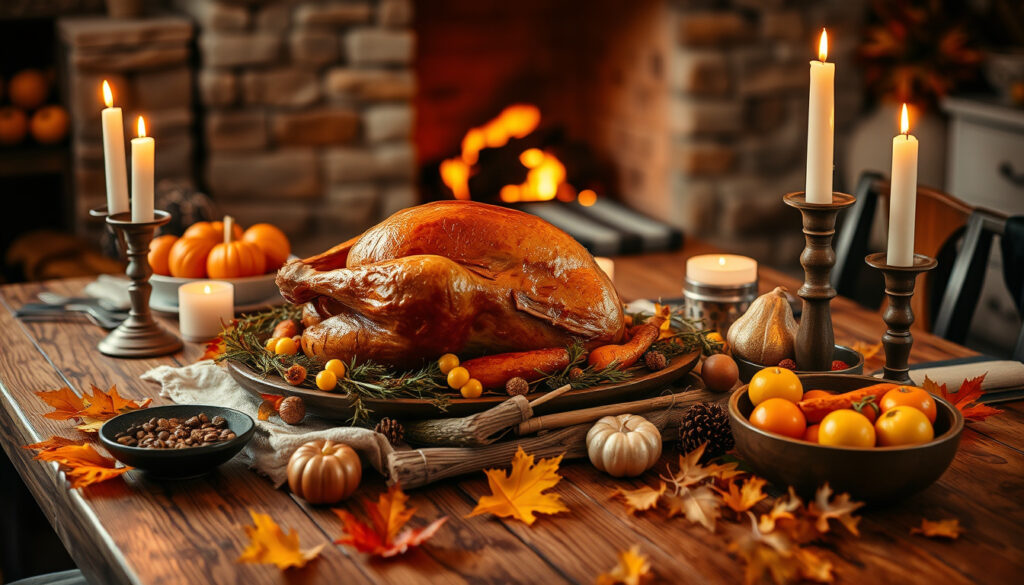
Thanksgiving: meaning, history, and why we eat turkey
Few holiday traditions feel as universally familiar as Thanksgiving — but the story behind the turkey, the date, and the annual family gathering is more layered than most people realize. The 1621 harvest feast in Plymouth, attended by at least 90 Wampanoag people and 52 English colonists, is widely considered the origin story, though historians caution that the event was a one-time harvest celebration, not a holiday.
Date of celebration in the United States: Fourth Thursday of November ·
Year of the first recorded celebration: 1621 ·
National holiday status: Federal holiday in the United States ·
Approximate number of turkeys consumed in the US annually: 46 million
Quick snapshot
- Thanksgiving has been a federal holiday in the United States since 1863 (Smithsonian Institution (U.S. history museum)).
- The fourth Thursday of November has been the official date since 1941 (Congressional Research Service (U.S. legislative research)).
- The exact menu of the 1621 feast is not fully documented — the presence of turkey is inferred from later accounts (Gilder Lehrman Institute of American History (historical education nonprofit)).
- The narrative of a single “first Thanksgiving” dinner has been simplified and mythologized over time (Britannica (encyclopedia publisher)).
- 1621: Harvest celebration in Plymouth (U.S. National Archives (federal records custodian)).
- 1863: Lincoln proclaims national Thanksgiving on the last Thursday in November (Smithsonian Institution).
- 1941: Congress fixes date to the fourth Thursday (Congressional Research Service).
- The day after Thanksgiving, Black Friday, marks the unofficial start of the holiday shopping season (Britannica).
- Thanksgiving travel and family gatherings continue to define the holiday’s modern character (Congressional Research Service PDF).
The path from that autumn meal to a federal holiday follows a pattern of gradual institutionalization.
| Label | Value |
|---|---|
| First celebration | 1621, Plymouth Colony |
| National holiday official | 1863 (proclamation of Lincoln) |
| Current fixed date | 1941 (Congressional law) |
| Countries that celebrate | United States, Canada, Grenada, Saint Lucia |
| Annual turkey consumption in the U.S. | Approximately 46 million turkeys |
What Does Thanksgiving Day Mean?
Origin of the Name
Thanksgiving is a federal holiday in the United States and Canada, rooted in the tradition of giving thanks for the autumn harvest. The name “Thanksgiving” comes from the practice of setting aside a day for gratitude, often after a successful harvest. According to the Britannica (encyclopedia publisher), the holiday is now “a day of feasting and family gatherings” rather than a strictly religious observance.
Current Cultural Meaning
Today, the holiday centers on a shared meal, family reunions, and expressions of gratitude. The Congressional Research Service (U.S. legislative research) notes that the holiday is “widely associated with family gatherings, gratitude, and a shared meal.”
The cultural meaning of Thanksgiving has shifted from a localized harvest rite to a secular, national occasion centered on family. For American families, the holiday now functions as a communal anchor — a predictable day to gather, regardless of religious background.
What Is the Real History of Thanksgiving?
The 1621 Celebration
The first documented harvest celebration took place in autumn 1621 in Plymouth, where at least 90 Wampanoag people joined 52 English colonists to mark a successful harvest, according to the U.S. National Archives (federal records custodian). This event is commonly described as the origin story of the American Thanksgiving tradition, though it was a harvest feast rather than a modern holiday, notes Britannica.
Evolution Toward a National Holiday
President George Washington issued a national day of thanksgiving proclamation on November 26, 1789, as recorded by the Congressional Research Service (U.S. legislative research). But it was President Abraham Lincoln who, in 1863, proclaimed Thanksgiving a national day and set it for the last Thursday in November, according to the Smithsonian Institution (U.S. history museum). The date was later standardized to the fourth Thursday of November by Congress in 1941, resolving the confusion caused by years with five Thursdays in November, per the Congressional Research Service.
The timeline shows a clear progression: from a one-off colonial feast to a presidential proclamation during the Civil War, and finally to a fixed federal date in 1941. Each step was driven by a need for national unity — first to bind a divided country, later to rationalize the calendar for commerce.
Why Is Turkey Eaten on Thanksgiving?
Historical Reasons
Turkey became the centerpiece of the Thanksgiving meal for practical reasons: it was abundant, large enough to feed a crowd, and not as valuable as cattle for dairy or eggs. A later 1856 account described the 1621 feast as including “a great store of Wild turkies,” according to the Gilder Lehrman Institute of American History (historical education nonprofit), which helped cement the turkey connection in popular memory.
Turkey as a Symbol
The 19th-century writer and editor Sarah Josepha Hale, who campaigned for Thanksgiving to become a national holiday, also promoted turkey as the ideal dish. Her advocacy helped standardize the turkey dinner as the holiday’s culinary centerpiece. The Smithsonian Institution notes that the modern national Thanksgiving celebration is tied to 19th-century nation-building as well as older New England customs.
For home cooks, turkey has become the default — but the documentary record shows that the 1621 menu is uncertain. The First Bite Story (food history blog) notes that historians do not clearly know exactly what was served in 1621. The turkey tradition is a 19th-century invention, not a direct link to the Pilgrims.
What Is Celebrated in the United States in November?
Federal Holidays in November
Thanksgiving is the primary federal holiday in November. The Congressional Research Service confirms that Thanksgiving is a federal holiday observed on the fourth Thursday in November. The other major federal holiday in November is Veterans Day (November 11), which honors military veterans.
Events and Associated Traditions
The Thanksgiving weekend also marks the start of the holiday shopping season, with Black Friday traditionally the busiest shopping day of the year. The Britannica notes that the holiday’s association with family gatherings and gratitude has been extended to include the kickoff of consumer spending.
For retailers, the Thanksgiving weekend is a critical economic signal; for families, it is a logistical challenge of travel and meal planning. The two forces — commerce and tradition — now define the November holiday landscape.
How Is Thanksgiving Celebrated in the United States?
Traditional Dinner
The typical Thanksgiving dinner includes turkey, stuffing, mashed potatoes, cranberry sauce, and pumpkin pie. While the menu varies by region, turkey remains the universal protein. If you are planning to share leftovers with your pet, check our guide on Can Dogs Eat Turkey? Vet-Approved Safety Tips.
Parades and Football
The Macy’s Thanksgiving Day Parade in New York City is a nationally televised tradition, featuring giant balloons, floats, and marching bands. Football games are also a staple: the NFL has hosted Thanksgiving Day games since 1920, and college rivalries draw large audiences.
Family Gatherings
Thanksgiving is the most traveled holiday in the United States. Millions of Americans travel long distances to gather with family, reinforcing the holiday’s role as a secular family reunion. For seasonal activities, many families visit pumpkin patches in the weeks leading up to Thanksgiving — find one near you with Pumpkin Patch Near Me: Ireland’s Top Patches for 2026.
For American families, the tradition of turkey is a 19th-century invention, but the meaning of gratitude remains genuine. The commercial pressure of Black Friday now competes with the holiday’s original spirit of thanks.
Timeline
The evolution of Thanksgiving from a local harvest feast to a federal holiday unfolded over more than three centuries.
| Date or Period | Event |
|---|---|
| 1621 | Harvest celebration in Plymouth, considered the first Thanksgiving (U.S. National Archives). |
| 1789 | George Washington proclaims a national day of thanksgiving (Congressional Research Service). |
| 1863 | Abraham Lincoln proclaims Thanksgiving a national holiday on the last Thursday in November (Smithsonian Institution). |
| 1939–1941 | Franklin Roosevelt moves the date to extend the Christmas shopping season; Congress fixes it to the fourth Thursday in 1941 (Congressional Research Service). |
The timeline reveals that the “traditional” Thanksgiving date is a relatively recent compromise — Congress settled the date only in 1941, after a brief period of confusion when some states celebrated on different Thursdays.
Confirmed facts and what’s unclear
Confirmed facts
- Thanksgiving is a federal holiday in the United States since 1863 (Smithsonian Institution).
- The fourth Thursday of November is the official date since 1941 (Congressional Research Service).
- Turkey has been the traditional centerpiece since the 19th century (Gilder Lehrman Institute).
What’s unclear
- Exact details of the 1621 menu are not fully documented (Britannica).
- The “first Thanksgiving” story has been simplified and mythologized (Britannica).
Quotes from key figures
“We have great reason to be thankful for the many blessings we enjoy. The turkey is a most appropriate dish for the occasion.”
— Sarah Josepha Hale, 19th-century editor and campaigner for Thanksgiving, as cited in Gilder Lehrman Institute of American History
“I do therefore invite my fellow citizens in every part of the United States, and also those who are at sea and those who are sojourning in foreign lands, to set apart and observe the last Thursday of November next as a day of Thanksgiving and Praise.”
— President Abraham Lincoln, Proclamation of Thanksgiving 1863, via Smithsonian Institution
For American families, the tradition of turkey is a 19th-century invention, but the meaning of gratitude remains genuine. The choice is clear: embrace the holiday’s commercial pageantry or reclaim its original spirit of shared thanks — or both.
britannica.com, congress.gov, congress.gov, congress.gov, prologue.blogs.archives.gov, en.wikipedia.org
Frequently asked questions
Is Thanksgiving the same as Día de Acción de Gracias?
Yes, “Día de Acción de Gracias” is the Spanish translation of Thanksgiving Day, the same holiday celebrated in the United States and other countries.
In which countries is Thanksgiving celebrated?
Thanksgiving is a federal holiday in the United States and Canada. It is also observed in Grenada, Saint Lucia, and Liberia, each with its own traditions.
Why did Thanksgiving change date in the 20th century?
In 1939, President Franklin Roosevelt moved the date to the third Thursday of November to extend the Christmas shopping season. This caused confusion, and in 1941 Congress fixed the date to the fourth Thursday of November, as noted by the Congressional Research Service.
What other dishes are traditionally served besides turkey?
Common side dishes include stuffing, mashed potatoes, gravy, cranberry sauce, sweet potatoes, green bean casserole, and pumpkin pie. Regional variations exist across the United States.
What is Black Friday and how does it relate to Thanksgiving?
Black Friday is the day after Thanksgiving, traditionally considered the start of the Christmas shopping season. It is known for major retail sales and is a major economic event in the United States.
Did the Pilgrims really wear black hats with buckles?
No, that image is a 19th-century stereotype. Pilgrim clothing in the 1620s was typically simple wool and linen garments in muted colors, without the iconic buckled hats. The popular image was created later by artists and illustrators.
More related posts
 McDonald’s Gift Card Balance: Check, Use, and Manage
 Kat Dennings Movies and TV Shows: Complete Career Guide
 High School Musical Cast: Where Are They Now & Deaths
 American Idol Katy Perry: Why She Left After 7 Seasons
 San Jose State University Guide: Rankings, Cost, Majors
 Jelly Roll Hard Fought Hallelujah: Lyrics, Meaning & Backstory
 Fantasy Football Start ‘Em Sit ‘Em: Weekly Picks & Advice
 Kia Stinger for Sale – Listings Prices Deals Near You