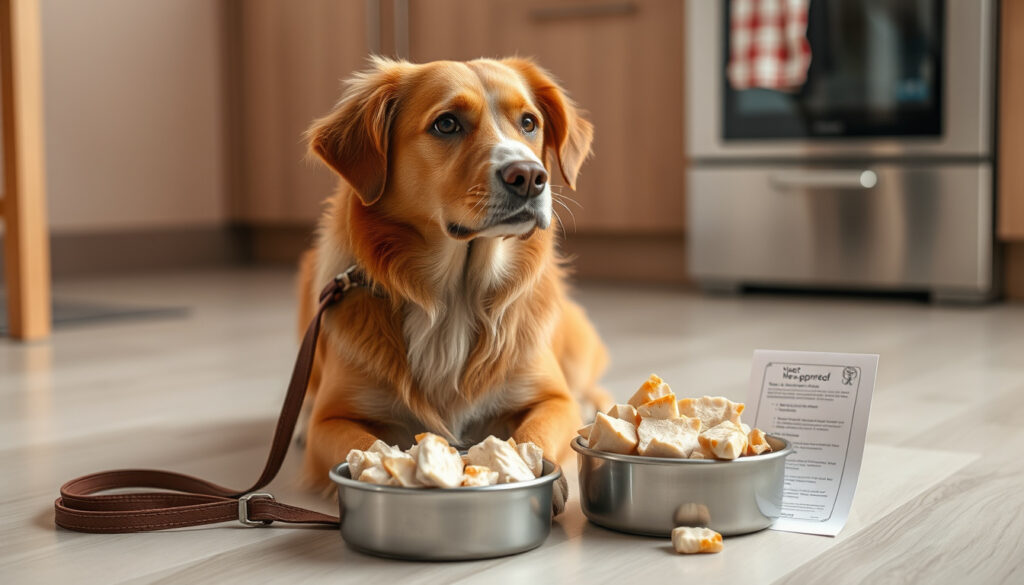
Can Dogs Eat Turkey? Vet-Approved Safety Tips
You’re carving a turkey for the holidays and your dog is giving you that look. The short answer is yes—plain, fully cooked turkey is safe for most dogs in small amounts, but a few wrong pieces (skin, bones, heavy seasoning) can land you at the emergency vet; this guide walks through the safe parts, dangerous ones, and how to apply the 90/10 rule so everyone shares the meal without regrets.
Protein in cooked turkey breast (per 100g): 29 g ·
Fat in cooked turkey breast (per 100g): 7 g ·
Riboflavin (per 100g): 0.1 mg ·
Phosphorus (per 100g): 200 mg ·
Calories (per 100g): 189 kcal
Quick snapshot
- Plain cooked turkey is safe for dogs (ASPCA Pet Health Insurance)
- Cooked turkey bones splinter and can cause internal injury (VEG ER for Pets)
- Seasonings like garlic and onion are toxic (Boulder Veterinary Hospital)
- Turkey should reach 165°F internal temp to kill pathogens (Nature’s Logic)
- Optimal amount of turkey as a treat for specific breeds (Boulder Veterinary Hospital)
- Whether raw turkey is safe due to bacterial risk (Nature’s Logic)
- Whether fully cooked turkey must be avoided for dogs with certain conditions (American Kennel Club)
- Digestive upset from fatty or seasoned turkey usually appears within 2–12 hours (VEG ER for Pets)
- Cooked bone issues can be immediate (choking) or delayed (obstruction over 24–48 hrs) (Advanced Pet Care)
- Start with a small bite (pea-sized for small dogs, thumbnail for large) and monitor 24 hrs (Boulder Veterinary Hospital)
- Gradually incorporate plain turkey as a 10% treat alongside complete diet (ASPCA)
Here are the key nutritional values for plain cooked turkey breast.
| Turkey protein content (cooked breast) | 29 g per 100 g |
|---|---|
| Fat content (cooked breast) | 7 g per 100 g |
| Calories | 189 kcal per 100 g |
| Riboflavin (Vitamin B2) | 0.1 mg per 100 g |
| Phosphorus | 200 mg per 100 g |
| Safe serving for a 30 lb dog (10% rule) | Approx. 1 oz (28 g) plain turkey per day |
Is cooked turkey ok for dogs?
Safety of plain cooked turkey
- Plain, fully cooked turkey (white meat, no skin) is safe for dogs in moderation (ASPCA Pet Health Insurance).
- Turkey is a common ingredient in many commercial dog foods because it’s a lean, digestible protein (Boulder Veterinary Hospital).
Seasonings and additives to avoid
- Garlic and onion are toxic to dogs and often used in turkey rubs (Boulder Veterinary Hospital).
- Butter, oils, gravy, and salt can cause vomiting, diarrhea, or pancreatitis (ASPCA Pet Health Insurance).
- Turkey skin is especially high in fat and may carry seasonings (American Kennel Club).
Serving size guidelines
- A piece the size of the dog’s thumbnail is a safe starting portion (Boulder Veterinary Hospital).
- Turkey treats should never exceed 10% of daily caloric intake (ASPCA).
A single holiday host who offers “just a little” seasoned dark meat can send a 25‑pound dog into gastrointestinal distress. The safest move: carve a plain breast piece before you add any seasoning.
The implication: Owners who assume “turkey is nutritious” without stripping skin and seasoning are making the most common mistake. Stick with plain white meat in tiny portions, and you’re in the clear.
The implication: Owners who assume “turkey is nutritious” without stripping skin and seasoning are making the most common mistake. Stick with plain white meat in tiny portions, and you’re in the clear.
Can dogs eat turkey bones?
Dangers of cooked turkey bones
- Cooked turkey bones become brittle and splinter into sharp shards that can puncture the mouth, throat, or intestines (ASPCA).
- Bone fragments can also cause choking or esophageal blockages (VEG ER for Pets).
Safe alternatives to bones
- Offer a commercial dental chew or a rubber toy instead of real bones (Advanced Pet Care of Clearlake).
- If you want a natural chewing outlet, raw marrow bones from a butcher are softer but still carry bacterial risk (Nature’s Logic).
What to do if your dog eats a turkey bone
- Monitor for signs of distress: drooling, gagging, vomiting, lethargy, or bloody stool (VEG ER for Pets).
- If symptoms appear, go to the emergency vet immediately. Do not induce vomiting unless instructed (Boulder Veterinary Hospital).
Even large dogs that “crush bones easily” can still suffer from splinter fragments. No breed, jaw size, or chewing style makes cooked bone safe. The risk is universal.
Why this matters: A single turkey bone incident can cost hundreds in emergency surgery and cause permanent damage. Prevention is the only safe path.
Why this matters: A single turkey bone incident can cost hundreds in emergency surgery and cause permanent damage. Prevention is the only safe path.
Is turkey better for dogs than chicken?
Three nutritional differences, one pattern: turkey edges out chicken as a leaner protein, but the gap is small enough that the best choice depends on your dog’s specific needs.
Here’s how the two meats compare nutritionally.
| Nutrient (per 100 g cooked breast, skinless) | Turkey | Chicken |
|---|---|---|
| Protein | 29 g | 31 g |
| Fat | 7 g | 3.6 g |
| Calories | 189 kcal | 165 kcal |
| Iron | 1.3 mg | 0.9 mg |
| Zinc | 1.5 mg | 1.0 mg |
| B12 | 0.5 µg | 0.3 µg |
Nutritional comparison: protein, fat, vitamins
- Turkey is slightly higher in fat and calories than chicken breast, but still a lean choice (Boulder Veterinary Hospital).
- Turkey provides more iron, zinc, and B12 than chicken, which supports red blood cells and immune function (Purina).
Digestibility and allergies
- Both turkey and chicken are highly digestible, but some dogs develop allergies to chicken more often than turkey (Boulder Veterinary Hospital).
- If your dog has a known chicken allergy, turkey is an excellent alternative protein (VEG ER for Pets).
Which meat is leaner?
- Skinless chicken breast is leaner than turkey breast, but the difference is minor in small treat portions (Nature’s Logic).
- Dark turkey meat is significantly fattier than dark chicken meat, so stick with breast for treats (Boulder Veterinary Hospital).
The pattern: Neither meat is a “bad” choice—pick turkey if your dog needs a novel protein or more iron, and chicken if you want the absolute lowest fat treat.
Can turkey upset a dog’s stomach?
Causes of digestive upset from turkey
- Fatty or fried turkey can overwhelm a dog’s pancreas, causing vomiting and diarrhea (ASPCA).
- Seasonings like garlic powder, onion powder, and even excessive salt are common irritants (Boulder Veterinary Hospital).
Fat content and pancreatitis risk
- A single high-fat meal (e.g., turkey skin, dark meat, gravy) can trigger acute pancreatitis, especially in small breeds predisposed to the condition (Boulder Veterinary Hospital).
- Dogs with a history of pancreatitis should avoid all fatty turkey (VEG ER for Pets).
Introducing turkey gradually
- Start with a tiny piece of plain boiled turkey and wait 24 hours before giving more (Boulder Veterinary Hospital).
- If the dog tolerates it, you can slowly increase the portion, still keeping it under 10% of daily calories (ASPCA).
A dog with a mild upset may just have soft stool for a day; a more serious reaction includes repeated vomiting, lethargy, or refusal to eat. The latter warrants a vet call within hours.
The trade-off: Rich, fatty turkey delivers a high reward for the dog but carries a real risk of pancreatitis. Plain, lean breast almost eliminates that risk.
What is the 90/10 rule for dogs?
Applying the 90/10 rule to turkey treats
- 90% of a dog’s daily calories should come from a complete, balanced dog food, and 10% can come from treats including plain turkey (ASPCA).
- This rule prevents nutritional imbalance and overfeeding while still allowing safe indulgences (Boulder Veterinary Hospital).
Calculating treat calories for your dog
- A 30‑pound (14 kg) dog needs roughly 700–900 kcal per day (depending on activity). 10% = 70–90 kcal from treats (VEG ER for Pets).
- One ounce (28 g) of plain turkey breast is about 53 kcal, so a daily treat could be roughly 1½ ounces at the upper end (Nature’s Logic).
Examples of safe turkey treats
- Shredded plain turkey breast mixed into kibble as a topper.
- Small cubes of turkey used as training rewards (size of a pea).
- Plain, unseasoned turkey liver (occasional, due to high vitamin A) (Boulder Veterinary Hospital).
Why this matters: The 90/10 rule turns turkey from a potential health hazard into a controlled, nutritious supplement. Most holiday overfeeding incidents happen when owners ignore this math.
Upsides
- Plain turkey is a lean, high‑quality protein.
- Can be used as a safe training treat for dogs with chicken allergies.
- Easily digestible when boiled or baked without seasoning.
Downsides
- High‑fat parts (skin, dark meat) pose pancreatitis risk.
- Bones can cause life‑threatening obstructions.
- Seasonings that taste fine to humans are toxic to dogs.
How to safely feed turkey to your dog: step by step
- Choose boneless, skinless white turkey meat. Remove all visible fat.
- Cook thoroughly to an internal temperature of 165°F (74°C) (Nature’s Logic).
- Do not add any seasoning, oil, butter, or gravy.
- Cut into small, pea‑sized pieces for small dogs, thumbnail‑sized for larger dogs.
- Start with one piece and wait 24 hours to check for digestive upset.
- If tolerated, incorporate plain turkey as no more than 10% of daily caloric intake.
- Never feed turkey bones under any circumstance.
The implication: Following these steps ensures that your dog enjoys turkey as a controlled, safe treat rather than facing a trip to the emergency vet.
What we know for sure – and what’s still fuzzy
Confirmed facts
- Plain cooked turkey is safe for dogs (ASPCA).
- Cooked turkey bones are dangerous (ASPCA).
- Seasoned turkey can cause pancreatitis (Boulder Veterinary Hospital).
- Turkey must be fully cooked to avoid bacterial risk (Nature’s Logic).
What’s unclear
- Optimal amount of turkey as a treat for specific breeds (Boulder Veterinary Hospital).
- Whether raw turkey is safe due to bacterial risk (Nature’s Logic).
- Whether fully cooked turkey must be avoided for dogs with certain conditions (American Kennel Club).
The pattern: When in doubt, apply the 90/10 rule and stick with plain cooked breast meat – that leaves no room for guesswork.
What veterinary experts say
“Turkey isn’t inherently toxic to dogs. It’s used as an ingredient in many dog foods.”
— AKC expert vet (American Kennel Club)
“Dogs can eat turkey, but follow certain advice and keep treats to 10% of diet.”
— Purina nutritionist (Purina)
“Plain, boneless, skinless turkey can be a healthy source of protein for dogs.”
— Boulder Veterinary Hospital (Boulder Veterinary Hospital)
The decision to share turkey with your dog comes down to one question: can you serve it plain, boneless, and in tiny amounts? If yes, it’s a fine occasional treat. If you’re at a holiday table where the turkey is swimming in butter, garlic, and onions, the kindest answer is a firm no. For the dog owner who wants to participate in the feast without the vet bill, the choice is clear: carve a plain breast portion before the seasoning goes on, then follow the 90/10 rule with a pea-sized piece. Anything more, and you’re gambling with your dog’s pancreas.
Related reading: What Do Lions Eat? · Black Eyed Peas Food: Nutrition, Recipes, Benefits
grayanimalhospitalinc.com, veg.com, reddit.com, youtube.com, princetonvet.net, facebook.com, vet.cornell.edu
For those interested in other dog-safe fruits, our banana safety guide provides similar vet-approved guidance.
Frequently asked questions
What three meats should dogs avoid?
Processed meats like ham, bacon, and sausage are high in salt and fat. Game meats with unknown origin may carry parasites. Also avoid any meat cooked with garlic or onion. For more on animal diets, see our article What Do Lions Eat? (Boulder Veterinary Hospital).
What is the one meat to never feed your dog?
Never feed cooked poultry bones—all sources agree they are unsafe (ASPCA).
What is the healthiest meat for a dog?
Skinless chicken and turkey breast are both excellent; turkey has slightly more iron and zinc, while chicken is leaner. The healthiest choice also depends on any food allergies your dog may have (Boulder Veterinary Hospital).
Can dogs eat turkey raw?
Raw turkey can carry Salmonella and other bacteria, so most veterinarians advise cooking it to 165°F (74°C) before feeding (Nature’s Logic).
Can dogs eat turkey skin?
Turkey skin is very high in fat and often seasoned, both of which can cause pancreatitis or stomach upset. It’s best avoided (ASPCA).
Can dogs eat turkey ham?
Turkey ham is a processed meat product typically loaded with sodium, nitrates, and other preservatives. It’s not a healthy treat for dogs (Boulder Veterinary Hospital).
How much turkey can a dog eat safely?
Enough to stay within 10% of daily calories. For a 30‑pound dog, that’s about 1–1.5 ounces (28–42 g) of plain cooked turkey breast per day (ASPCA).
More related posts
 170 lbs to kg: 77.11 kg Exact Conversion for Fitness and Health
 How Many MLB Teams Are There? (2025 Update)
 Dog Friendly Restaurants Near Me: Guide to Dublin, Galway & More
 Rings of Power Season 3: News, Lore Questions & Renewal Status
 One World Trade Center – Height, History, Observatory Guide
 Beauty in Black Cast: Season 1 & 2 Full Actors List
 HP Instant Ink Login: Troubleshoot & Manage Your Account