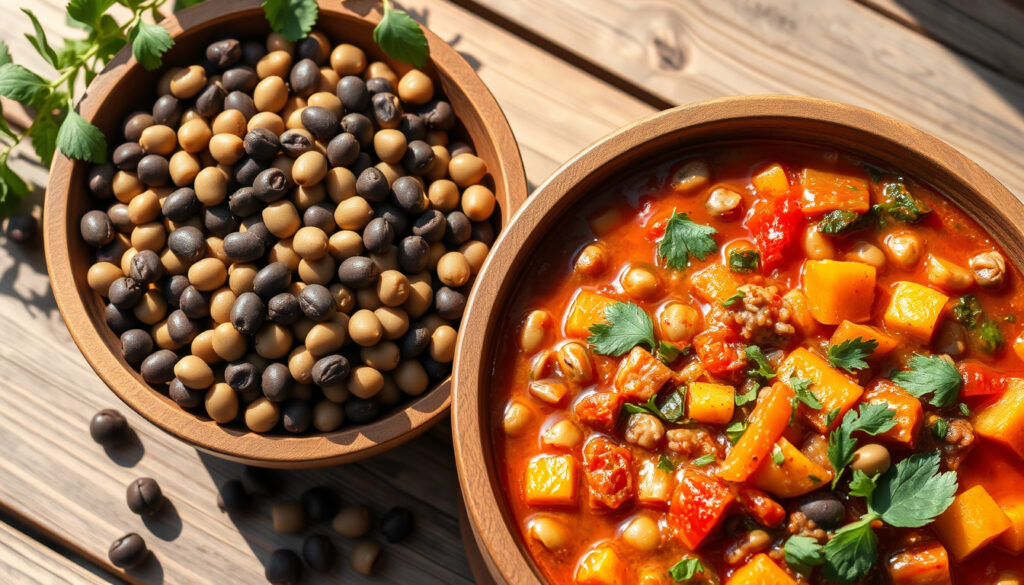
Black Eyed Peas Food: Nutrition, Recipes, Benefits
If you only know black-eyed peas as a New Year’s tradition, you’re missing out on one of the most nutritious legumes you can put on your plate. These medium-sized beans pack a serious nutritional punch—folate, fiber, and protein in every cup—and they cook faster than almost any other dried bean. Whether you’re looking to boost your plant-based eating or just want something new for weeknight dinners, black-eyed peas deserve a regular spot in your rotation.
Edible part: medium-sized bean · Classification: subspecies of cowpea · Culinary uses: stews, salads, patties · Regional staple: Southern US · Protein source: legume
Quick snapshot
- Specific long-term human trials confirming all claimed benefits (Medical News Today)
- Quantitative data on regional nutritional variations (US vs. Africa) (Medical News Today)
- USDA nutrition info published January 2020 (USDA Food and Nutrition Service)
- 2023 study links legume consumption to less 10-year weight gain in US adults (Healthline)
- Growing interest in black-eyed peas as sustainable protein source (Dr. Axe)
- Continued research on cardiovascular benefits from legume intake (Healthline)
The table below consolidates the most frequently cited nutritional benchmarks for black-eyed peas, drawing from Medical News Today and Healthline to give you a reliable at-a-glance reference.
| Label | Value |
|---|---|
| Common names | black-eyed pea, black-eyed bean |
| Type | legume, cowpea subspecies |
| Key uses | edible bean in dishes |
| Cultural note | Southern US staple |
| Calories per cup cooked (165g) | 160 |
| Protein per cup cooked (165g) | 5.2g |
| Fiber per cup cooked (165g) | 8.3g |
| Folate (% Daily Value per cup) | 52% |
| Vitamin A (% Daily Value per cup) | 44% |
Are black-eyed peas a healthy food?
Nutrition profile
Black-eyed peas are far more nutritious than their humble reputation suggests. One cup (165g) cooked contains 160 calories, 5.2g protein, and 8.3g fiber (Medical News Today). A separate measurement of one cup (171g) cooked shows 13g protein and 11g fiber with 89% of the Daily Value for folate (Healthline).
These beans deliver substantial micronutrients too. Per cup cooked, you get 52% of the Daily Value for folate, 44% for vitamin A, and 37% for vitamin K (Medical News Today). Folate supports DNA synthesis and cell production while helping prevent anemia, and vitamin A at 26% Daily Value per cup promotes eye health and skin maintenance (Dr. Axe). Potassium content reaches 20% of daily needs per cup, supporting healthy blood pressure control (Dr. Axe).
One cup of black-eyed peas covers over half your daily folate needs—a nutrient most Americans fall short on—and delivers more vitamin A than a carrot.
Health benefits
The fiber content in black-eyed peas serves multiple functions: it aids digestion, promotes regular bowel movements, and acts as a prebiotic feeding beneficial gut bacteria (Medical News Today). A 2012 meta-analysis confirmed that higher fiber intake improves constipation outcomes, while a 2017 review linked high-fiber diets to reduced coronary heart disease risk (Medical News Today).
Heart health benefits appear significant. Legume intake reduces LDL cholesterol by 19% and cardiovascular disease risk by 11% according to a review of 23 studies (Healthline). The potassium and fiber combination supports blood pressure management, while polyphenols provide antioxidant protection against cell damage (Healthline).
For weight management, the soluble fiber and protein work together to reduce the hunger hormone ghrelin, helping you feel fuller longer (Healthline). A 2023 study found that US adults who include legumes like black-eyed peas in their diet have less 10-year weight gain and lower BMI on average (Healthline).
The USDA classifies half a cup of cooked black-eyed peas as equivalent to 2 oz of protein or half a cup of vegetables in MyPlate guidelines, making them a flexible component of balanced meals (USDA Food and Nutrition Service).
Bottom line: Black-eyed peas deliver impressive fiber and folate numbers, with heart-health and weight-management benefits backed by peer-reviewed studies.
What is the best way to eat black-eyed peas?
Recipe ideas
Black-eyed peas adapt to nearly any cooking style, which is part of what makes them so valuable in the kitchen. They work in hearty stews, vibrant salads, crispy fried patties called “akara” in West African cuisine, and creamy dips (Dr. Axe). In the Southern United States, they’re a staple in dishes like hoppin’ john, where they’re simmered with rice and ham hock.
The mild, slightly nutty flavor absorbs seasonings well—think smoked paprika, cumin, garlic, and bay leaves for a simple side dish. They also hold their shape better than softer beans when added to soups, making them ideal for chunky preparations.
Black-eyed peas cook faster than navy beans (30-60 minutes versus 1.5-2 hours), but they still require overnight soaking if you want optimal texture and reduced cooking time.
Cooking methods
The most important preparation step is soaking. Unsoaked black-eyed peas can take up to two hours to cook, while soaked peas tenderize in 30-45 minutes on the stovetop. Soaking also helps reduce phytic acid, an antinutrient that can interfere with mineral absorption (Healthline).
After soaking, drain and rinse the peas, then simmer in fresh water with aromatics until tender. A slow cooker or pressure cooker cuts cooking time significantly—under 30 minutes in an Instant Pot. Unlike some beans, black-eyed peas don’t require a long simmering time to become creamy, making them weeknight-friendly.
Bottom line: Soak overnight and pressure-cook for the fastest path to tender, ready-to-use black-eyed peas.
Are black-eyed peas lentils or beans?
Botanical classification
Black-eyed peas are beans, not peas. Despite their name, they belong to the cowpea family (Vigna unguiculata subsp. unguiculata) (Dr. Axe). The confusion stems from their small size and the fact that they’re often prepared similarly to peas, but botanically they’re classified as legumes in the bean family.
Farmers value black-eyed peas for their nitrogen-fixing ability—they return nutrients, particularly nitrogen, to the soil, making them an excellent rotation crop that improves soil health for subsequent plantings (Dr. Axe).
Culinary category
In the kitchen, black-eyed peas fall squarely in the bean category. They’re sold dried, canned, and fresh in the shell, and they behave like other beans when cooked—they hold their shape, absorb flavors, and work in dishes where you’d use kidney beans, pinto beans, or cannellini beans. They’re distinct from lentils, which are smaller, cook faster without soaking, and have a softer texture when finished.
One practical advantage over some other beans: black-eyed peas are less likely to cause flatulence than pinto or black beans (Harvard Health). This makes them a gentler entry point for those new to eating legumes regularly.
Bottom line: Black-eyed peas are beans, not peas or lentils, and they offer a gentler digestive experience than most other dried beans.
What’s another name for black-eyed peas?
Regional names
The most common alternative is “black-eyed bean,” which is botanically more accurate since they’re beans, not peas. In the American South, they’re often called “southern peas,” reflecting their prominence in regional cuisine. Other names include “cowpea,” though that’s technically the broader species, and “niebe” in West African countries where the legume originated.
The name “black-eyed pea” itself comes from the distinctive black spot on the cream-colored bean—it looks like an eye, which gave rise to the memorable moniker.
Related varieties
Several close relatives fall under the cowpea umbrella, including purple hull peas, crowder peas, and field peas. These variations share similar nutritional profiles and cooking methods, though subtle differences in texture and flavor exist. Purple hull peas, for instance, have a slightly earthier taste and purple-streaked shells.
When a recipe calls for “field peas,” it may or may not mean black-eyed peas specifically—some regions use the term more broadly for any small, dried peas used in Southern cooking.
Bottom line: Black-eyed peas also go by “black-eyed bean” and “southern peas,” with related varieties like purple hull and crowder peas sharing the cowpea heritage.
What’s healthier, chickpeas or black-eyed peas?
Nutrient comparison
Both legumes are nutritious, but they excel in different areas. Chickpeas are higher in total calories and carbohydrates, making them slightly heavier, while black-eyed peas are richer in vitamin A (a nutrient chickpeas don’t provide in significant amounts) and cook faster. Black-eyed peas offer 44% Daily Value for vitamin A per cup, a benefit chickpeas simply don’t match (Medical News Today).
For folate, black-eyed peas are the winner at 52-89% Daily Value depending on serving size, compared to chickpeas at roughly 40% Daily Value per cup. Both provide complete plant proteins and substantial fiber for digestive health.
Health edge
The health edge depends on your priorities. If you’re focused on blood pressure control and heart health, black-eyed peas’ potassium (20% Daily Value per cup) and cardiovascular study backing give them an advantage (Dr. Axe). If you’re looking for a protein with more versatility for hummus and falafel, chickpeas may be more convenient.
One study found that legume intake broadly reduces LDL cholesterol by 19% and cardiovascular disease risk by 11%—benefits that apply to both legumes, not one over the other (Healthline).
Black-eyed peas win on vitamin A and folate density; chickpeas win on versatility and mild flavor. Neither is universally “healthier”—it depends on what nutrients your diet needs most.
Bottom line: Black-eyed peas outpace chickpeas in folate and vitamin A; chickpeas excel in culinary flexibility. Both are smart protein choices.
How to prepare black-eyed peas
Getting black-eyed peas from dry bag to dinner table takes planning ahead. Here’s how to do it right:
- Sort and rinse: Spread dried peas on a tray and pick out any debris or discolored beans. Rinse thoroughly under cold water.
- Overnight soak: Cover with cold water (2 inches above the peas) and let sit 8-12 hours. This cuts cooking time in half and reduces the compounds that cause gas.
- Drain and simmer: Discard soaking water (it contains released starches and antinutrients). Add fresh water, bring to boil, then reduce to a gentle simmer. Cook 30-45 minutes until tender.
- Season and serve: Add aromatics like onion, garlic, bay leaf, and salt during the last 15 minutes of cooking. Drain and use in your recipe, or season as a simple side dish.
A pressure cooker (like an Instant Pot) reduces active cooking time to 20-25 minutes total with the quick-release method, no overnight soak required. Just add 1.5 cups water per cup of dry peas.
Upsides
- Exceptional folate and vitamin A density
- Supports heart health, digestion, and weight management
- Quick cooking compared to most dried beans
- Gentler on digestion than pinto or black beans
- Versatile in soups, salads, and main dishes
- Improves soil health as a rotation crop
Downsides
- Requires planning (overnight soaking ideal)
- Phytic acid reduces mineral absorption if not properly prepared
- Limited evidence from long-term human trials on some claimed benefits
- Regional variations in nutrient content not fully studied
“Black-eyed peas aren’t peas at all—they’re beans.”
— Dr. Axe, Nutrition Expert (Dr. Axe)
“Black-eyed peas are highly nutritious and associated with many impressive health benefits.”
— Rachael Ajmera, MS, RD, Registered Dietitian (Healthline)
For home cooks looking to expand their legume repertoire, black-eyed peas offer a compelling case: they’re nutrient-dense, quick-cooking, and flexible enough for everything from weeknight stews to holiday traditions. The science backs their benefits for heart health and weight management, and their gentle digestion makes them approachable for anyone new to eating beans regularly. Adding a weekly serving of black-eyed peas to your rotation is a small change with outsized nutritional returns.
Related reading: Symptoms of Low Iron · How to Lose Weight Fast Naturally
Southern staples like black-eyed peas bring luck on New Year’s, and this no-soak Southern recipe skips soaking for quicker results.
Frequently asked questions
What do you normally eat with black-eyed peas?
They’re traditionally served over rice (as in hoppin’ john), alongside cornbread, or mixed into collard greens. For weeknight meals, pair them with roasted vegetables, grilled chicken, or as a protein-rich salad ingredient.
What is known as poor man’s meat?
Legumes like black-eyed peas have historically been called “poor man’s meat” because they provide plant-based protein at a fraction of the cost of meat. They remain an important affordable protein source in many cultures worldwide.
How nutritious are black-eyed peas?
One cup cooked provides 160 calories, 5.2-13g protein, 8.3-11g fiber, 52-89% Daily Value for folate, and 44% Daily Value for vitamin A. They also supply iron, zinc, magnesium, and potassium.
Can black-eyed peas be eaten daily?
Yes, they can be eaten regularly as part of a balanced diet. The USDA includes them as a protein or vegetable option in MyPlate guidelines. Half a cup cooked counts as 2 oz protein equivalent.
Are black-eyed peas low carb?
No—they contain about 33.5g carbs per cup cooked. They’re not a low-carb food, but their high fiber content (8.3g per cup) moderates blood sugar impact compared to refined carbohydrates.
What are the benefits of black-eyed peas?
Key benefits include supporting heart health through cholesterol reduction, aiding digestion via fiber, providing folate for cell production, and offering a plant-based protein source with antioxidants. A 2023 study also linked regular legume consumption to lower long-term weight gain.
How to store black-eyed peas?
Dried black-eyed peas keep 2-3 years in an airtight container in a cool, dark pantry. Cooked peas last 4-5 days refrigerated in a sealed container. For longer storage, freeze cooked peas for up to 6 months.
More related posts
 U.S. Economy News Today: Record Spending vs Recession Risks
 Dolce and Gabbana The One – Intense EDP Fragrance Guide
 Cast of Dangerous Animals (2025): Full List, Roles & Plot Summary
 Pacific Rim Movies in Order: Watch Guide
 What Does ‘As Above, So Below’ Mean? Origin & Misconceptions
 What Do Lions Eat? Lion Diet, Prey, and Hunting Guide
 Wheel of Time Season 4: Cancellation, Pickup, Release Date
 COVID-19 Symptoms: Current Signs, Duration, and Contagious Period