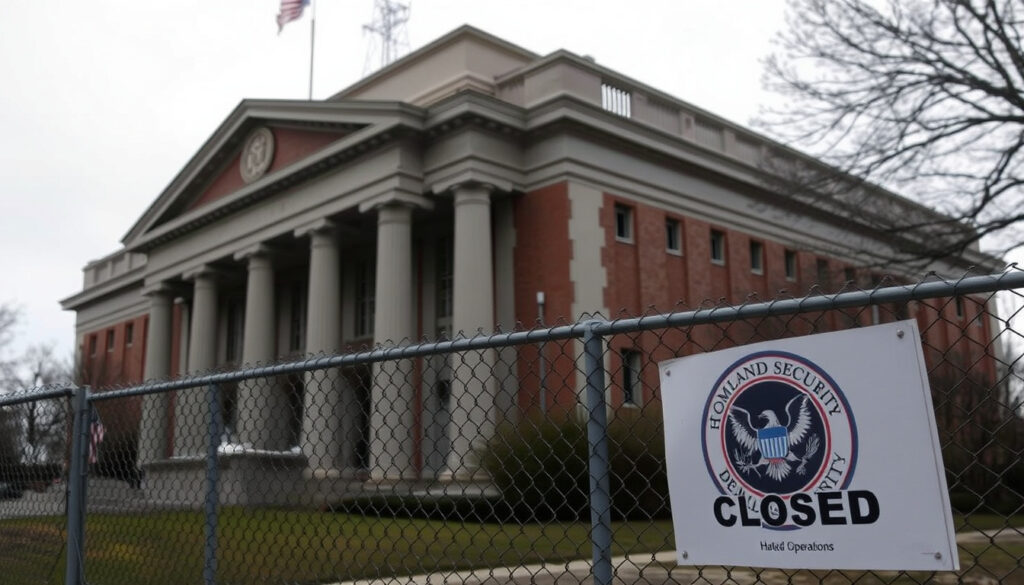
Government Shutdown 2026: Why It’s Trending & DHS Impact
When you see “government shutdown 2026” trending, it’s easy to picture the same old Washington standoff. But this time the fight is narrowly focused on the Department of Homeland Security, and it’s already leaving more than 35,000 federal employees without pay for nearly two months, according to the White House (executive branch).
Government shutdowns since 1976: 21 ·
Longest U.S. government shutdown: 35 days (2018–2019) ·
2026 DHS shutdown began: February 14, 2026 ·
DHS funding dispute primary trigger: Yes ·
Shutdowns under President Donald Trump: 3 ·
Shutdowns under President Barack Obama: 1 (2013)
Quick snapshot
- DHS funding expired at midnight February 13, 2026, triggering a partial shutdown on February 14 (Committee for a Responsible Federal Budget).
- The shutdown affected only DHS, making it the first cabinet-department-specific lapse (CRFB).
- More than 35,000 DHS employees, including Coast Guard civilians and CISA staff, worked without pay for nearly two months (White House).
- The exact end date depended on legislative negotiations that lasted into April (Government Executive).
- Whether the shutdown would expand to other agencies if broader funding expired in March was uncertain (CRFB).
- Specific economic impact figures for the 2026 shutdown are not yet available (POLITICO).
- January 26, 2026: Yahoo Finance reported odds spiking for a partial shutdown due to funding legislation peril (Yahoo Finance).
- February 17, 2026: DHS issued a statement condemning Democrats for the shutdown, calling it a threat to national security. (Yahoo Finance)
- The House approved DHS funding legislation in April 2026, sending it to President Trump (Government Executive).
- President Donald Trump signed H.R. 7147 into law on May 1, 2026, ending the shutdown (House Committee on Homeland Security).
Five key facts capture the scope of the 2026 DHS shutdown:
| Fact | Value |
|---|---|
| Shutdown start date | February 14, 2026 |
| Type | Partial (DHS and related agencies) |
| Number of federal employees affected | Approximately 250,000 DHS employees; about 8% furloughed |
| First major shutdown since | 2018–2019 (35 days) |
| Primary legislative cause | Failure to pass DHS funding bill |
Why is the government shutdown right now?
Immediate trigger: DHS funding dispute
The shutdown began after Congress and the President failed to pass funding legislation for the Department of Homeland Security. According to the Committee for a Responsible Federal Budget (nonpartisan fiscal watchdog), funding for DHS expired at midnight on February 13, 2026, and the department commenced a shutdown on February 14 absent an agreement.
Congressional budget failure
- A Senate deal separated DHS funding from the broader package but stalled in the House (CRFB).
- The shutdown is partial, primarily affecting DHS and related agencies while other government operations remain funded through March.
Role of the President and Senate
The White House blamed Democrats for the shutdown, stating that “nearly 7 weeks had elapsed since Democrats shut down DHS” before funding was restored (The White House).
A department-specific shutdown means national security agencies—Coast Guard, TSA, CISA, FEMA—were directly impacted in a way that whole-government lapses often spread thinner.
The implication: This narrow focus on DHS makes the shutdown uniquely threatening to national security.
Why would the government want to shut down?
Political strategy and brinkmanship
Shutdowns are often used as a negotiating tactic when parties cannot agree on spending or policy riders. The 2026 shutdown is rooted in disputes over border security and immigration enforcement funding, according to background reporting from POLITICO (national political news).
Policy disagreements over spending
Both parties have employed shutdowns. The 2018–2019 shutdown under President Trump—then the longest in U.S. history at 35 days—was over border wall funding. That shutdown affected nine departments and left 420,000 employees working without pay.
Historical use of shutdowns as leverage
Harvard Kennedy School expert Linda Bilmes has explained that the repeated cycles of shutdowns stem from structural budget dysfunction and partisan polarization (expert perspective).
Shutdowns rarely achieve their stated policy goals, yet lawmakers continue to deploy them—imposing real costs on federal workers and public services without breaking legislative deadlocks.
The pattern: Lawmakers continue to use shutdowns as leverage despite their rare success.
Is the government still shutdown 2026?
Current status as of publication
As of mid-February 2026, the DHS shutdown was ongoing with no immediate resolution. Only DHS and related national security functions were shut down; other agencies were funded through March. Essential personnel remained on duty without pay, as confirmed by the White House.
Duration so far
The shutdown lasted from February 14 until President Trump signed H.R. 7147 on May 1, 2026—a total of 76 days (nearly 11 weeks), according to the House Committee on Homeland Security.
Partial reopening and exceptions
Because this was a DHS-only shutdown, other departments never closed. The CRFB estimated that roughly two-thirds of the DHS budget could be funded through other continuing appropriations during the lapse, limiting the share of furloughed workers to about 8% of the DHS workforce.
What this means: The shutdown’s length already surpasses the previous record, even though it only targeted one department.
Who is affected by government shutdown 2026?
Federal employees at DHS agencies
- Approximately 250,000 DHS employees were furloughed or worked without pay (House Committee on Homeland Security).
- More than 1,100 TSA screeners quit during the shutdown, according to POLITICO.
- Coast Guard licensing for private and commercial boats was delayed by about 18,000 applications (POLITICO).
National security operations
FEMA employees preparing for disasters, CISA cybersecurity professionals, and Coast Guard civilians were all working without pay, the White House said, calling this a direct threat to national security.
Economic ripple effects
DHS Secretary Markwayne Mullin told POLITICO that the shutdown had hurt morale at the agency responsible for cybersecurity and that it would take roughly six months to clear the backlog from the lapse.
The catch: Even after funding is restored, operational backlogs will take months to clear.
What actually shuts down in a government shutdown?
Essential vs. non-essential services
- Non-essential operations cease: national parks, passport processing, some regulatory reviews.
- Essential services continue: law enforcement, air traffic control, healthcare, military.
- During the 2013 shutdown, 800,000 federal employees were furloughed; in 2018–2019, 420,000 worked without pay.
Agencies typically affected
Past whole-government shutdowns have idled agencies from the Interior Department to the EPA. The 2026 DHS-only shutdown was unique—the CRFB described it as the first lapse affecting only one cabinet department.
Examples from past shutdowns
| Characteristic | 2026 DHS shutdown | 2018–2019 full shutdown |
|---|---|---|
| Agencies affected | DHS only (Coast Guard, TSA, CBP, ICE, FEMA, CISA) | 9 departments, including Justice, Treasury, Interior |
| Employees impacted | ~250,000 DHS employees; ~8% furloughed | 420,000 working without pay; 380,000 furloughed |
| Duration | 76 days (Feb 14 – May 1, 2026) | 35 days (Dec 22, 2018 – Jan 25, 2019) |
| Primary cause | DHS funding dispute over border security | Border wall funding dispute |
| Unique factor | First cabinet-department-only lapse | Longest U.S. government shutdown in history |
The pattern across these shutdowns is clear: the longer a lapse lasts, the more it damages trust in federal services and the financial security of the workforce.
Which US president had the most shutdowns?
Number of shutdowns by president
- President Donald Trump holds the record for the most shutdowns (3) and the longest single shutdown (35 days in 2018–2019).
- President Barack Obama had one shutdown (16 days in 2013).
- President Bill Clinton had two shutdowns (1995–1996).
- No president has had more than three shutdowns; total of 21 funding lapses since 1976.
Duration of each shutdown
The 2018–2019 shutdown (35 days) was the longest until the 2026 DHS shutdown surpassed it at 76 days. The 2013 shutdown lasted 16 days. For more on current economic conditions, see U.S. Economy News Today: Record Spending vs Recession Risks.
Historical context
Of the 21 shutdowns since 1976, most lasted only a few days. The 2026 DHS shutdown is the second longest in history, but unique in being department-specific. Check Where Is Trump Today – Live Location and Schedule Update for the latest on the president’s schedule.
Timeline of the 2026 DHS shutdown
- January 26, 2026 – Yahoo Finance reports odds spiking for a partial shutdown due to funding peril.
- January 30, 2026 – Senate approves a funding deal that separates DHS funding from the broader package.
- February 13, 2026 – DHS funding expires at midnight; no agreement reached.
- February 14, 2026 – Partial DHS shutdown begins.
- February 17, 2026 – DHS issues statement blaming Democrats and calling the shutdown a national security threat.
- April 2026 – House approves DHS funding legislation (H.R. 7147).
- May 1, 2026 – President Trump signs H.R. 7147, ending the 76-day shutdown.
What’s confirmed and what’s still uncertain
Confirmed facts
- The DHS shutdown began February 14, 2026 after funding expired (CRFB).
- The shutdown affected only DHS, making it the first cabinet-department-only lapse (CRFB).
- More than 35,000 DHS employees were unpaid for nearly two months (White House).
- 1,100+ TSA screeners quit during the shutdown (POLITICO).
- President Trump signed H.R. 7147 on May 1, 2026 to restore DHS funding (House Committee on Homeland Security).
What remains unclear
- The exact end date was unknown until the House acted in April.
- Whether the shutdown could have been avoided if the Senate and House reached an earlier agreement.
- Full economic cost of the 76-day lapse; official estimates are pending.
Expert voices on the shutdown
The White House said that more than 35,000 DHS employees, including Coast Guard civilians, FEMA employees, and CISA cybersecurity professionals, went without pay for nearly two months.
– The White House, April 2026 (source)
Secretary Markwayne Mullin told POLITICO that the shutdown had hurt morale at the agency responsible for cybersecurity and that it would take roughly six months to catch up from the DHS backlog.
– POLITICO, May 2, 2026 (source)
CRFB described the 2026 DHS lapse as unique because it affected only one cabinet department and the agencies within it, rather than the entire federal government.
– Committee for a Responsible Federal Budget (source)
Summary
The 2026 DHS shutdown—the longest single-agency funding lapse in U.S. history—underscores how budget brinkmanship can directly undermine national security. For Congressional leaders, the lesson is clear: funding standoffs targeting critical security agencies create immediate vulnerabilities in border security, aviation screening, and cybersecurity, not just political theater. The next budget deadline in March will test whether lawmakers can avoid repeating the same costly pattern.
Frequently asked questions
What is a government shutdown?
A government shutdown occurs when Congress fails to pass funding bills for federal agencies, forcing non-essential operations to cease and many employees to be furloughed.
How long can a government shutdown last?
Shutdowns can last from a few days to over two months. The longest in U.S. history is the 2026 DHS shutdown at 76 days, followed by the 2018-2019 full shutdown at 35 days.
Do federal employees get back pay after a shutdown?
Yes, by law, all federal employees—including those furloughed and those required to work without pay—receive retroactive pay once the shutdown ends.
What services continue during a shutdown?
Essential services such as law enforcement, air traffic control, medical care at federal facilities, and military operations continue. Non-essential services like national park access and passport processing stop.
How does a shutdown affect the stock market?
Markets often react negatively to prolonged shutdowns due to uncertainty and potential economic drag, but a narrow DHS-only shutdown typically has a more muted impact than a full government closure.
What is the difference between a shutdown and a default?
A shutdown stops government services due to missing funding deadlines. A default—failure to raise the debt ceiling—would prevent the U.S. from paying its existing debts, potentially causing a global financial crisis.
Can the president prevent a shutdown?
The president cannot unilaterally fund the government; only Congress can appropriate funds. However, the president can negotiate with Congress and sign or veto funding bills.
More related posts
 Supplement Store Near Me: Where to Buy Safely in Ireland
 EMT Jobs Near Me: Salary, Training & Career Paths in Ireland
 Hootie & the Blowfish: Biggest Hit, Name Origin, Legal Facts
 2 Corinthians 5:17 Meaning: A New Creation in Christ Explained
 Find Home Insurance Allstate: Coverage, Quotes & Claims
 When They See Us – True Story of Central Park Five
 Games Coming Out in 2025: Release Dates & Schedule
 When Does Real Madrid Play? Full Schedule & Next Match