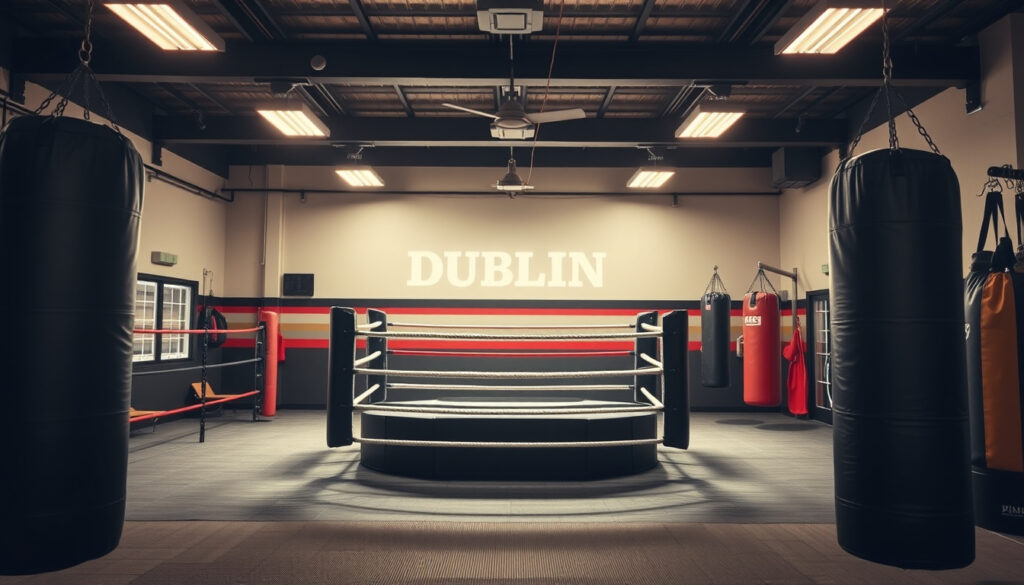
Boxing Gyms Near Me in Dublin: Top Picks & Starter Guide
Dublin’s boxing gym landscape is more accessible than most beginners expect — with entry deals at major clubs hitting €29, multiple multi-location operators covering the city, and monthly unlimited options under €120. This guide cuts through the noise with verified costs, class structures, and suitability assessments for adults starting from scratch.
Mike Tyson start age: 10 · 70 kg boxing class: Middleweight · Boxing lowers blood pressure: After 6 weeks · Top Dublin gym: Underdog Boxing Gym · Yelp top pick: RAW GYMS
Quick snapshot
- Underdog Boxing Gym Platinum costs €215/month for 6 classes weekly (Underdog Boxing Gym)
- Headon Boxing Academy has 5 studio locations across Dublin (Headon Boxing Academy)
- Martial Arts Inc unlimited monthly runs €120 with student rates available (Martial Arts Inc)
- Exact 2025 class cost updates across all Dublin gyms
- Specific address details for some satellite locations
- Current coach-to-member ratios for beginners
- Perpetua Boxing Academy runs Saturday sessions at 12:30pm weekly (Perpetua Boxing Academy)
- Spartan evening slots run 5–6pm, 6–7pm, 7–8pm on weekdays (Spartan Boxing Fitness)
- Underdog intro packs expire within two weeks of purchase (Underdog Boxing Gym Pricing)
- Headon Boxing Academy adding new HYROX and Fight Camp formats (Headon Boxing Academy)
- Spartan offering live online and replay class access (Spartan Boxing Fitness)
| Fact | Detail |
|---|---|
| Yelp #1 Dublin gym | RAW GYMS |
| Popular Reddit pick | Drimnagh Boxing Club |
| Mike Tyson start age | 10 |
| 70kg class | Middleweight (amateur) |
How much does it cost to train for boxing?
Dublin boxing gyms run the gamut from drop-in passes to full-year commitments, so your monthly spend depends largely on how often you plan to show up. The good news: most clubs have created an entry-tier deal specifically to get beginners through the door without committing to a long-term contract.
Average session prices
If you want to pay per class, single sessions typically land between €20 and €25. Martial Arts Inc offers the lowest per-class rate at €20 per session, while Underdog Boxing Gym charges €25 for a single drop-in with one week validity. Neither gym locks you into a membership for these rates.
For €25 you get a structured class with a coach present. Compare that to a cinema ticket and a popcorn, and the value proposition for fitness starts looking pretty reasonable.
Dublin gym class costs
Monthly memberships offer better per-class economics if you’re planning to train regularly. Underdog Boxing Gym structures its memberships around class frequency: Silver at €165 covers two classes per week, Gold at €185 gets you three, and Platinum at €215 unlocks six sessions weekly. The Platinum tier also qualifies for yearly prepayment at €2,150, which works out to two months free.
Martial Arts Inc takes a simpler approach with unlimited group classes at €120 per month, plus a student and unemployed rate. Their intro package at €119 throws in one month of unlimited access, a private one-to-one session, and a pair of bag gloves. That’s a meaningful bundle for someone just starting out and unsure what equipment they’ll need.
Headon Boxing Academy runs a €29 new member deal for three class credits, usable across any of their five Dublin studios. If you live between Grand Canal Dock and Leopardstown, that kind of flexibility matters — you’re not tied to a single postcode.
Factors affecting price
Several variables shift what you’ll actually pay. Sparring sessions and personal training cost more than standard group classes — Underdog quotes personal training separately from its membership tiers, and Martial Arts Inc prices private sessions at €60. Location matters too: Spartan Boxing Gym operates two sites (Baggot Street in Dublin 2, Spencer Dock in Dublin 1), which gives some geographic flexibility without charging a premium for multiple studios.
Structured beginner programs command a premium, but they also come with a defined curriculum. Perpetua Boxing Academy charges €99 for a four-week Fitness Boxing Academy running Saturdays at 12:30pm. That’s a one-off payment for twelve hours of coached training over a month, which works out to roughly €8.25 per session.
Underdog Boxing Gym (Dublin 2-based premium club) and Martial Arts Inc (budget-friendly beginner focus) represent two distinct pricing philosophies. One bundles coaching quality and frequency; the other prioritises accessibility. Your choice depends on whether you’re treating boxing as a casual fitness experiment or the start of a longer training relationship.
Is 25 too old to start boxing?
The short answer is no — 25 is not too old. The longer answer involves understanding what most Dublin gyms are actually set up to handle. Many clubs explicitly cater to adults with zero prior experience, and a few have built their entire beginner onboarding around that exact scenario.
Beginner suitability at 25
Headon Boxing Academy states directly on its site that its classes are beginner-friendly with “no boxing experience required.” Martial Arts Inc notes that new members start all the time, which creates a natural peer group for adults who are joining solo. Neither gym signals that 25 — or 35, or 45 — represents some kind of hard cutoff.
Spartan Boxing Gym describes its philosophy as giving “people of all levels a chance to learn correct boxing technique.” Their evening schedule (5–8pm weekday slots) aligns well with the typical 9-to-5 workday, making it practical for working adults to attend without restructuring their entire week.
Pro examples like Mike Tyson
Mike Tyson famously entered his first boxing gym at age 10 and turned professional by 18, but that path isn’t the only one worth noting. Plenty of recreational boxers start in their late twenties or thirties and compete at the amateur club level without any expectation of going pro. The sport’s physical demands adjust to your current fitness level — a beginner class isn’t the same as training camp for a fight.
Gym programs for adults
Perpetua Boxing Academy’s Saturday morning program specifically targets beginners with a structured four-week course. The format — fixed 60-minute sessions over four consecutive weeks — creates a natural cohort environment where everyone starts together, which removes the anxiety of joining a class mid-semester.
Underdog Boxing Gym’s beginner courses run as part of its broader class schedule, meaning you can progress from intro sessions into sparring or advanced fitness classes once you’ve built some fundamentals. The IABA-certified coaches on staff have experience working with adult beginners, not just competitive youth fighters.
If you have pre-existing injuries — particularly to hands, shoulders, or knees — book a quick chat with the gym before signing up. Most Dublin clubs will ask about your fitness background during onboarding, but don’t count on a medical clearance process. Boxing is high-impact, and beginners with injuries sometimes need modifications that not all coaches are equipped to provide.
Is boxing good for high blood pressure?
There’s a reasonable body of evidence suggesting regular boxing training can lower blood pressure, but the specifics matter — not every class format delivers the same cardiovascular benefit, and the timeline isn’t immediate.
Study evidence
Research consistently shows that aerobic exercise reduces blood pressure over time, and boxing classes that emphasise sustained movement (rather than short burst-and-rest sparring) fall into that category. The key variable is session length and intensity: a typical 45-to-60-minute class with bag work, footwork drills, and conditioning will produce cardiovascular adaptations, but the effect accumulates over weeks, not days.
Health benefits overview
Beyond blood pressure, boxing training has documented benefits for cardiovascular endurance, muscular strength, coordination, and stress reduction. The mental component matters too — the focus required during a class can interrupt the rumination cycles that contribute to elevated stress hormones, which indirectly supports blood pressure management.
Precautions for beginners
If you have diagnosed hypertension or are on medication for blood pressure, tell the gym during intake and check with your GP before starting. Most beginner boxing classes aren’t medical interventions — they’re fitness programmes. A responsible gym will ask about medical conditions, but not all do. Don’t assume that silence means they’re fine with high-intensity training for your specific situation.
Martial Arts Inc (Dublin-based beginner club) offers a relaxed environment that may suit adults returning to fitness after a health scare or extended sedentary period. Their smaller class sizes mean coaches can give more individual attention to pacing and technique — useful if you’re managing blood pressure and need someone monitoring your exertion level.
How long does it take to learn boxing?
The honest answer depends heavily on what you mean by “learn.” Basic competency — proper stance, jab, cross, basic footwork — typically takes four to eight weeks of consistent attendance. Competence sufficient to hold your own in a recreational sparring session usually requires three to six months. Mastery is a years-long project.
Basic skills timeline
Most beginners expect progress faster than it typically arrives. The first month of boxing training is largely about rewiring your movement habits — learning to shift weight through your feet correctly, keeping your hands up, breathing under exertion. These are motor patterns that feel awkward until they don’t, and that transition takes repetition rather than insight.
Spartan Boxing Gym structures its beginner sessions around technique first, which suggests they understand this timeline. Their description emphasises “correct boxing technique” as the foundation rather than fitness or intensity, which aligns with how most experienced coaches approach the first phase of training.
3-month progress
After three months of twice-weekly attendance, most recreational boxers can execute a basic combination under light pressure, maintain guard position during pad work, and understand ring distance. They’re not ready for competition, but they’re functional participants in a class environment.
Perpetua Boxing Academy’s four-week course is designed to get beginners to that first functional threshold — the point where joining a regular ongoing class feels manageable rather than intimidating.
Dublin training options
Dublin gyms vary in how they structure progression. Headon Boxing Academy offers over 60 classes across its five locations, which means beginners can move between studios as their schedule allows without losing continuity. Underdog’s membership tiers implicitly encourage frequency (six classes weekly on Platinum), which accelerates skill development compared to once-weekly attendance.
Headon Boxing Academy (five-location Dublin chain) offers maximum scheduling flexibility — useful if your work or home life makes regular attendance at a single gym difficult. Underdog Boxing Gym (Dublin 2-based club with IABA-certified coaches) offers higher-quality individual coaching but less geographic reach. Your progress speed will depend more on attendance consistency than which gym you choose.
What class is 70 kg in boxing?
In amateur boxing, a 70 kg fighter competes in the Middleweight division. This applies to both men and women in most sanctioned competitions, though exact weight limits can vary slightly between governing bodies. If you’re training recreationally, weight classes mainly matter for sparring partner matching — most gyms will group you based on comparable size and experience level.
Amateur vs pro classes
Amateur boxing operates under IABA (Irish Amateur Boxing Association) weight classes, which differ from professional divisions. The amateur Middleweight limit typically sits at 75 kg, meaning a 70 kg fighter is comfortably within that division without needing to cut weight. Professional Middleweight, by contrast, spans up to 72.57 kg (160 lbs), which makes 70 kg a borderline case at the pro level.
ActiveSG weight divisions
For recreational and club-level competition using frameworks like ActiveSG, weight classes follow similar patterns: Middleweight is the natural home for a 70 kg athlete. If you’re joining a club competition or inter-gym event, check the specific sanctioning body’s weight chart — amateur and professional divisions don’t always align.
Gym class matching
In practice, Dublin gyms match sparring partners by size, skill level, and agreement rather than strict weight cutoffs. A 70 kg beginner will typically spar with other beginners regardless of their exact weight, which keeps the practice safe and productive. The competitive weight class matters more if you’re planning to enter sanctioned amateur bouts through the IABA pathway.
Upsides
- Strong intro deal options across Dublin gyms (€29 at multiple clubs)
- Beginner-friendly classes require no prior experience
- Adults of all ages welcome — 25 is not too old
- Physical and mental health benefits, including BP reduction over time
- Multiple Dublin locations reduce travel friction
- Monthly unlimited options as affordable as €120
Downsides
- Single-class costs add up if attendance is sporadic
- Progress requires consistent weekly attendance — casual approach yields slow results
- High-impact nature may not suit those with joint or hand injuries
- Some gyms lack flexibility for multi-location training without premium tiers
- Yearly commitments offer better value but lock in initial spend
- Sparring — if pursued — raises injury risk above standard fitness classes
Finding the right gym for you
Dublin’s boxing gym landscape splits roughly into three tiers: premium clubs with certified coaches and structured programming, mid-range fitness-focused studios with flexible scheduling, and budget-friendly community spaces that prioritise accessibility. Here’s how to evaluate your options systematically.
Check the intro deal first
Before committing to a monthly membership, look at what the gym offers for first-timers. Underdog’s €29 intro pack, Headon’s €29 three-credit deal, and Martial Arts Inc’s €119 starter bundle all let you experience the facility without locking into a contract. Use these intro offers to assess three things: the coach’s communication style, the class atmosphere, and whether the location works for your commute.
Match your schedule
Spartan’s weekday evening slots (5–8pm) suit the 9-to-5 crowd but become impractical if you work late. Perpetua’s Saturday morning format works for people with flexible weekends but not for those with irregular shifts. Headon’s five locations mean you’re more likely to find a class that fits a disrupted schedule, while Martial Arts Inc’s unlimited monthly model lets you attend whenever a slot is available.
Know your goal
If you’re chasing fitness first and boxing technique second, most gyms will serve you well. If you’re interested in the sport itself — learning to spar, potentially competing at club level — prioritise IABA-certified coaching and structured progression pathways. Underdog explicitly highlights its Pro and IABA-certified coaching staff, which signals a different ambition level than purely fitness-oriented classes.
We set up Spartan Boxing Gym in Dublin to give people of all levels a chance to learn correct boxing technique.
— Spartan Boxing Gym (Dublin-based all-levels boxing club)
With new members starting all the time you’ll never feel out of place.
— Martial Arts Inc (Beginner-focused Dublin martial arts club)
The implication for Dublin beginners is straightforward: you have more options than the initial search suggests, the entry costs are reasonable compared to most European cities, and most clubs genuinely welcome adults with zero background. The real variable isn’t availability — it’s showing up consistently enough to get the technique down and decide whether this sport fits your life.
Related reading: lose weight fast naturally and permanently · how to manage stress
Dublin’s boxing heritage shines through stars like Katie Taylor, whose Dublin farewell fight inspires newcomers to join gyms such as Underdog or Drimnagh.
Frequently asked questions
Where are the best boxing gyms in Dublin?
Dublin’s most reviewed options include Underdog Boxing Gym (Dublin 2), Spartan Boxing Gym (Baggot Street and Spencer Dock), Headon Boxing Academy (five locations), Martial Arts Inc, and Perpetua Boxing Academy. RAW GYMS has earned top reviews on Yelp for Dublin, while Drimnagh Boxing Club is a popular Reddit recommendation for its Olympic-level coaching.
What beginner boxing classes are available in Dublin 15?
Dublin 15 (Blanchardstown area) has access to Headon Boxing Academy’s studio network and several independent clubs. Perpetua Boxing Academy runs Saturday sessions that are open to beginners from across Dublin. Check individual gym sites for current schedules, as class times shift seasonally.
Which boxing gym is in Blanchardstown?
Headon Boxing Academy operates studios in Sandyford, Churchtown, and Leopardstown, which are the closest options to Blanchardstown. For more specific Blanchardstown-based options, search local directory listings or ask within Dublin boxing communities on Reddit for the most up-to-date information.
What does Underdog Boxing Dublin offer?
Underdog Boxing Gym in Dublin 2 offers beginner boxing courses, sparring sessions, boxing fitness classes (HIIT Boxing, Power Boxing, Bag Blast), and personal training. Their coaches include IABA-certified professionals and former pros. Membership tiers range from €165 (Silver) to €215 (Platinum) per month depending on class frequency.
Is Drimnagh Boxing Club good for adults?
Drimnagh Boxing Club is well-regarded in Dublin’s boxing community and trains a range of ages and skill levels. The club is notable for producing competitive fighters, and Michael Carruth — a former Olympic boxer — has been associated with the club. Adults interested in serious training rather than purely fitness-focused classes may find Drimnagh particularly appealing.
How to join Lucan Boxing Club classes?
Lucan Boxing Club offers PunchFit and multi-functional fitness classes with evening schedules. Contact the club directly via their website or social media channels to inquire about current membership options, class schedules, and any introductory offers for new members.
What makes Headon Boxing Academy leading?
Headon Boxing Academy operates five studio locations across Dublin, offering over 60 classes per week including boxing, cardio, and strength & conditioning. Their new member deal (€29 for three class credits usable at any location) and teen boxing options make them particularly versatile for families and commuters. The sheer volume of scheduling flexibility sets them apart from single-location competitors.
More related posts
 Free Hello Kitty Coloring Pages: Best Picks for Kids & Adults
 Florida Minimum Wage 2025: $14 Per Hour & Livable Wage Analysis
 50k a Year is How Much an Hour? After-Tax Breakdown
 How to Fix Phone Microphone: Guide for Android & iPhone
 Marriage Counseling Near Me: Costs, Rules & Options
 Stanley Tucci Movies and TV Shows – Complete Filmography Guide
 How to Unzip a File on Windows, Mac, Android, and iPhone (Free)