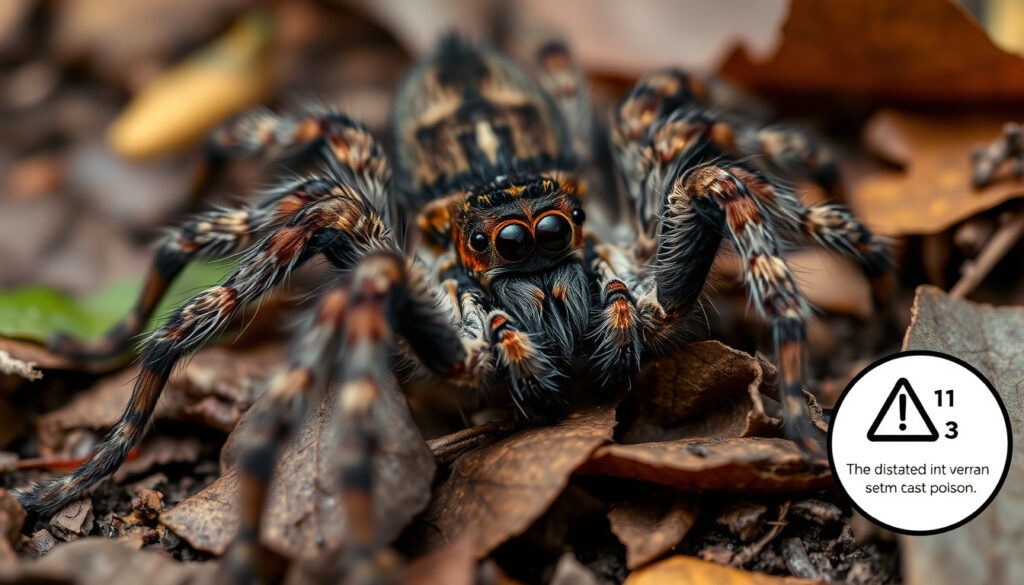
Are Wolf Spiders Poisonous? Venom vs Poison & Bite Facts
If you’ve ever spotted a fast, hairy spider scurrying across the floor and felt a chill, you’re not alone. Wolf spiders are among the most common household spiders in the U.S., and many people worry they’re dangerous. The truth is these eight-legged hunters are venomous, not poisonous, and their bites are far less scary than folklore suggests—here’s what you actually need to know.
Wolf spider species worldwide: over 2,300 ·
Venomous: yes (but mild for humans) ·
Fatal to humans: never recorded ·
Typical bite reaction: local pain, swelling, itching ·
Medical attention needed: rarely
Quick snapshot
- Wolf spiders are venomous, not poisonous (Cleveland Clinic medical authority)
- No human deaths recorded from wolf spider bites (Cleveland Clinic medical authority)
- Exact frequency of allergic reactions (Responsible Pest Control)
- Pre-2000s: Wolf spiders widely feared as deadly in folklore (WebMD health resource)
- 2000–2010: Medical sources clarify bites are minor (WebMD health resource)
- 2024: CDC and WebMD confirm no fatal cases (Your Health Magazine consumer health site)
- Ongoing public education on venom vs. poison
- More research on rare allergic responses
Six key facts, one pattern: wolf spiders are far less dangerous than their reputation suggests, and understanding the terminology changes everything.
| Fact | Details |
|---|---|
| Number of species | 2,300+ |
| Venomous | Yes (mild) |
| Fatal to humans | No |
| Bite reaction | Local pain, swelling |
| Medical attention | Rarely needed |
| Lifespan | 1–2 years |
Are Wolf Spiders Poisonous to Humans?
Venom vs. Poison: What’s the Difference?
- Wolf spiders are venomous, not poisonous. Venom is injected via fangs; poison is ingested or absorbed through the skin (Cleveland Clinic medical authority).
- The distinction matters: you can touch a wolf spider without harm, but a bite delivers a mild venom cocktail.
- Medical experts emphasize that wolf spiders do not secrete poison from their bodies.
What Medical Experts Say
- The CDC NIOSH (federal occupational safety authority) lists only black widows and brown recluses as medically important spiders in the U.S.—wolf spiders are not on that list.
- California Poison Control (state health agency) notes that spider bites are rarely life-threatening, with anaphylaxis being the main concern—not venom toxicity.
- ScottsMiracle-Gro (home and garden authority) confirms wolf spider venom is not dangerous to humans, though some may experience mild stinging and redness.
What Happens if a Wolf Spider Bites You?
Immediate Symptoms
- Common wolf spider bite symptoms include redness, swelling, itching, mild pain, and a burning sensation (Your Health Magazine consumer health site).
- Some sources describe cases of severe pain, though this framing is not consistent across medical guidance (Responsible Pest Control industry blog).
- California Poison Control (state health agency) lists warning signs such as dizziness, fever, chills, headache, and stiffness—but these are rare.
When to See a Doctor
- Medical attention is rarely needed. Cleveland Clinic medical authority advises seeing a doctor if symptoms worsen or signs of infection appear.
- California Poison Control (state health agency) recommends seeking professional help if anaphylaxis symptoms (difficulty breathing, swelling of the face) occur.
- Allergic reactions to wolf spider bites are reportedly rare (Responsible Pest Control industry blog), but any severe response warrants a call to poison control.
First Aid for Wolf Spider Bites
- Wash the bite area with soap and water (CDC NIOSH).
- Apply a cold compress or ice to reduce swelling (CDC NIOSH).
- Use an antihistamine for itching and antibiotic ointment to prevent infection (Cleveland Clinic medical authority).
- Do not attempt to remove venom; seek medical care if needed.
Most wolf spider bites heal on their own in days. The bigger risk is infection from scratching, not the venom itself.
The pattern: wolf spider bites are manageable at home, and serious complications are extremely rare.
Why Shouldn’t You Squish a Wolf Spider?
Squishing Releases Spiderlings
- Female wolf spiders carry their egg sacs attached to their spinnerets. When squished, the sac can burst, releasing hundreds of baby spiders (ScottsMiracle-Gro home pest guide).
- Those spiderlings scatter quickly, creating a bigger problem than the single spider you intended to eliminate.
Ethical and Ecological Reasons
- Wolf spiders are natural pest controllers. They eat insects like cockroaches, flies, and mosquitoes (WebMD health resource).
- Killing them disrupts the local ecosystem. Outdoors, they keep garden pests in check without chemicals.
Better Ways to Remove a Wolf Spider
- Capture and release using a jar and a piece of cardboard. Slide the spider into the jar and release it outdoors.
- Use a vacuum cleaner with a hose attachment if you don’t want to get close.
- Seal cracks and gaps in doors and windows to prevent future entries.
Squishing a female wolf spider can instantly turn one spider into dozens of fleeing babies, making the problem worse—not better.
The implication: capture and release is the smarter move, both for your home and the environment.
Are Wolf Spiders Aggressive?
Defensive vs. Aggressive Behavior
- Your Health Magazine consumer health site states wolf spiders usually bite only because they are scared.
- CDC NIOSH (federal safety authority) notes that spiders are usually not aggressive; most bites occur when a spider is trapped or touched.
- Wolf spiders are hunters that run fast but prefer to flee rather than fight.
Do Wolf Spiders Chase Humans?
- Wolf spiders may run toward you if threatened, but it’s a defensive bluff—they are trying to escape, not attack.
- Their eyesight is excellent for a spider, so they can detect movement and react quickly.
- Stand still and let the spider pass; it will not pursue you.
The implication: wolf spiders are not a threat to humans and will avoid conflict if given the chance.
When Should You Get Rid of a Wolf Spider?
Indoor vs. Outdoor Sightings
- Outdoor wolf spiders provide natural pest control and should be left alone.
- Indoor sightings can be managed by capture and release. Professional extermination is rarely necessary (ScottsMiracle-Gro home pest guide).
Natural Pest Control Benefits
- One wolf spider can consume dozens of insects per day, reducing the need for chemical pesticides.
- They are harmless to humans and pets when left undisturbed.
What this means: coexistence is both practical and ecologically beneficial.
Confirmed facts
- Wolf spiders are venomous, not poisonous (WebMD health resource).
- No human deaths from wolf spider bites (CDC NIOSH).
- Bites cause mild localized symptoms and heal at home (WebMD health resource).
What’s unclear
- Exact frequency of allergic reactions remains undocumented.
- Long-term effects of multiple bites are not studied.
- Some sources describe severe pain but this is not consistent across medical guidance.
“The bite of a wolf spider is typically harmless.”
— Cleveland Clinic medical authority
“Wolf spiders aren’t venomous, meaning they don’t make or secrete venom (poison).”
— WebMD health resource
For the average homeowner in the U.S., the decision is clear: learn to coexist with wolf spiders rather than fear them. Squish one and you might invite dozens more; capture and release is the smarter move—or leave it be and let it earn its keep as free pest control.
Frequently asked questions
Are wolf spider bites dangerous to babies?
Babies may have more sensitive skin, but wolf spider bites are still mild. Clean the area and monitor for signs of infection. Consult a pediatrician if you’re concerned.
Can a wolf spider kill a dog?
No. A wolf spider bite to a dog might cause localized swelling, but it is not fatal. If your dog shows signs of an allergic reaction, seek veterinary care.
Do wolf spiders jump?
Wolf spiders are fast runners and can lunge short distances, but they don’t jump like jumping spiders. They prefer to run toward cover.
How do I identify a wolf spider?
Look for a stout, hairy body up to 1.5 inches long, with eight eyes in three rows. They are usually brown, gray, or black with striped markings.
What attracts wolf spiders into homes?
They follow prey insects like crickets, cockroaches, and ants. Cracks, open doors, and cluttered basements make entry easy.
Should I kill a wolf spider or release it?
Release it outdoors. Killing a female with an egg sac can release spiderlings. Capture using a jar and slip of cardboard.
More related posts
 Pacers vs Atlanta Hawks Match Player Stats: Latest Results
 Is It Going to Snow? Ireland & UK Forecast
 When Do the Olympics Start? 2026 Dates & History
 Loan for Bad Credit: Complete Guide to Getting Approved
 Dolce and Gabbana Shoes: Complete Guide to Women’s & Men’s Styles
 Art Basel Miami 2025: Dates, Tickets, Theme & Dress Code
 Steelers vs Jaguars Player Stats: Aug 9, 2025 Box Score
 One World Trade Center – Height, History, Observatory Guide