How Much Sugar a Day? Daily Limits for Women, Men & Children
Most people have a vague sense that too much sugar is bad for them, but the specific number — how many grams a day is actually okay — is surprisingly hard to pin down. Official guidelines from the World Health Organization, the American Heart Association, and the UK’s National Health Service each offer slightly different limits, creating confusion where there should be clarity.
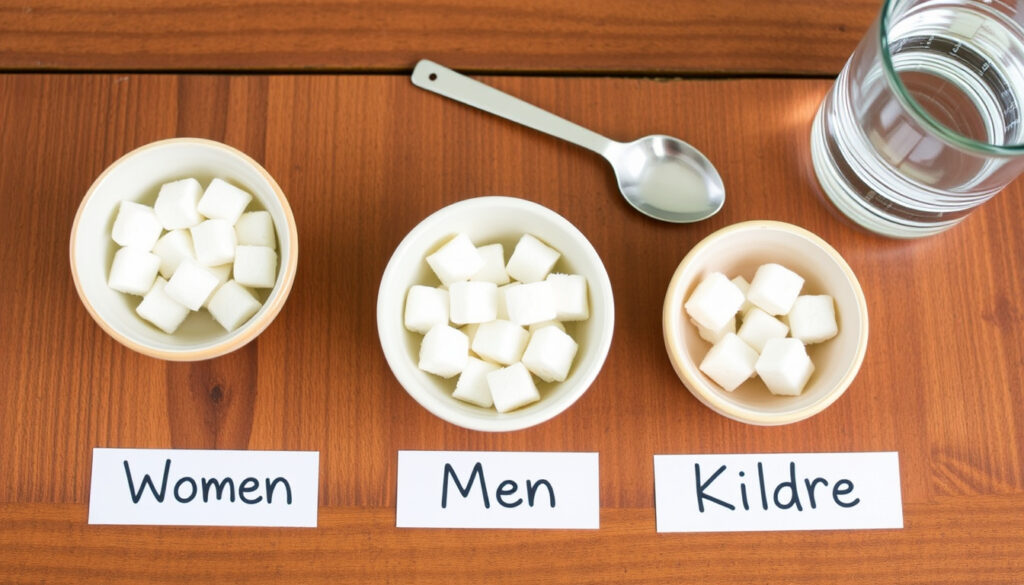
Women (added sugar limit): 25g (6 tsp) ·
Men (added sugar limit): 36g (9 tsp) ·
Adults (NHS free sugars): 30g ·
Children 7–10 (NHS): 24g ·
Calorie percentage (WHO): <10% of total calories
Quick snapshot
- American Heart Association recommends women ≤25g, men ≤36g added sugar per day.
- NHS says adults should have ≤30g free sugars daily.
- World Health Organization advises keeping added sugar below 10% of total calories.
- Excess added sugar intake is linked to increased risk of heart disease, type 2 diabetes, and obesity (WHO/NCBI).
- The exact timing and severity of sugar withdrawal symptoms vary widely among individuals (Harvard Health).
- “Sugar face” is not a formal medical diagnosis; skin effects of excess sugar are individual (Healthline).
- Rapid “flushing” of sugar from the body is not scientifically supported; sustained reduction is more effective (Mayo Clinic).
- Days 1–3: Withdrawal symptoms (headache, fatigue, cravings) peak (Healthline).
- Days 4–7: Energy stabilizes, cravings subside (Harvard Health).
- Days 8–14: Improved skin clarity, better sleep, reduced hunger (Healthline).
- After 2 weeks: Taste buds adjust; naturally sweet foods taste sweeter; sustained energy (Harvard Health).
- After 2 weeks of reduced sugar, most people report fewer cravings and more stable energy (Harvard Health).
- Long-term reduction lowers risk of type 2 diabetes and heart disease (Dietary Guidelines for Americans).
- Focus on replacing added sugars with whole foods, not artificial sweeteners (Mayo Clinic).
Six key numbers, one pattern: official bodies agree the sweet spot is surprisingly low, but they use different definitions and units.
| Group / guideline | Daily limit | Source |
|---|---|---|
| Women (added sugar, AHA) | 25 grams (6 teaspoons) | American Heart Association |
| Men (added sugar, AHA) | 36 grams (9 teaspoons) | American Heart Association |
| Adults (free sugars, UK NHS) | 30 grams (7 sugar cubes) | NHS |
| Children 7–10 (free sugars, UK NHS) | 24 grams (6 teaspoons) | NHS |
| Children 4–6 (free sugars, NHS) | 19 grams | NHS |
| Children 2–3 (free sugars, NHS) | 14 grams | NHS |
| Age 1 (free sugars, NHS) | 10 grams | NHS |
| Percentage of calories (WHO) | Less than 10% | World Health Organization |
| Children 2–18 (added sugar, AHA) | ≤24 grams (6 tsp) | American Heart Association |
What is a healthy amount of sugar to have in a day?
Daily added sugar limits for women, men, and children
- Women: ≤25g (6 tsp) added sugar per day (American Heart Association).
- Men: ≤36g (9 tsp) added sugar per day (American Heart Association).
- Children 7–10: ≤24g free sugars per day (NHS).
- The WHO recommends added sugar stay below 10% of total daily calories (World Health Organization).
What this means: a single 12-ounce soda (39g sugar) already exceeds the daily limit for women. The gap between what we crave and what’s safe is narrower than most people realize.
Free sugars vs added sugars: definitions and daily limits
- The NHS defines free sugars as sugars added to food or drinks, plus sugars naturally present in honey, syrups, and unsweetened fruit juices (NHS).
- Added sugars (US definition) include sucrose, high-fructose corn syrup, honey, and syrups added during processing (Dietary Guidelines for Americans).
- Both terms converge on the same advice: keep these sugars low. Whole fruit is not a concern for most people (Harvard T.H. Chan School of Public Health).
The catch: the definition matters because labels can hide sugar under different names. Knowing the difference helps you spot hidden sources.
What are signs of too much sugar?
5 signs you are eating too much sugar
- Frequent cravings and fatigue (Healthline)
- Brain fog and irritability (Harvard Health)
- Acne or dull skin (sugar face) (Healthline)
- Unexplained weight gain (Mayo Clinic)
- Poor dental health (CDC)
The implication: these signs are your body’s way of saying your sugar intake has crossed a threshold. Recognizing them early can help you reset before chronic issues develop.
How sugar affects your face and skin
- Excess sugar can cause glycation, a process that damages collagen and elastin, leading to wrinkles and dull skin (Harvard Health).
- “Sugar face” is not a clinical diagnosis, but many dermatologists link high sugar intake to acne and premature aging (Healthline).
The trade-off: the skin benefits of cutting sugar are visible within a couple of weeks, but the damage from glycation is cumulative. Earlier intervention matters more than extreme cuts.
What happens after 2 weeks of no sugar?
Short-term detox timeline and expected benefits
- Days 1–3: Withdrawal symptoms (headache, fatigue, cravings) peak (Healthline).
- Days 4–7: Energy levels begin to stabilize; cravings start to subside (Harvard Health).
- Days 8–14: Improved skin clarity, better sleep, reduced hunger between meals (Healthline).
The pattern: the first three days are the hardest. After that, the body recalibrates and many people report feeling noticeably better within two weeks.
What does 25 grams of sugar a day look like? (sample meal plan)
- 25 grams of added sugar is roughly the amount in one 250ml soda or a small sugary yogurt (American Heart Association).
- To stay within the limit, skip sugary drinks, choose plain yogurt, and avoid sweetened cereals (NHS).
One soda or one flavored yogurt alone can blow your daily sugar budget. The easiest swap: replace sugary drinks with water or unsweetened tea.
Why this matters: visualizing 25 grams in real food makes the limit feel achievable — and reveals just how quickly packaged foods push you over the edge.
Sugar intake by age and for specific goals
How much sugar per day to lose weight
For weight loss, minimize added sugars; focus on whole fruits (limit whole fruit to 2–3 servings per day). The CDC notes that reducing added sugars directly lowers calorie intake.
How much sugar from fruit per day
Natural sugars from whole fruit are not a health concern for most people. The NHS recommends up to 2–3 servings of whole fruit per day (NHS).
How much sugar should a 12 year old have a day
Children 7–10 should have ≤24g free sugars per day; the AHA recommends ≤24g (6 tsp) added sugar for children 2–18 (American Heart Association).
The pattern: recommended limits drop significantly for children, reflecting their smaller energy needs and lower tolerance for empty calories.
How much sugar in a day is dangerous?
Upper limits and chronic health risks
Consistently exceeding 25% of daily calories from added sugar is linked to increased heart disease risk. The WHO advises keeping added sugar below 10% of total calories to reduce risk of obesity, type 2 diabetes, and dental decay (World Health Organization).
What is added sugar? (label reading guide)
Added sugars include sucrose, high-fructose corn syrup, honey, and syrups added during processing. The Dietary Guidelines for Americans recommend limiting added sugars, not natural ones.
The catch: sugar hides under many names on labels — know the terms to spot hidden sources.
How to flush sugar out of your body quickly?
Dietary strategies to reduce blood sugar
- Drinking water helps kidneys flush excess sugar through urine (Harvard Health).
- Eating fiber-rich foods (vegetables, legumes) slows glucose absorption (Mayo Clinic).
- Include protein and healthy fats at meals to blunt blood sugar spikes (CDC).
Hydration and exercise tips
- Light exercise (walking) helps muscles use glucose, lowering blood sugar gradually (Harvard Health).
- Avoid rapid detox methods; focus on steady reduction of added sugars (Mayo Clinic).
Steps to reduce added sugar safely
- Read Nutrition Facts labels and check for added sugars under the “Sugars” line (Dietary Guidelines for Americans).
- Swap sugary drinks for water, sparkling water, or unsweetened tea (NHS).
- Choose whole fruit over fruit juices or sweetened yogurts (Harvard T.H. Chan School of Public Health).
- Limit candies, cookies, and pastries to occasional treats (American Heart Association).
- Cook more meals at home to control added sugar content (CDC).
The implication: these steps are simple, but they require label-reading discipline. The biggest win is cutting liquid sugar — sodas, juices, and sweetened coffees.
Timeline: What happens when you cut added sugar
The timeline below is based on reported experiences of individuals reducing added sugar.
| Period | What happens | Source |
|---|---|---|
| Day 1–3 | Withdrawal symptoms (headache, fatigue, cravings) peak | Healthline |
| Day 4–7 | Energy levels begin to stabilize; cravings start to subside | Harvard Health |
| Day 8–14 | Improved skin clarity, better sleep, reduced hunger between meals | Healthline |
| After 2 weeks | Taste buds adjust; naturally sweet foods (fruit) taste sweeter; sustained energy | Harvard Health |
The pattern: the first three days are the hardest. After that, the body recalibrates and many people report feeling noticeably better within two weeks.
What we know and what’s unclear
Confirmed facts
- AHA and NHS recommended daily sugar limits are well-established (American Heart Association, NHS).
- WHO recommends added sugar below 10% of total calories (World Health Organization).
- Excess added sugar consumption is linked to increased risk of heart disease, type 2 diabetes, and obesity (NCBI).
What’s unclear
- The exact timing and severity of sugar withdrawal symptoms vary widely among individuals (Harvard Health).
- “Sugar face” is not a formal medical diagnosis; individual results vary (Healthline).
- Rapid “flushing” of sugar is not supported by evidence; sustained reduction is more effective (Mayo Clinic).
- The extent of weight loss from reducing added sugars varies among individuals and is influenced by other dietary factors (CDC).
The bottom line on what we know: the limits are clear, but individual responses to cutting sugar vary. Use the guidelines as a starting point, not a rigid rule.
Expert perspectives on sugar intake
“Most adult women should have no more than 100 calories per day of added sugars.”
— American Heart Association
“Adults should have no more than 30g of free sugars a day.”
— NHS (National Health Service, UK)
“Free sugars should be less than 10% of total energy intake.”
— World Health Organization
“Reducing added sugar is one of the most effective dietary changes for weight management and metabolic health.”
The consensus: four major health organizations agree — most people eat too much sugar, and the safe limit is lower than what the average diet contains.
Summary
For the average adult, the choice is clear: keep added sugar under 25–36 grams per day, or face a measurable increase in risk for chronic disease. The easiest first step is cutting out sugary drinks — that single change brings most people back within the limit. For anyone trying to lose weight or improve energy, every gram of added sugar counts.
cdc.gov, ages.at, complementaryfeedingcollective.org, nutritionsource.hsph.harvard.edu, iris.who.int, knowledge4policy.ec.europa.eu, nhs.uk, vorafood.com
Frequently asked questions
Is honey better for you than white sugar?
Honey contains trace nutrients and has a lower glycemic index than white sugar, but it is still a form of added sugar. The AHA recommends treating honey the same as other added sugars (American Heart Association).
Can I eat fruit if I am trying to reduce sugar?
Yes. Whole fruit contains natural sugars along with fiber, vitamins, and water, which blunt the blood sugar impact. The NHS recommends up to 2–3 servings of whole fruit per day (NHS).
What is the difference between natural sugar and added sugar?
Natural sugars occur naturally in whole foods like fruit and milk. Added sugars are those added during processing or cooking. The USDA Dietary Guidelines recommend limiting added sugars, not natural ones (Dietary Guidelines for Americans).
How many grams of sugar are in a can of soda?
A 12-ounce can of regular soda typically contains 39 grams of added sugar — that is 14 grams above the AHA’s daily limit for women (American Heart Association).
Does cutting sugar help with weight loss?
Yes. Reducing added sugar directly lowers calorie intake. The CDC notes that Americans who reduce added sugars tend to lose weight and improve metabolic markers (CDC).
How can I satisfy a sweet craving healthily?
Try a piece of whole fruit, a small handful of berries, or a square of dark chocolate (70%+ cocoa). These options provide sweetness with fiber or antioxidants (Harvard Health).
Are artificial sweeteners a safe alternative to sugar?
Most health agencies consider artificial sweeteners safe in moderation. However, the Mayo Clinic advises that they may not help with weight loss if they trigger sugar cravings (Mayo Clinic).
How long does it take for sugar cravings to go away?
Withdrawal symptoms typically peak in the first 3 days and subside within 1–2 weeks. After that, many people report a noticeable reduction in cravings (Healthline).
📚 Related reading: How Much Protein Do You Need? Daily Intake Guide · Teaspoons in a Tablespoon: Conversion Guide
More related posts
 America the Beautiful Lyrics: Story and Meaning
 Are Wolf Spiders Poisonous? Venom vs Poison & Bite Facts
 76ers vs Memphis Grizzlies Player Stats: Overtime Recap
 Water Heater Installation Near Me: Cost Guide & Plumber Rates Ireland
 Aspen Dental Savings Plan: Costs, Discounts & Worth It
 Padres vs Mets Match Player Stats: 2026 Season Series
 iPhone 16e vs iPhone 16: Which Should You Buy
 Pumpkin Patch Near Me: Ireland’s Top Patches for 2026