Best Api con Pastel Near Me: Bolivian Breakfast Guide
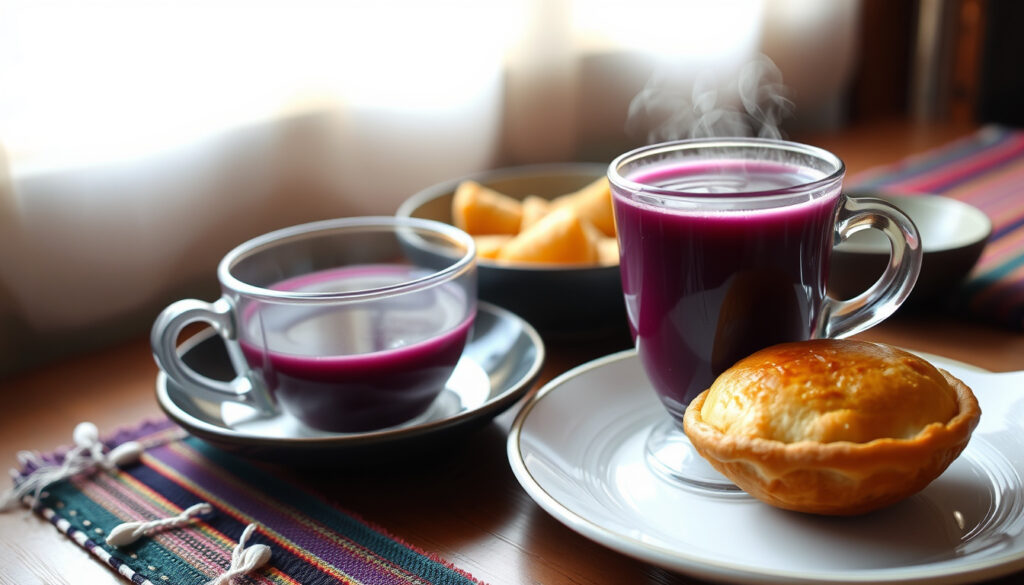
There’s a moment in the early morning in Cochabamba when the street fills with the scent of cinnamon and fried dough. That’s the signal that api con pastel — Bolivia’s classic purple corn drink with cheese-filled pastries — is being served.
Origin country: Bolivia ·
Typical serving time: Early morning breakfast ·
Main drink ingredient: Purple corn (maíz morado) ·
Pastel filling: Cheese or ground beef ·
Common accompaniments: Buñuelos, cinnamon, sugar ·
Search volume (“api con pastel”): Low, but strong local intent in Bolivia
Quick snapshot
- Api con pastel is a traditional Bolivian street breakfast pairing a sweet purple corn drink with fried cheese pastries (Amigo Foods (Bolivian food blog)).
- It is most widely available in Cochabamba, La Paz, and Sucre (Vianca That Vagabond (travel blogger)).
- Api is made from purple corn flour, cinnamon, and sugar; pastel is a deep-fried pastry filled with cheese or beef (Comedera (Spanish recipe site)).
- Exact number of restaurants serving api con pastel outside Bolivia. (Chile to Mexico (travel food guide))
- Whether delivery apps consistently list “api con pastel” as a menu item in all regions. (Chile to Mexico (travel food guide))
- Historical origin of the dish — pre-Columbian or colonial adaptation (Chile to Mexico (travel food guide)).
- Trend of more Bolivian restaurants opening in US cities like Virginia and Maryland is not yet documented by a direct source. (Chile to Mexico (travel food guide))
- Early morning (6 AM – 10 AM) is peak serving time in Bolivia (Chile to Mexico).
- Also eaten as an afternoon snack in some regions (same source). (Chile to Mexico)
- No set historical timeline — recipe variations suggest colonial-era influences (Amigo Foods).
- Growing interest from foodies abroad may increase availability via delivery (Ireland Headline (food trend article)).
- Homemade versions gaining traction on social media (YouTube (Cochabamba street food report)).
Six key facts about api con pastel, broken down into a quick-reference table:
| Fact | Details |
|---|---|
| Country of Origin | Bolivia |
| Primary Drink Ingredient | Purple corn (maíz morado) |
| Typical Pastel Filling | Cheese (queso fresco) or ground beef |
| Common Serving Time | Early morning (6 AM – 10 AM) |
| Popular Cities | Cochabamba, La Paz, Sucre |
| Average Price (street stall) | 10–15 Bolivianos (~$1.50–$2 USD) |
What is api con pastel?
Traditional Bolivian breakfast ingredients
- Api: a warm, sweet drink made from purple corn (maíz morado), cinnamon sticks, cloves, and sugar — simmered until thickened (A Travel Blog (travel recipe guide)).
- Pastel: a deep-fried pastry with a soft wheat-flour dough, filled with fresh cheese (often queso fresco or mozzarella) or seasoned ground beef (Vianca That Vagabond).
- Together they form a breakfast that’s both sweet and savory, often accompanied by a dusting of sugar or a side of buñuelos (same source).
How api (purple corn drink) is prepared
- Water is boiled with cinnamon sticks, orange peel, and cloves (Comedera).
- Dissolved purple corn flour is added and the mixture cooks over medium-low heat for about 40 minutes until it thickens (Comedera).
- Sugar, ground anise, and extra cinnamon are stirred in for flavor (A Travel Blog).
What a pastel (cheese empanada) contains
- The dough is a mix of wheat flour, salt, melted butter (or manteca), yeast, egg, and warm water — rested before shaping (Comedera).
- Small balls of dough are flattened, filled with grated cheese or seasoned beef, folded into semicircles, and sealed (Bolivian Cookbook (home cook source)).
- They’re fried in deep hot oil until puffed and golden brown (Gastronomia Bolivia (Bolivian food culture site)).
The implication: api con pastel is a labor-intensive, deeply traditional breakfast that relies on simple ingredients but careful technique, especially the 40-minute simmer for the api.
Where can I find the best api con pastel near me?
Searching for api con pastel in your area
- In Bolivia, the dish is ubiquitous in Cochabamba and La Paz, especially along Avenida Fuerza Aérea in the south zone of Cochabamba (YouTube).
- Outside Bolivia, search for “Bolivian restaurant” or “Latin American bakery” on Google Maps. Cities with sizable Bolivian communities — such as Arlington, VA; Silver Spring, MD; or Miami, FL — are most likely to have options.
- Use the phrase “api con pastel” directly in Google searches to surface local menus or social media posts from nearby Bolivian eateries.
Using delivery platforms like Uber Eats
- Delivery availability remains limited. In Bolivia, apps like Pedidos Ya sometimes list api con pastel from local restaurants (Ireland Headline).
- Outside Bolivia, check Uber Eats or DoorDash for “api” or “pastel” as separate items — some Latin restaurants offer them individually.
- Calling the restaurant directly is often the most reliable way to confirm availability and order for pickup or delivery.
Local Bolivian restaurants and food stalls
- In La Paz, ask for recommendations from locals near the Mercado Lanza or Sopocachi neighborhood.
- Cochabamba is known as the unofficial capital of api con pastel — street vendors set up from 6 AM to noon and again as an afternoon snack (Chile to Mexico).
- Even in cities like Sucre, the dish is common; look for stalls with large pots of purple liquid and a stack of golden pastries.
What this means: If you’re in Bolivia, finding api con pastel is as simple as following the morning crowd. Outside the country, you’ll need to rely on Bolivian restaurant networks and a bit of persistence.
Does api con pastel delivery exist near me?
Checking Uber Eats and other delivery apps
- Search for “api con pastel” on Uber Eats, DoorDash, or Grubhub — results are hit-or-miss. Use broader terms like “Bolivian breakfast” or “api drink”.
- In Bolivia, Pedidos Ya is the most likely platform to list api con pastel from formal restaurants, but street vendors rarely use delivery services.
- Outside Bolivia, a handful of Bolivian restaurants in the US have started offering api on delivery menus, though pastel is less common.
Contacting local Bolivian restaurants directly
- Call ahead and ask if they serve api con pastel as a daily special — many Bolivian restaurants only prepare it on weekends or by request.
- Some restaurants will pack the api in a separate container and wrap the pastel in foil to keep it crispy during transport.
DIY delivery: ordering api and pastel separately
- If a restaurant doesn’t list the combo, ask for a cup of api (often available as a hot drink) and order empanadas or pastel de queso separately. Assemble at home.
- This workaround is common among Bolivian expats who crave the combination but can’t find it on any delivery menu.
The trade-off: Delivery is convenient but often sacrifices the crispness of the pastel. The best experience is still at the stall, where the pastel comes straight from the oil.
For Bolivians living abroad, finding api con pastel near you means either locating a dedicated Bolivian restaurant or settling for a modified version. In Cochabamba and La Paz, the street experience remains unmatched.
How do you make api con pastel at home?
Step-by-step recipe for api (purple corn drink)
- Boil 4 cups of water with 2 cinnamon sticks, a strip of orange peel, and 3 cloves (Comedera).
- In a separate bowl, dissolve ½ cup of purple corn flour in 1 cup of cold water, then add to the boiling mixture.
- Simmer over medium-low heat for 40 minutes, stirring occasionally, until the drink thickens.
- Add ½ cup of sugar (or to taste), 1 teaspoon of ground cinnamon, and ½ teaspoon of ground anise. Stir well and serve hot.
Step-by-step recipe for pastel (cheese empanada)
- Mix 2 cups of wheat flour, 1 teaspoon of salt, 3 tablespoons of melted butter (or manteca), and ½ cup of warm water. Optionally add 1 egg yolk for richness (Comedera; Bolivian Cookbook).
- Knead until smooth, cover, and rest for 20 minutes.
- Divide into small balls (about golf-ball size). Roll each into a thin disc.
- Place a generous spoonful of grated queso fresco or mozzarella in the center. Fold over, seal edges with a fork.
- Heat oil to 350°F (175°C) and fry pastels for 2–3 minutes per side until golden brown (Gastronomia Bolivia).
Tips for authentic flavor and texture
- Use maíz morado (purple corn flour) — available online or at Latin markets — for the right color and flavor.
- For the pastel, queso fresco is ideal; mozzarella works as a substitute, though it becomes stretchier.
- Don’t skip the resting step for the dough — it makes rolling easier and results in puffier pastries (Bolivian Cookbook).
Making api con pastel at home takes about an hour and a half, most of it the api simmering. But for expats or food lovers with no Bolivian restaurant nearby, it’s the only way to taste the real thing.
What other Bolivian dishes are similar to api con pastel?
| Dish | Description | How it compares |
|---|---|---|
| Silpancho | Breaded beef cutlet served with rice, potatoes, and fried eggs | Hearty lunch dish — not a breakfast drink-pastry combo |
| Pique macho | Spicy mix of beef, sausages, potatoes, peppers, and onions | Evening street food — completely different flavor profile |
| Sopa de maní | Peanut-based soup with beef and vegetables | Warm comfort food, but savory and soup-based rather than sweet drink + pastry |
| Buñuelos | Fried dough fritters, often dusted with sugar | Sometimes served alongside api as an alternative to pastel |
The pattern: api con pastel occupies a unique slot — sweet hot drink plus fried savory pastry. Other Bolivian staples are either separate courses or entirely savory, making this combination stand out.
For more traditional breakfast guides, check out Best Cocido Gallego Near Me and Best Piononos de Santa Fe Near Me.
Pros and cons of api con pastel
Upsides
- Unique sweet-savory breakfast experience not found elsewhere
- Deep cultural roots — eating it connects you to Bolivian street food tradition
- Relatively inexpensive (about $1.50–$2 per serving)
- Can be made vegetarian by using cheese filling only
Downsides
- Hard to find outside Bolivia — limited availability internationally
- Delivery often ruins the pastel’s crisp texture
- Not gluten-free (pastel uses wheat flour, and api sometimes contains flour additives)
- High in calories and fried oil — not a light breakfast
What we know and what’s still unclear about api con pastel
Confirmed facts
- Api con pastel is a traditional Bolivian breakfast pairing a purple corn drink with cheese pastries (Amigo Foods).
- Api is made from purple corn, cinnamon, and sugar (Comedera).
- Pastel is a fried pastry filled with cheese or beef (Vianca That Vagabond).
- The dish is widely available in Cochabamba and La Paz (YouTube street food report).
What’s unclear
- Exact number of restaurants serving api con pastel outside Bolivia remains unknown.
- Whether delivery apps consistently list “api con pastel” as a menu item varies by region.
- The historical origin of the dish — whether it’s pre-Columbian or a colonial adaptation — is not firmly documented (Chile to Mexico).
What people are saying about api con pastel
“Api con pastel is Bolivia’s ultimate breakfast delicacy — a sweet purple corn drink served with cheesy empanadas that makes you want to wake up early every morning.”
Bolivian food blogger (viancathatvagabond.com)
“Api is warm and sweet, and when you pair it with a crispy pastel filled with cheese, it’s pure comfort. The key is freshness — straight from the oil.”
For Bolivians and travelers alike, the ritual of standing at a stall, cup of api in one hand and a hot pastel in the other, is the essence of the experience.
Summary
Api con pastel is more than a breakfast — it’s a morning institution in Bolivia, especially in Cochabamba and La Paz. While finding it outside the country requires effort, the combination of warm purple corn drink and a crispy cheese-filled pastry is worth the search. For anyone living far from Bolivia’s street stalls, the choice is clear: track down a Bolivian restaurant, call ahead for delivery, or spend a weekend recreating the magic in your own kitchen.
Frequently asked questions
What is the best time to eat api con pastel?
Traditionally it’s eaten early in the morning (6 AM – 10 AM), but in some regions like Cochabamba it’s also served as an afternoon snack (Chile to Mexico).
Can api con pastel be made vegan?
Api itself is vegan (plant-based sweetener + corn flour). Pastel can be made vegan by using plant-based butter and a vegetable filling, though traditional versions use cheese or beef.
Is api con pastel gluten-free?
Api is gluten-free if made with pure purple corn flour. Pastel is not gluten-free because it uses wheat flour. There are no widely available gluten-free versions.
How much does api con pastel cost in Bolivia?
Expect to pay 10–15 Bolivianos (about $1.50–$2 USD) per serving at a street stall (Amigo Foods).
What does api taste like?
Api is sweet and slightly thick, with warm notes of cinnamon, clove, and a mild earthy corn flavor from the purple corn flour.
Can I freeze api con pastel?
Api can be refrigerated or frozen and reheated. Pastel is best eaten fresh — frozen and reheated pastels lose their crispness.
What is the difference between api and other purple corn drinks?
Api is specifically a Bolivian hot breakfast drink. Peruvian chicha morada is a cold, fruitier beverage made from the same purple corn but with pineapple and no thickening.
More related posts
 COVID-19 Symptoms: Current Signs, Duration, and Contagious Period
 Charlie and the Chocolate Factory: 1971 vs 2005 Comparison
 Best Piononos de Santa Fe Near Me: Where to Eat & Recipe
 Pittsburgh Steelers 2026 Depth Chart: Starters & Analysis
 Asian Store Near Me: Top Groceries in Dublin & Cork
 Walmart Money Center Hours: Services, Fees & Locations
 How Old Is Bonnie Blue? Age, Real Name & Marriage
 Pacific Rim Movies in Order: Watch Guide