Sid from Toy Story: Character Analysis, Backstory & Redemption
Few Pixar antagonists have aged as strangely as Sid Phillips. The sneering neighbor kid who tortured toys in the first Toy Story now inspires fan theories, sympathetic re-readings, and genuine debates about whether he was ever truly evil. Voiced by Erik von Detten, Sid is the only human in the franchise who directly learns the toys are alive — and more than two decades later, the question of who he really is still hasn’t settled (MovieWeb (film news site)).
First appearance: 1995 ·
Voice actor: Erik von Detten ·
Notable for: Toy-torturing antagonist in the first film ·
Redemption arc: Garbage collector in Toy Story 3
Quick snapshot
- Sid Phillips is Andy Davis’s next-door neighbor and the main human antagonist of the first Toy Story (Disney Wiki (character encyclopedia)).
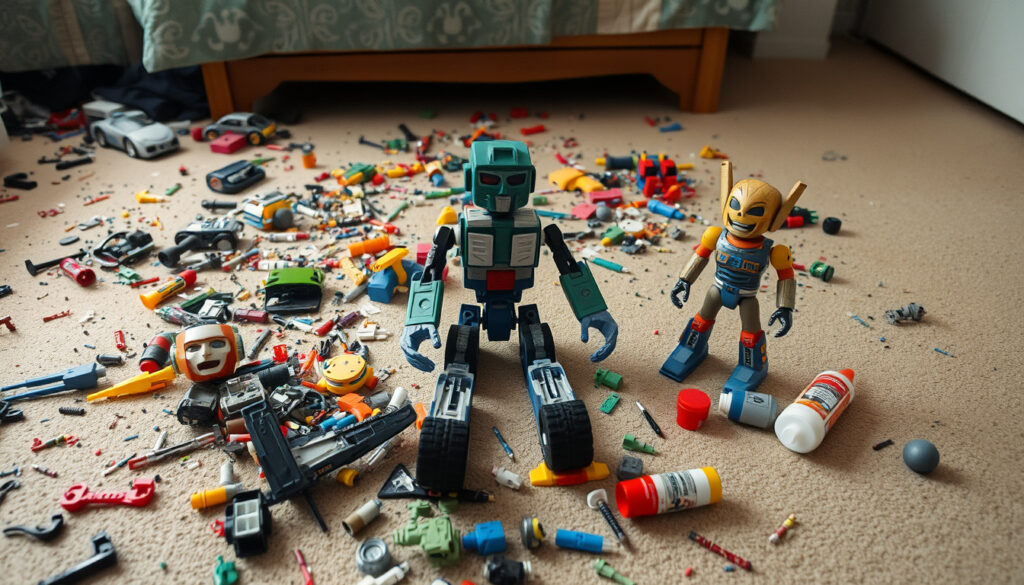
- Sid experiments on toys, reassembling them into hybrid creations (CharacTour (character database)).
- Whether Sid is truly a villain or a neglected, troubled child (The A.V. Club (film criticism outlet)).
- 1995: Toy Story introduces Sid Phillips as its first human antagonist (CharacTour (character database)).
- 2010: Toy Story 3 shows adult Sid working as a garbage collector (Collider (film news outlet)).
- Modern commentary recasts Sid as a creative, misunderstood kid rather than a monster (Collider (film news outlet)).
- The debate over Sid’s morality keeps growing in fan spaces and film commentary (YouTube fan commentary (video analysis)).
Six facts anchor Sid’s on-screen biography, and one pattern jumps out: everything memorable about him was locked in by his first appearance.
| Label | Value |
|---|---|
| Full name | Sid Phillips |
| First film | Toy Story (1995) (Disney Wiki (character encyclopedia)) |
| Voice actor | Erik von Detten |
| Age in Toy Story | Approximately 11 years old (CharacTour (character database)) |
| Trademark item | Skull t-shirt |
| Final appearance | Toy Story 3 (2010) (Shmoop (film study guide)) |
The same silence defines the debate: the Toy Story films never explain why Sid became destructive, so every reading of him is an act of inference, not canon.
Who Is Sid from Toy Story?
Sid Phillips is the reason Toy Story works as a thriller: he is the unpredictable human who makes the toys’ safe suburban world feel dangerous. He is also the first character in the franchise to treat the toys as objects and force them to confront what that means.
Sid Phillips’ role in the Toy Story universe
- Sid treats toys as disposable objects, which makes him the sharpest contrast to Buzz and Woody — and the reason every suspenseful scene in the first film builds toward his bedroom (Shmoop (film study guide)).
What makes Sid structurally important is that the toys cannot reason with him. They can only run. That helplessness is what shifts the film from comedy into something closer to a survival story.
Sid’s appearance and signature style
The design works almost too well: Sid’s look signals menace so clearly that the film never has to explain him.
The rest of the package — braces, dark clothes, a bedroom full of dismantled toys — reinforces that first impression. He is a middle-school kid whose hobby looks like a horror movie set.
The implication: Sid looks like a villain because the film dresses him like one. The shorthand is so effective that most viewers never stop to ask what is underneath the shirt.
What Are Sid Phillips’ Character Traits?
Strip away the skull shirt and Sid’s profile gets harder to label. The same energy that reads as cruelty in one scene reads as creativity in the next.
Creative versus destructive impulses
- Some commentary interprets Sid’s destructive streak as acting out frustration or unhappiness rather than pure malice (The A.V. Club (film criticism outlet)).
Sid’s “toy surgeries” are grotesque, but they are also imaginative. He does not just break toys; he rebuilds them into things that never existed before. That detail is what makes him more interesting than a simple bully: he is creative with nowhere to point it.
Signs of neglectful parenting at home
- The film’s background details show a household with little adult presence: no one interrupts Sid, no one asks questions, and his sister’s toys are as much a target as Andy’s.
This is the detail that changes the moral of the story. Sid is not a victim, but he is a kid operating without guardrails, and the toy world pays for it.
Sid is the most imaginative kid in Toy Story. His problem is not a lack of creativity — it is the direction that creativity takes without an adult to channel it.
What this means: Toy Story gets away with casting a child as the villain because it never asks you to look at Sid’s life. Once you do, “villain” becomes a much harder word to use.
What Happens to Sid in Toy Story 3?
Sid’s story does not end in 1995. Fifteen years later, Toy Story 3 gives him one of the franchise’s quietest callbacks.
Sid’s brief cameo as a garbage collector
- Sid appears as an adult garbage truck driver in Toy Story 3 — a cameo that commentators read as proof he turned out fine (Collider (film news outlet)).
The joke writes itself: the boy who threw toys away grew up to collect garbage for a living.
The character’s redemption arc
- The original film ends with Sid frightened after the toys reveal themselves — a scene commonly read as an implicit deterrent rather than a formal redemption arc (Disney Wiki (character encyclopedia)).
The two bookends — terror in 1995, normalcy in 2010 — are the entire arc. Sid never apologizes, never explains, and never gets a speech.
Sid is the rare antagonist who gets a future instead of a punishment. Toy Story 3 treats him as someone who grew up, not a monster who got what he deserved.
The pattern: Pixar built Sid’s “redemption” in two scenes across two decades, and neither requires him to change. That is the cleverest part of the design — it lets the audience decide whether Sid was ever a villain at all.
What Does Sid’s Skull T-Shirt Mean?
For a character with almost no dialogue beyond sneers, Sid’s wardrobe does the talking. The skull t-shirt is the thesis statement of his entire design.
Heavy metal and punk influences on Sid’s design
The skull shirt is so effective as a villain costume that it obscures the character underneath. The “neglected kid” reading has spent years fighting the design.
The rest of Sid’s look reinforces the message: braces, dark clothes, and a bedroom that looks like a workshop for things that should not exist. Every visual cue points the same way.
The skull as a symbol of rebellion
- Shmoop’s study guide describes Sid’s toy experiments as a horror-themed counterpoint to the film’s domestic toy world — the skull shirt is the visual signpost for that horror (Shmoop (film study guide)).
The same iconography reads differently to different audiences: to adults it signals heavy metal rebellion; to a kid it is just a cool shirt. The film never explains it, which is why the debate lives on.
The trade-off: the skull shirt gives Sid instant recognition but locks him into a single note. To understand him as anything more than a “bad kid,” you have to look past the shirt.
Confirmed Facts and What’s Still Unclear
What the evidence separates cleanly is what the films show versus what audiences have projected onto Sid over thirty years.
Confirmed facts
- Sid has braces, a punk haircut, and a signature skull t-shirt.
- Sid’s bedroom is filled with dismantled and reassembled toys.
- Sid reappears in Toy Story 3 as an adult garbage collector.
What’s unclear
- Whether Sid was ever “evil” or simply an unsupervised, creative kid.
- Sid’s exact age, which the films never state.
- Whether Sid changed after Toy Story or simply learned to fear toys.
The difference between the two lists is the difference between watching Toy Story as a child and rewatching it as an adult: the facts stay the same, but the judgment shifts.
Commentary: Why Sid Still Divides Fans
Two camps dominate the Sid conversation: those who saw a monster and those who saw a neglected kid with too much imagination and not enough supervision.
“Maybe destructive Sid from Toy Story wasn’t such a bad kid.”
“Sid was never the villain of Toy Story. He was a frustrated kid acting out because no one was paying attention.”
The divide is generational as much as interpretive: viewers who grew up with Toy Story tend to see Sid as a thrill; viewers who rewatch it as parents tend to see him as a warning.
Every version of Sid raises the same uncomfortable question: what makes a child a villain? Toy Story’s answer is that neglect does the casting. For parents and guardians watching the film with a new generation, the choice is clear: treat destructive play as a signal worth investigating — or wait for the day the toys write back.
collider.com, movieweb.com, movieweb.com, tycoonstory.com, disney.fandom.com, pixar.fandom.com, youtube.com
Frequently Asked Questions
Is Sid Phillips a psychopath in Toy Story?
No. The film never diagnoses Sid — it shows behavior that is destructive but aimed at objects he believes are inanimate. Critical readings, including The A.V. Club’s, frame him as a neglected or troubled child rather than a clinical psychopath.
Why does Sid wear a skull shirt?
The skull shirt is visual shorthand for rebellion. It signals Sid’s outsider status and connects his look to heavy metal and punk culture, marking him as the opposite of Andy’s clean, wholesome world (MovieWeb (film commentary)).
Does Sid appear in Toy Story 2?
No. Sid’s on-screen appearances are limited to the original Toy Story (1995) and a brief cameo in Toy Story 3 (2010).
How old is Sid from Toy Story?
The films never state his exact age. Character guides estimate Sid is around 11 years old, roughly Andy’s age, based on his middle-school look.
Did Sid know toys were alive before the end of Toy Story?
No. Sid’s shock when the toys reveal themselves is the film’s climax. Before that moment, he treats them purely as objects.
Why did Pixar make Sid a garbage collector in Toy Story 3?
The cameo is a darkly funny callback: the boy who threw toys away grew up to collect garbage for a living. It also gives Sid a quiet redemption by showing he turned out fine.
What is the name of Sid’s dog?
Scud. The dog appears throughout Sid’s house in Toy Story and adds to the chaos of his bedroom lab.
More related posts
 What Causes Leg Cramps? Triggers, Treatments, and Warning Signs
 Baking Powder vs Soda: Key Differences, Substitutions & More
 As Above So Below Meaning: Movie & Hermetic Origin
 Walmart Money Center Hours: Locations, Fees & Services
 Pittsburgh Steelers 2026 Depth Chart: Starters & Analysis
 Marriage Counseling Near Me: Costs, Rules & Options
 How to Delete a TikTok Story: Step-by-Step
 Ulta Credit Card Payment: Pay Online, by Phone, or Mail