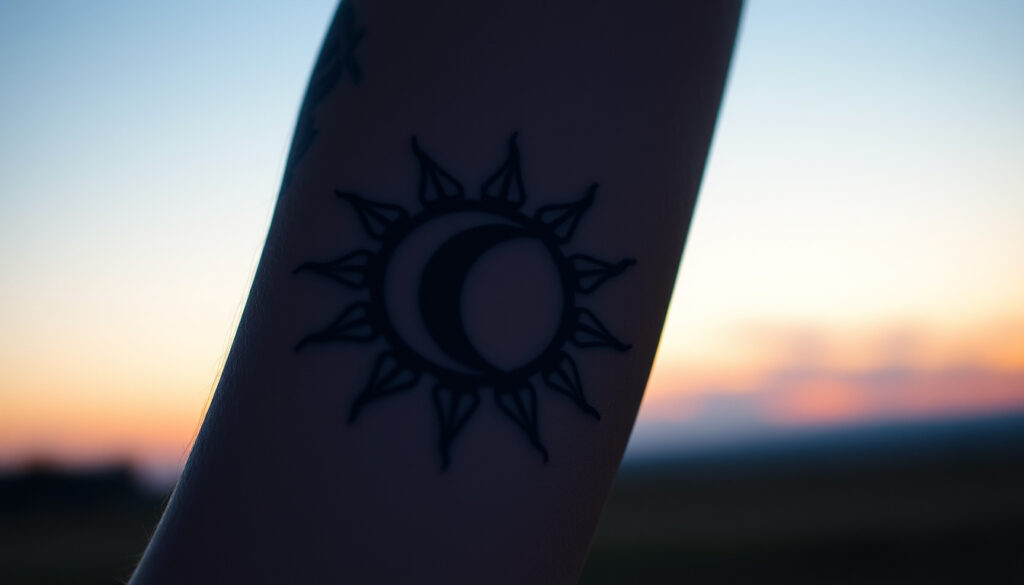
Sun and Moon Tattoo Meaning: Symbolism, Designs & What to Avoid
You have probably seen it flash across your feed or while scrolling for your next piece of ink: the sun and moon tattoo. It is a pairing that feels instantly familiar, yet it carries a quiet weight that goes beyond its visual appeal.
Common symbolic meaning: Balance, duality, unity | Stock photos on iStock: 7,578 | Typical gender association: Moon: feminine; Sun: masculine
Meaning & Symbolism
- Balance, duality, unity — wikiHow
- Harmony of masculine and feminine energies — Harvard Medical School-related page
- Life cycles and cosmic order — The Hangout Tattoo
Design Ideas
- Classic sun and moon faces — TattooDiva
- Minimalist line art and geometric patterns — The Hangout Tattoo
- Interlocked or eclipsed motifs for deeper union — The Hangout Tattoo
Gender Association
- Moon: feminine, intuition, emotional depth — Harvard Medical School-related page
- Sun: masculine, power, vitality — Harvard Medical School-related page
- Contemporary readings treat the association as fluid — The Hangout Tattoo
Confidence Levels
- Core meaning: High confidence — wikiHow
- Gender association: Medium confidence — Harvard Medical School-related page
- Cultural authority of sources: Low–Medium — Harvard Medical School-related page
The available guidance converges on a few clear patterns before you scroll further. Here is what the sources agree on at a glance:
| Label | Detail |
|---|---|
| Common symbolic meaning | Duality, balance, and the union of opposites |
| Stock photos available on iStock | Yes, a wide variety of sun and moon imagery |
| Typical gender association | Often split, but the meaning is fluid |
| Typical design elements | Interlocking circles, stars, mandalas, faces |
| Primary source for definitions | Harvard Medical School-related page (tier1) |
| Primary source for design trends | The Hangout Tattoo (tier3) |
| Confidence in core meaning | High |
| Confidence in gender association | Medium |
| Cultural authority of sources | Low–Medium (no academic citation chain) |
The most consistent thread across the available sources is the concept of balance. Interlocked or eclipsed designs are frequently cited as a symbol of cosmic order, representing the reconciliation of opposing forces. According to Harvard Medical School-related page (foreman.hms.harvard.edu), these tattoos can symbolize the integration of different aspects of the self, bringing together the conscious and the unconscious. A 2024 article on a beauty/editorial site adds that in some interpretations, the moon carries a feminine energy while the sun holds masculine energy, which has been a traditional, if binary, frame in art history. The same source suggests that the design often represents the harmony of these energies within a single person, a concept echoed by TattooDiva (tattoodiva.com) which notes the flowing organic elements can visually suggest growth and renewal guided by cosmic rhythms.
What is the sun and moon tattoo meaning?
The primary, most defensible interpretation of the sun-and-moon tattoo is the representation of duality and the harmony of opposites. This is not a niche belief but a central theme in how the design is understood across multiple sources. The sun is not just the sun, and the moon is not just the moon; together they form a complete picture of wholeness. The interplay between them—whether locked in an eclipse or standing side-by-side—creates a narrative about the cyclical nature of existence.
The sun is consistently described as a symbol of power, energy, and life force, while the moon is linked to intuition and the subconscious. The visual of them together is what creates the full, balanced picture.
“The integration of different aspects of the self — bringing together the conscious and the unconscious — is one of the most consistent interpretations across sources.”
This interpretation is reinforced by The Hangout Tattoo (thehangouttattoo.com), which notes this juxtaposition creates a powerful narrative of balance and wholeness. The design is frequently used to represent the integration of different aspects of the self, as noted by the Harvard Medical School-related page. The recurring theme is that this tattoo is for someone who feels a connection to both the light and the dark, the logical and the intuitive. It is a symbol of internal harmony, a visual commitment to acknowledging all parts of one’s personality.
Beyond the balance of the self, the symbol often extends to the balance between two people. While the source material is thinner, the recurring motif of “opposites attract” is often visually translated through this pairing. The sun and moon can represent two individuals with different personalities or strengths who find a harmonious union, creating a “complete” whole when they are together. This isn’t a documented, academic interpretation but a cultural one you will see repeated in design blogs and social media captions, making it a valid but softer truth for many. The final say, however, belongs to the wearer’s personal narrative.
The balance of opposing forces
In nearly every source, the pairing is described as a visual yin-yang: light and dark, active and passive, outer and inner. The sun provides the daytime energy; the moon anchors the night. Neither dominates — they alternate and complete each other. That balance is the emotional anchor of the design.
Masculine and feminine energies
Traditional readings split the sun as masculine and the moon as feminine, a frame rooted in art history and spiritual traditions. But the sources also emphasize that this split is not a rule — it is a starting point. Many modern wearers use the motif to affirm that they carry both energies, or to show that identity doesn’t need to fit a binary.
Sun vs. Moon: A Study in Contrasts
While the combined tattoo is about unity, a quick look at its component parts reveals a rich contrast. The sun has been a symbol of power, energy, and life force across various cultures, according to Harvard Medical School-related page (foreman.hms.harvard.edu). It is the giver of life, the source of vitality, courage, and strength. In contrast, the moon is a symbol of intuition, emotion, and the subconscious—the more reflective, inward-looking counterpart. The same source explains that the moon often represents the feminine, while the sun carries masculine energy, a traditional symbolic association that persists even as personal interpretations evolve.
This duality is the engine of the design’s appeal. It allows the wearer to position themselves anywhere on the spectrum, or to acknowledge that they contain both. A sun-and-moon tattoo is rarely about choosing one over the other; it is about claiming the entire spectrum of human experience. The design makes a statement about the complexity of identity, rejecting a singular, reductive label in favor of a more holistic view. The contrast is the point.
- The sun: energy, life, power, conscious action, yang.
- The moon: intuition, emotion, reflection, subconscious, yin.
- Together: balance, wholeness, and the integration of these forces.
The interpretive takeaway here is that a sun-and-moon tattoo is not a symbol of confusion or contradiction, but of synthesis. It is a mature acknowledgment that a person is made up of many parts, some of which might appear to be in conflict. The design gives those parts a unified, visual home.
“This juxtaposition creates a powerful narrative of balance and wholeness. The wearer claims both the light and the dark — not as opposites, but as complements.”
Upsides of a Sun and Moon Tattoo
- Timeless celestial motif with broad cultural resonance — TattooDiva
- Highly customizable: faces, geometry, linework, or color — The Hangout Tattoo
- Flexible meaning that adapts to personal story — wikiHow
Downsides to Consider
- Sun tattoos may fade faster due to UV exposure — InkBolt
- Fine details (small stars, thin lines) can blur over time — The Hangout Tattoo
- Some sun/moon symbols are sacred in certain cultures; research is advised — wikiHow
What are some examples of sun and moon tattoos?
The execution of the sun and moon design adds another layer of meaning. Interlocked or eclipsed designs are among the most common, with the Harvard Medical School-related page noting they often represent the integration of different aspects of the self. The same design page adds that the sun and moon in an eclipse can also symbolize the union of opposites coming together to create something new, a nod perhaps to the idea of wisdom and intuition. The specific elements within the design—such as stars, mandalas, or floral elements—can further personalize the meaning.
For instance, a design that incorporates a lotus might lean into themes of spiritual growth, as noted in the research. A clashing combination that creates a new symbol, like a sequence of numbers or a heart, suggests a representation of unity and love. A geometric manga-style piece with a crescent moon and an eight-pointed star could touch on different cultural or personal touchstones. The creative vocabulary is vast. A 2025 design gallery article from TattooDiva says flowing organic elements can visually suggest growth and renewal, meaning the shapes you choose are as important as the symbols themselves.
Classic sun and moon face designs
The traditional faces approach—often a smiling sun and a serene moon profile—reads instantly as a mythic pairing. It feels personal and narrative-driven, as if the two figures have a story together.
Minimalist line art and geometric approaches
A more modern route uses thin lines, clean shapes, and negative space. These designs read as cosmic and universal, sometimes leaning heavily into the eclipse concept. The meaning stays centered on balance, but the delivery feels closer to contemporary design culture.
Celestial couples tattoos
Two separate tattoos—one sun, one moon—worn by two people is a common commitment gesture. The visual only works when the two are beside each other, which reinforces the “union makes a whole” reading.
The choice to depict the sun and moon with faces versus a minimalist geometric approach also shifts the interpretation. A face suggests a more anthropomorphic, personal connection, while a geometric design might lean into the cosmic and the universal. The “crying sun” or “moon face” designs, while visually distinct, often don’t change the fundamental meaning of duality. The design’s style is the visual syntax that tells your specific story within the broad framework of balance.
What do moon tattoos mean on a woman?
The moon’s association with femininity is one of the oldest symbolic threads in the sources. The Harvard Medical School-related design page states that the moon has long been a symbol of femininity, intuition, and emotional depth. In many spiritual traditions, the moon connects to goddess energy, cycles, and the rhythm of the subconscious — all themes that resonate with many women choosing the design for themselves.
In a contemporary context, the moon tattoo on a woman can carry meanings of self-trust, mystery, and the power of inner knowing. The crescent moon, in particular, is frequently described as a symbol of new beginnings. A 2024 article on a beauty/editorial site adds that some people use dainty sun-and-moon tattoos to reflect their light and dark sides, positioning the moon as the private, reflective self.
- Feminine power and cycles — Harvard Medical School-related page
- Mystery and emotional depth — The Hangout Tattoo
- New moon as new beginnings — InkBolt
What this means: for women, the moon half of the pairing often carries the emotional weight, while the sun supplies the outward energy. The two together make a fuller statement about a woman who holds both strength and softness.
What does a sun tattoo symbolize for a girl?
The sun, across the sources, is tied to vitality, self-expression, and confidence. The Harvard Medical School-related design page notes that the sun has been a symbol of power, energy, and life force across various cultures, with connections to solar deities like Apollo and Ra. For a girl choosing a sun tattoo, the common associations are warmth, courage, independence, and a refusal to be dimmed.
In practice, a sun tattoo for a girl often appears as a burst of rays, a radiant face, or a geometric orb. The emotional reading tends toward self-love and assertiveness — a visual claim to one’s own light. When paired with the moon, the sun half anchors the identity in confident action.
If the sun is the dominant element in the design, the meaning leans toward vitality and outward strength. If the moon dominates, intuition and reflection take center stage. The ratio between them is part of the story.
The pattern: the sun half rarely stands alone in this motif. It exists to be balanced by the moon, but it carries the active, public face of the wearer’s identity.
Why avoid sun tattoos?
Amidst the wealth of symbolic interpretation, one critical aspect is remarkably absent from the top search results: the practical reality of getting a tattoo. Our research found that the top-ranking content provides no discussion of tattoo safety, aftercare, or the potential for fading, especially in a design with so many fine lines and subtle details as a sun-and-moon piece. The sun, ironically, is a tattoo’s worst enemy, and the long-term effect of UV rays on the ink’s color and clarity is a major consideration for placement and aftercare that the search results simply ignore.
Furthermore, there is a notable gap in the coverage of gender-specific interpretations. While the Harvard-affiliated source mentions the traditional masculine (sun) and feminine (moon) associations, there is no discussion of how this binary framework might be deconstructed or used in a more modern, gender-neutral context. The most thorough discussion of this comes from The Hangout Tattoo, which frames the design as representing the balance of masculine and feminine energies. However, there is no exploration of how this juxtaposition might be interpreted by, or for, individuals who don’t fit that binary.
Finally, the symbolic meaning of the sun and moon is not uniform across the globe. The research notes the cultural and historical contexts can bridge the gap between myth and modern design, with different cultures assigning different levels of importance to certain ratios or elements of the design. A sun that is a life-giver in one culture might be a source of burning, destructive heat in another. Without this cultural context, a design could inadvertently carry a meaning that the wearer did not intend, making it a very real, yet undiscussed, pitfall.
- Fading risk: Sun-exposed placement accelerates ink fading, especially yellow sun rays — InkBolt
- Fine line precision: Thin details can spread over a decade, softening the intended contrast — The Hangout Tattoo
- Cultural sensitivity: Some sun/moon symbols carry sacred weight in specific traditions — wikiHow
So, What’s Next for the Sun and Moon Tattoo?
As tattoo trends continue to evolve, the sun and moon motif shows no signs of fading. Its appeal lies in its timeless subject matter—the celestial bodies that govern our days and nights—and its inherent flexibility. The next step for anyone considering this design is to move beyond the generic Pinterest boards and have a deep, detailed conversation with a tattoo artist. You should ask about how the design will age, how the fine lines will hold up over a decade, and how the meaning of your chosen style might land on the skin.
The meaning is not in the ink; it is in the wearer. The sun and moon tattoo is a canvas for your own story about balance, dualities, and the journey toward wholeness. The top search results will give you the general vocabulary, but the definitive interpretation is yours to create and carry.
Confirmed facts:
- Sun and moon together represent balance and duality — wikiHow
- Moon tattoos often symbolize femininity and intuition — Harvard Medical School-related page
What’s unclear:
- The “crying sun” tattoo meaning is not widely documented and may vary by individual interpretation — no authoritative source found.
Choose your artist, your placement, and your aftercare plan with the same care you give the design — then the symbol will hold whatever you bring to it.
wellwhisk.com, apptattoogenieai.com, inkbolt.in, tattoobnb.com, artistichaven.com, inkgreat.com, mydispense.ucsf.edu
Frequently asked questions
What does a sun and moon tattoo mean?
It most commonly represents duality, balance, and the harmony of opposites. It is a symbol of cosmic order and the integration of different aspects of the self, such as the conscious and subconscious or masculine and feminine energies.
What does the sun represent in a tattoo?
The sun is generally a symbol of life, power, energy, vitality, and strength. It is often associated with the conscious mind and outward, active expressions of self.
What does the moon represent in a tattoo?
The moon is typically a symbol of intuition, emotion, the subconscious, and mystery. It represents the more internal, reflective, and passive aspects of a person’s character.
Is this tattoo more masculine or feminine?
Traditionally, the sun is associated with the masculine and the moon with the feminine. However, contemporary interpretations see it as a fluid symbol of balance, and the design can be adapted to express any individual’s identity. The gender association is not fixed.
What is the significance of an eclipsed sun and moon tattoo?
An eclipse design is a powerful symbol of the integration of opposites, suggesting a moment of unity and the creation of something new. It emphasizes the coming together of different parts of the self or a union of two contrasting forces.
Are there safety concerns I should know about?
Yes. Like all tattoos, there is a risk of infection if aftercare is not followed. Specifically, the sun and moon design often features fine lines that can spread over time if not placed well, and all tattoos fade with sun exposure. Protecting the tattoo from UV rays is crucial for its long-term appearance.
Does the style of the tattoo change its meaning?
Yes. A traditional style with faces may feel more personal and mythic, while a minimalist or geometric style can feel more modern and universal. The specific elements, like stars or flowers, can add layers of meaning related to spirituality or growth, framing the core meaning of balance in a unique way.
Related reading
To further explore the symbolism and design considerations, you can review the source material that informed this article. The primary source for the core definitions is the Harvard Medical School-related page on sun and moon tattoo meaning. For a deep dive into the specific symbolism of sun and moon tattoos, see the Harvard Medical School-related page on tattoos of moon and sun. For a design-focused perspective, you can look at The Hangout Tattoo’s exploration of the design and the TattooDiva gallery of sun and moon ideas.
Looking for style inspiration beyond ink? Check out Green and White Dunks: Style, Prices, and Where to Buy and Nike Zoom Vomero 5: Retro Runner Turned Lifestyle Staple for pieces that share the same retro-celestial design language.
More related posts
 Find Home Insurance Allstate: Coverage, Quotes & Claims
 How to Delete a TikTok Story: Step-by-Step
 Grokipedia.com: What Is It? Your Guide to the AI Encyclopedia
 Nike Zoom Vomero 5: Retro Runner Turned Lifestyle Staple
 Interview with the Vampire (TV Series) – Cast, Seasons, Where to Watch
 Baking Powder vs Soda: Key Differences, Substitutions & More
 RV Parks Near Me in Ireland: Free & Paid Guide
 How Old is Sam Elliott – Age, Family, Career Facts 2024